

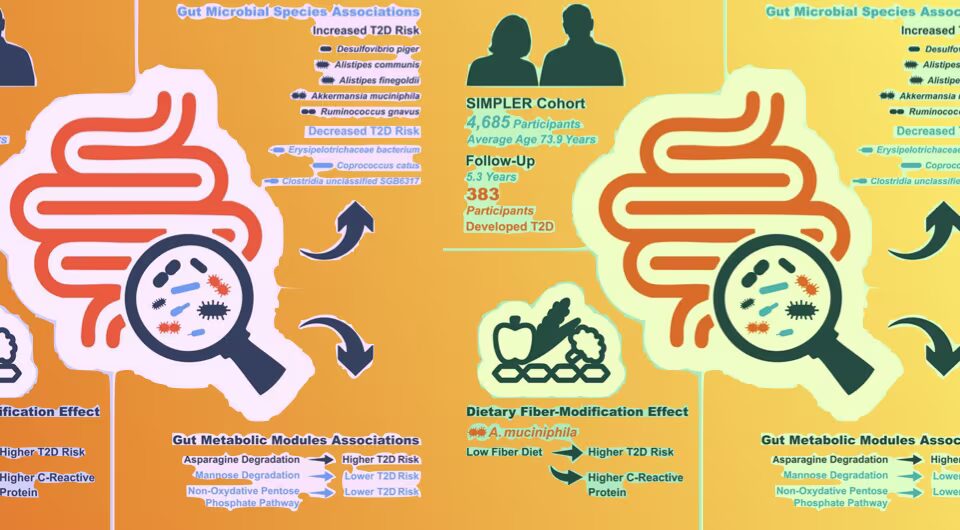
Swedish researchers have identified six specific gut bacteria associated with an increased risk of developing type 2 diabetes among elderly individuals. Analyzing stool samples from 4,685 participants over an average of 5.3 years, they found that these bacteria appeared more frequently in those who later developed the disease, while three other microbial groups seemed to offer protective effects. The study was published in Cell Reports Medicine.
The cohort consisted of adults aged 70 and above who were not on any medication. Researchers performed whole-genome sequencing of the gut microbiome to assess its composition and track its connection to diabetes onset. During the follow-up, type 2 diabetes was diagnosed in 383 participants.
Contrary to some simplified reports, overall measures of microbiome diversity – alpha and beta diversity – did not significantly predict diabetes risk. Instead, the link was apparent at the individual bacterial species level. Elevated risk correlated with the presence of six bacteria:
- Desulfovibrio piger
- Alistipes communis
- Akkermansia muciniphila
- Ruminococcus gnavus
- Alistipes finegoldii
- An unidentified member of the Lachnospiraceae family
Conversely, a lower risk was associated with bacteria from the families Erysipelotrichaceae, Coprococcus catus, and an unclassified Clostridia species.
The researchers took a closer look at Akkermansia muciniphila due to its known interaction with dietary fiber intake. Interestingly, when fiber consumption was low, the link between this bacterium and increased diabetes risk was even stronger. The study also found a meaningful relationship between A. muciniphila levels, fiber intake, and C-reactive protein, a marker of systemic inflammation.
Beyond composition, the study examined microbial functions. The strongest positive correlation with diabetes risk came from increased activity in asparagine degradation pathways. On the flip side, pathways involved in mannose degradation and the pentose phosphate pathway showed inverse relationships with risk.
This research highlights a gap between the booming global gut microbiome testing industry-now valued at over $1 billion-and clinically reliable biomarkers for predicting type 2 diabetes on a large scale. If these Swedish findings hold up in younger populations and across other regions, gut microbiota profiles could join BMI, blood glucose, and family history as tools to assess diabetes risk more comprehensively.