

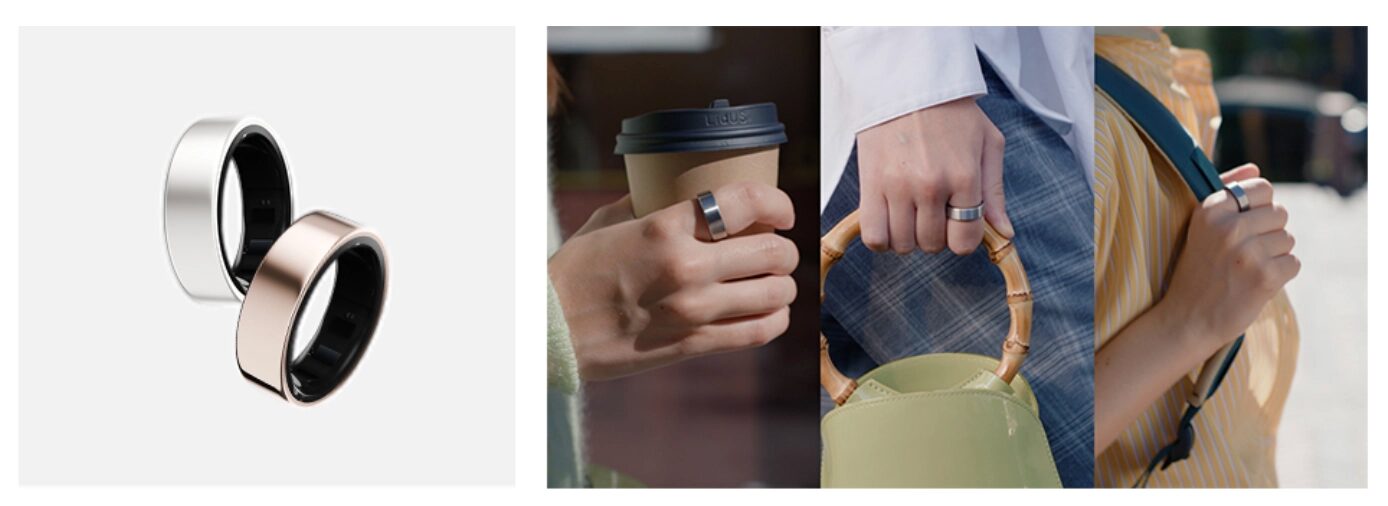
Sharp is finally putting its name on a wearable lineup of its own, and it is doing it with a paired launch: the Karada Mate Watch (MH-W01) and Karada Mate Ring (MH-R01) go on sale on 9 July. The Sharp Karada Mate Watch and Ring are built around daily health tracking, with both devices feeding into Sharp’s Karada Mate medical app for a single view of the data.
That is a sensible move in a market where hardware alone rarely wins anymore. Fitbit, Samsung, and Garmin have all spent years turning watches and rings into software subscriptions, coaching, and health dashboards; Sharp is arriving late, but at least it is arriving with a clear idea of what the user is supposed to do with the devices.
Karada Mate Watch focuses on everyday health
The Karada Mate Watch comes in gold and silver, uses a standard 22 mm strap width, and runs a Circuit View interface that shows steps, heart rate, and calories during the day. At bedtime, it shifts to weather and the next day’s schedule, which is a neat bit of context switching instead of stuffing every screen with the same data dump.
Sharp says the watch uses its patented Flow technology to automatically measure calorie intake, and it can also track hydration levels and nudge users to drink more water. That last part sounds simple, but it is exactly the sort of low-friction reminder that makes wearables stick, especially when the alternatives are yet another app notification you ignore after lunch.
Karada Mate Ring packs more sensors into less space
The Karada Mate Ring is the more compact of the two, and Sharp is leaning hard into the numbers: IPX8 protection, 6.7 mm width, 2.8 mm thickness, and a weight of 2.1-3.1 grams. Inside are a SOXAI sensor, accelerometer, optical heart-rate sensor, infrared sensor, and skin-temperature sensor, all aimed at sleep depth, pulse, blood oxygen, and related health metrics.
Rings have become the quiet success story of wearables because they are easier to wear all day than a watch for many people, and Sharp is clearly trying to ride that wave rather than fight it. The trick will be whether the company can make the software feel polished enough to compete with more established health ecosystems.
Karada Mate app and Plus plan
Both devices connect to the Karada Mate medical app, which centralizes the measurement history and turns the hardware into something more than a stack of sensors. Sharp will also offer a Plus plan for 600 yen, or $4, per month, with diet recommendations from a qualified dietitian.
That subscription layer is where the business logic gets clearer. The hardware is the hook; the recurring service is the part Sharp will want to grow, and if the advice feels useful instead of generic, there is a chance this becomes a sticky relationship rather than a one-off gadget purchase.
The open question is whether Sharp can turn first-mover curiosity into a real wearable brand, or whether this ends up as another decent product buried under better-known names. The specs are respectable. The market, as ever, is less polite.