

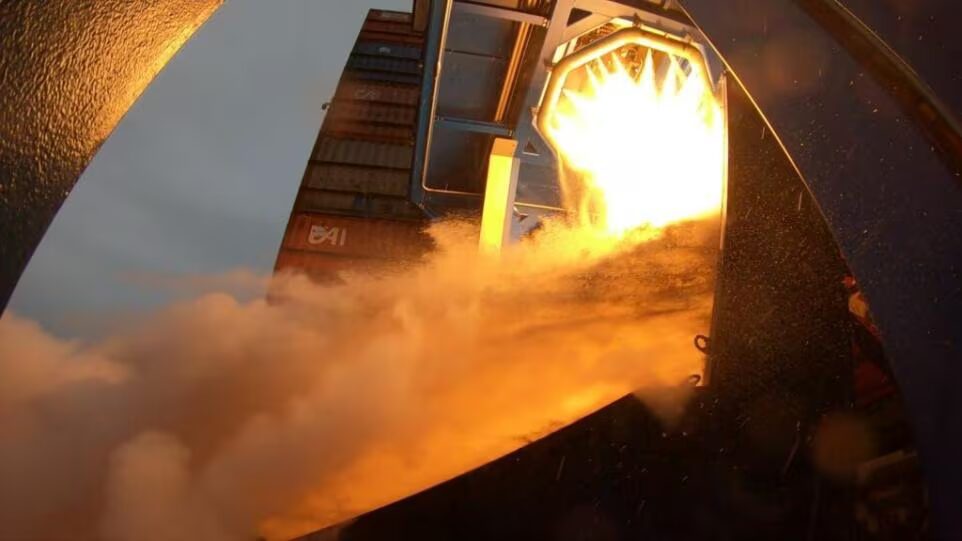
Scotland is on the verge of a historic first: German startup Rocket Factory Augsburg (RFA) has secured permission to launch its RFA One rocket from the SaxaVord spaceport in the Shetland Islands. If successful, this mission will mark the first satellites ever reaching orbit from Scottish-and indeed British-soil. For SaxaVord, the launch is a critical test to prove it can operate as a bona fide commercial orbital launch site, not just a ceremonial one.
Preparations are progressing along familiar lines. SaxaVord is formalizing plans to build a safety perimeter around the launch pad, with the project budget estimated at about £120,000. During the launch window, temporary traffic restrictions will be imposed on the nearby Isle of Unst, with residents receiving special passes to access local roads.
RFA One is designed for the small satellite market, capable of delivering up to 1,300 kilograms to low Earth polar and sun-synchronous orbits-prime real estate for Earth observation satellites. The maiden flight will carry approximately a 500-kilogram Earth observation satellite for a Scandinavian customer, according to published reports.
This launch addresses a long-standing gap for the UK space sector. While Britain is strong in satellite manufacturing and space services-its space industry revenues recently surpassed £17 billion annually-it has lacked a functioning orbital launch site on home turf. A domestic launch capability is increasingly seen not just as an ambition, but a missing link in the UK’s space ecosystem.
RFA One’s troubled road to liftoff
RFA One’s debut has been anything but smooth. The rocket’s first launch was originally slated for 2024 but ended in a fiery test stand accident. During ground testing, oxygen ignited inside one of the turbopumps, triggering a blaze that spread to the first stage and all nine engines.
That mishap pushed the schedule back considerably. In spring, Rocket Factory Augsburg filed for maritime licensing and indicated that launches wouldn’t begin before July 1. Now, with SaxaVord cleared to host and infrastructure gradually coming online, the launch is back at the forefront of immediate priorities rather than a distant plan.
For the British space program, this is also a second shot at proving that orbital launches from UK soil are doable. In January 2023, Virgin Orbit attempted air-launched missions from Cornwall Airport, but the effort failed due to an upper-stage malfunction, and Virgin Orbit subsequently folded. SaxaVord’s approach sticks with the classic vertical rocket launch method-a strategy that could deliver a more solid success story.
Meanwhile, competition in the European small rocket market has heated up. Germany’s Isar Aerospace and Britain’s Orbex are also eyeing this segment, while Northern European spaceports compete not just for operators but for satellite clients in the several hundred-kilogram range. RFA One aims for a clear niche: Earth observation, tech demonstration missions, and commercial constellations requiring frequent, small launches.
Logistics are another challenge. RFA One’s components have already undergone testing in Sweden before being shipped to the Shetlands. In Europe, small rocket startups often stumble not just on engines or certifications, but on assembling complex supply chains and ground infrastructure. On paper, the projects look promising-but real-world delays often come from these transitional steps.
If RFA One manages a successful orbital insertion, SaxaVord will gain far more than a symbolic checkbox in British rocketry history. It would move from being a licensed launch site to a genuine commercial hub where rockets regularly fly. For Europe, this would signal that the small launch market is no longer dominated solely by American companies with glossy pitches-it’s becoming genuinely multinational and operational.