

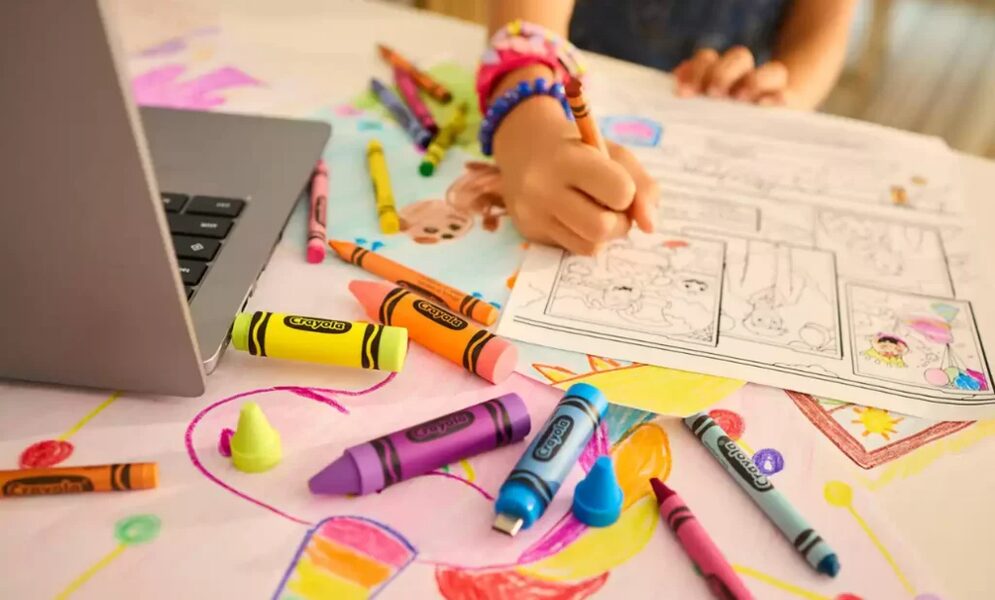
SanDisk has turned one of the least serious-looking ideas imaginable into a real storage product: the SanDisk Crayola USB-C Flash Drive. Shaped like a Crayola crayon, it uses USB-C and is aimed at people who want file transfers that are fast enough to be useful and weird enough to start conversations.
The SanDisk Crayola USB-C Flash Drive uses USB 3.2 Gen 1 and is rated for read speeds of up to 300 MB/s. That puts it firmly in the ”practical, not fancy” camp, which is exactly where a lot of flash drives live anyway, except this one looks like it escaped from a school art box.
Capacities and pricing
SanDisk is offering the drives in 64GB, 128GB, and 256GB versions. In India, pricing starts at about $26, while the source also cites a starting price of $33. That range is a reminder that regional pricing for simple storage hardware can be as tidy as a desk drawer after a kindergarten class.
- Interface: USB 3.2 Gen 1
- Connector: USB-C only
- Read speed: up to 300 MB/s
- Capacities: 64GB, 128GB, 256GB
Why the crayon look works
This is not the first time a tech company has dressed hardware up in nostalgia, but it is a neat way to make a commodity product feel giftable. SanDisk is clearly leaning on Crayola’s instantly recognizable design language to sell something that would otherwise compete on a shelf full of very boring black sticks. The upside is obvious: people notice it. The downside is equally obvious: once the joke wears off, it’s still a flash drive, so the specs had better hold up.
For buyers, the pitch is straightforward: USB-C convenience, decent read speeds, and a design that will probably end up in a pencil case, a laptop bag, or a stocking stuffer. For everyone else, it is another sign that storage makers are leaning harder on branding and form factor to stand out in a market where the underlying hardware has become painfully ordinary.
A small product with a very loud personality
The bigger question is whether this kind of collaboration becomes a one-off novelty or a template for more branded storage accessories. If SanDisk can make a basic flash drive feel like a collectible, competitors will almost certainly try their own version of cute, licensed hardware. Consumers may not need another crayon-shaped gadget, but that has never stopped the accessory business before.