

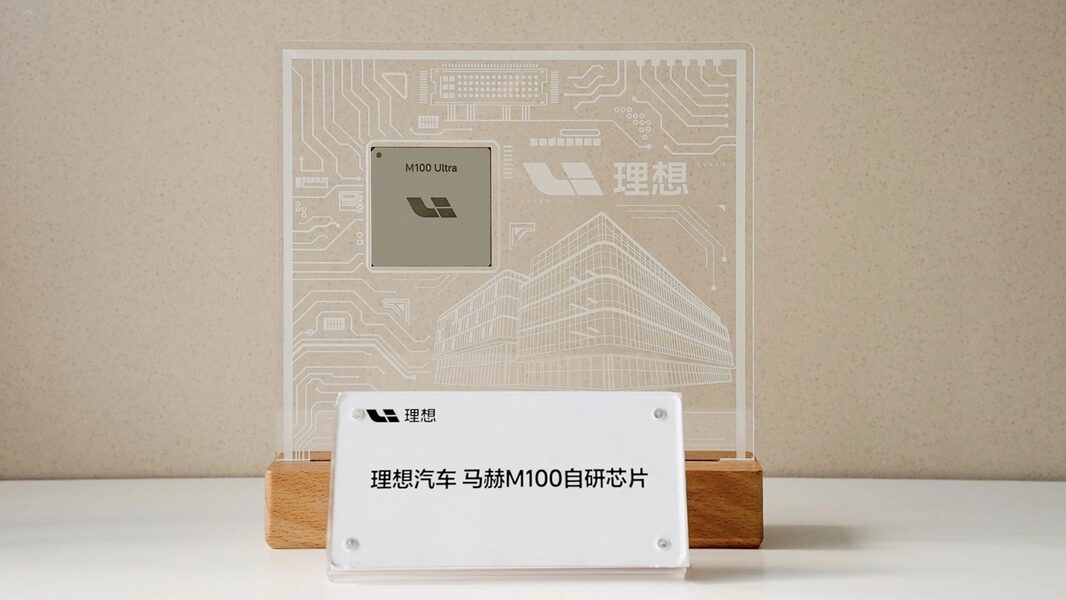
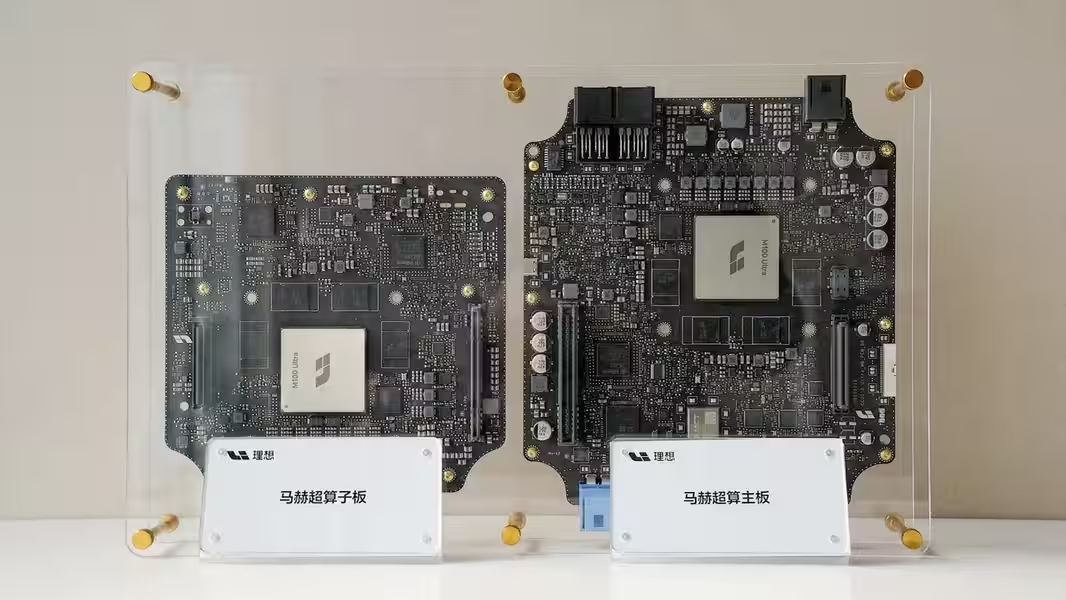
Li Auto has put its in-house ambitions on display, revealing the Mach M100 chip alongside supercomputer boards, motherboards, and other hardware. Li Auto says the point is not to make chips for the sake of making chips, but to give the company the kind of tightly controlled stack that lets software behave better in the real world.
That pitch sounds a lot like the Apple playbook, and Li Auto says as much. The company’s argument is simple: the best experience comes from owning the chips, operating system, hardware, and cloud layer rather than stitching together parts from different suppliers and hoping the seams never show.
Mach M100 chip and the hardware stack behind it
Li Auto framed the chip effort as a response to problems current suppliers cannot solve rather than a vanity project. In practice, that is the same argument every serious hardware company makes before it starts chewing through cash on silicon: if the off-the-shelf parts are holding back performance, latency, or reliability, vertical integration suddenly looks less like ego and more like arithmetic.
- Mach M100 is Li Auto’s own chip.
- The company also showed supercomputer boards and motherboards.
- Li Auto links the hardware push to AI working in the physical world.
Why Li Auto is talking like Apple
Apple is the obvious reference point because it has spent years proving that integrated design can beat a patchwork supply chain on polish and consistency. Automotive companies have long wanted that same control, but very few manage it without paying dearly in complexity, time, and money. The difference here is that Li Auto is tying the effort directly to AI systems that need to behave in the messy, unpredictable physical world, not just in a neat demo.
That makes the move more than a branding exercise. China’s carmakers are under pressure to differentiate as EV hardware becomes easier to copy, and custom silicon is one of the few levers left that can still create real separation. The catch, of course, is that designing chips is easy to announce and hard to sustain, especially when the payoff depends on software teams, cloud infrastructure, and a manufacturing ecosystem all moving together.
What Li Auto is trying to build next
The company says it is working on chips, operating systems, large-scale models, and more hardware at the same time. That is a bold menu, and also a familiar one: once a hardware company decides it wants to own the full stack, there is no clean halfway point. Either the integration works and the user feels it, or the whole thing turns into a very expensive science project.
The interesting question now is not whether Li Auto can show more chip photos. It is whether the Mach M100 chip and the rest of this stack can actually improve the driving and AI experience enough to justify the effort, because that is where the Apple comparison either becomes flattering or ridiculous.