

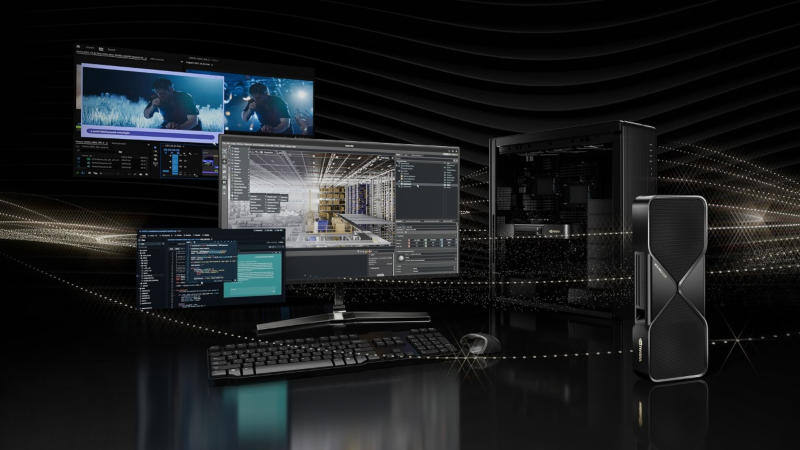
Nvidia has pushed the recommended price of its RTX Pro 6000 Blackwell workstation flagship to $13,250, a steep jump from the original launch price and another reminder that memory shortages are now hitting professional GPUs as hard as consumer ones. The card arrived in March 2025 as an already expensive piece of kit; at this point, it costs more than some entire gaming PCs, which is not exactly a selling point for anyone buying by the rack.
The new figure is for the standard Workstation Edition, while Nvidia also lists a more efficient Workstation Edition Max-Q and a Server Edition for large enterprises. In practice, the market around it is already messy: Nvidia’s own site shows a PNY RTX Pro 6000 Blackwell at $11,359.99, and Newegg lists the Nvidia-branded card at $12,099.99. That spread tells you everything – pricing is drifting faster than retailers can tidy up their listings.
RTX Pro 6000 Blackwell pricing across retailers
There’s still a patchwork of pricing depending on which version you want and where you buy it. Nvidia says some of the other RTX Pro 6000 Blackwell versions are cheaper on its site, although the Server Edition is not listed there. Newegg, meanwhile, sells the server model for $14,999, with some offers coming from third-party sellers and others labeled as OEM products without retail packaging.
- RTX Pro 6000 Blackwell Workstation Edition: $13,250 recommended price
- PNY RTX Pro 6000 Blackwell: $11,359.99 on Nvidia’s site
- Nvidia RTX Pro 6000 Blackwell on Newegg: $12,099.99
- RTX Pro 6000 Blackwell Server Edition on Newegg: $14,999
Why workstation GPUs are getting pricier
This is not a one-off. The source of the squeeze is the same old culprit: limited memory supply. And while Nvidia is the headline name here, it is hardly alone – when component costs rise, workstation hardware usually follows consumer cards upward, just with a cleaner invoice and a bigger number at the end. Buyers who need these cards for production work are left doing the least glamorous part of tech shopping: price checking across multiple stores.
The uncomfortable part is that there’s no obvious quick fix. As long as memory remains tight, professional and consumer GPUs are likely to keep drifting higher rather than normalizing, which means procurement teams will keep paying attention to retailer-by-retailer differences instead of waiting for a neat MSRP reset. That’s not a great era for bargain hunters, but it is a very good era for anyone selling high-end silicon.