

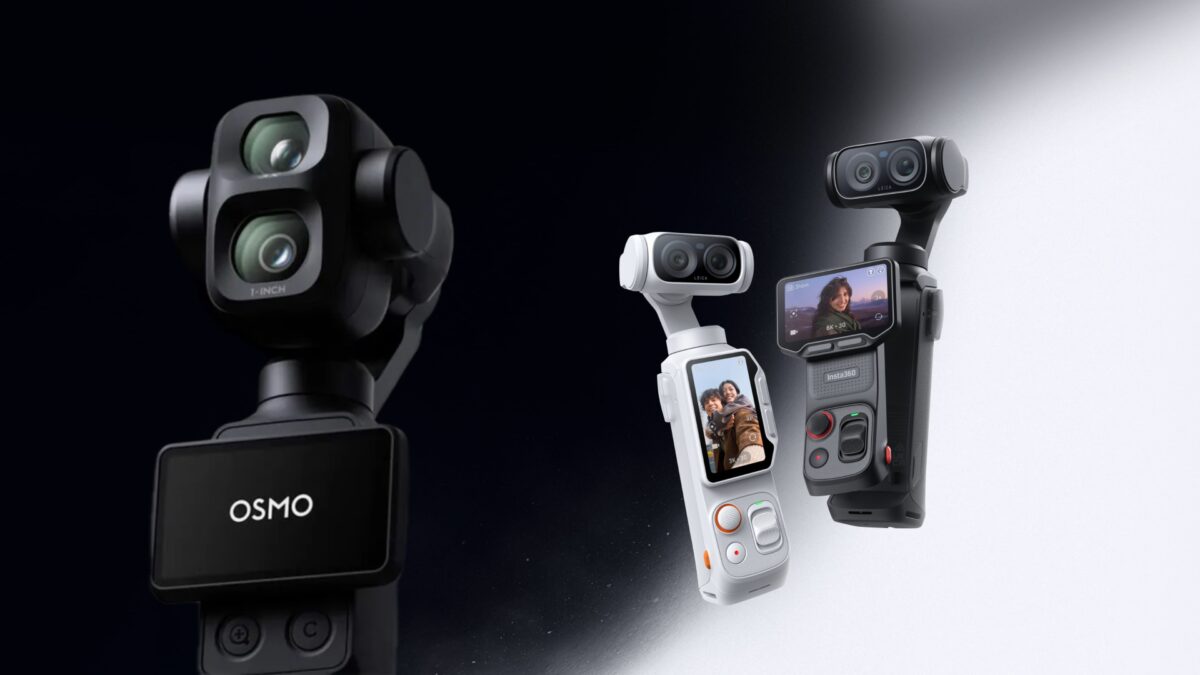
DJI and Insta360 have turned their camera rivalry into a courtroom fight, with each side now accusing the other of patent infringement in the US. The dispute arrived just as Insta360 pushed out its new Luna Ultra, a premium dual-lens gimbal camera that quickly became a target for DJI’s legal team and then for Insta360’s counterattack.
The timing is messy for both companies, but especially for anyone hoping the pocket camera wars would stay focused on specs instead of attorneys. Texas has become a familiar home for these kinds of battles, and the outcome could end up shaping how aggressively the two brands can sell and market their stabilized cameras in the US.
DJI sued first over the Luna series
Insta360 launched the Luna Ultra on June 10, 2026, positioning it as a high-end alternative in the vlogging and pocket gimbal space. The camera offers 8K video recording, 4K 120fps slow-motion recording, a detachable OLED touchscreen, and advanced stabilization, all wrapped in a co-development with Leica.
On the same day, DJI filed two lawsuits in the US District Court for the Eastern District of Texas. DJI says the Luna lineup copies design and utility patents tied to its Osmo Pocket family and wants a permanent ban on US sales, plus damages. That is a fairly blunt message: in this market, a hardware launch can now come with a legal warning label attached.
Insta360’s countersuits target DJI’s core camera features
Insta360 responded on June 12 with two countersuits of its own, saying DJI infringed five of its utility patents. Those patents cover gimbal stabilization, directional control, smooth camera stabilization, telemetry overlay, and panoramic video stabilization.
According to Insta360, those technologies appear across DJI products including the Osmo Pocket series, Ronin/RS gimbals, Osmo Mobile, and Osmo 360 cameras. In other words, this is not a side quest over a niche feature; both companies are aiming at the same core engineering claims that make their products usable in the first place.
Luna Ultra sales and the broader patent chessboard
Insta360 says the Luna Ultra was built from years of R&D that started in 2020 and draws on earlier products such as the ONE R, Link Series, and Flow gimbals. Its founder, JK Liu, also dismissed DJI’s same-day lawsuit as fear of a competitor rather than proof of copying. That is standard corporate combat language, but it also signals confidence: Insta360 clearly thinks the market response is on its side.
The company says the Luna Ultra, priced around $770, started strong and ranked as a top seller in Amazon’s camcorder category in the US on its first day. That kind of launch momentum matters because DJI and Insta360 are fighting over more than patents; they are fighting over who gets to define the next generation of compact creator gear while phones keep eating the low end of the camera market.
What the Texas cases could change
The two companies have already sparred in China, so this is not a one-off flare-up. But Texas can be brutal for IP fights, and if either side convinces the court to limit imports or sales, the fallout could reach far beyond a single model. The more interesting question is whether this pushes both brands to patent harder, launch faster, and leave even less room for compromise.