

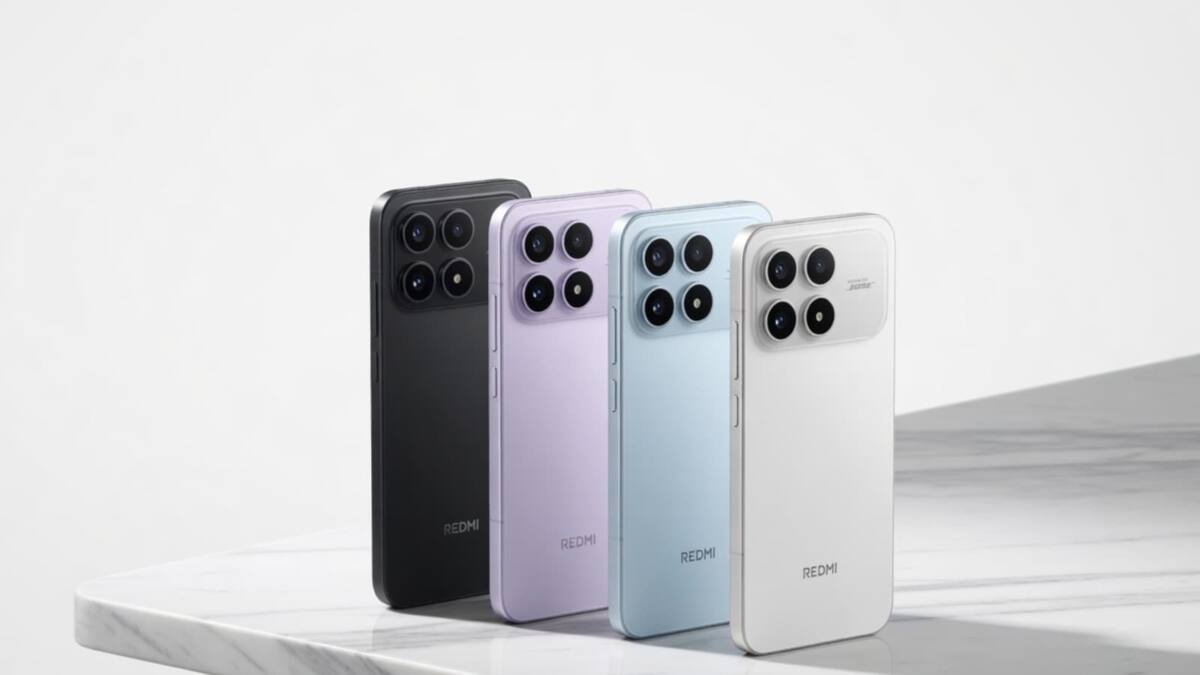
Redmi’s K90 series has crossed 2 million activations, a strong sign that Xiaomi’s mid-premium play is finding an audience in a segment crowded with lookalikes. The numbers, reported by the Chinese tipster Digital Chat Station, point to a broader shift: buyers are showing more interest in smaller phones that still feel expensive, rather than oversized slabs built mostly for speed bragging rights.
That preference is not exactly a shock. Across Android, the most aggressive spec sheets have often gone to the biggest phones, while the more comfortable hand-fit models were forced to compromise on battery, materials, or cameras. Redmi appears to be threading the needle better than some rivals, and that may explain why the K90 is landing harder than expected.
Redmi K90 sales momentum
Digital Chat Station said the activation tally is roughly on par with the combined sales of two competing phones in the same price bracket, though he did not name them. That is the kind of comparison manufacturers love to make and rivals hate hearing, because it frames Redmi as punching above its weight without forcing anyone to check the fine print.
The K90 Standard Edition was presented in October as what Xiaomi calls the most polished base model in the history of the K series. It runs on Snapdragon 8 Elite, packs a 7100 mAh battery, and supports 100-watt fast charging – a very loud spec trio for a phone that is also being sold on comfort and everyday usability.
- Chipset: Snapdragon 8 Elite
- Battery: 7100 mAh
- Charging: 100-watt fast charging
- Series status: more than 2 million activations
Why smaller premium phones are selling better
The interesting part is not the raw spec sheet. It is the shape of the market underneath it. Consumers have spent years being told that bigger equals better, yet many now seem willing to trade a giant screen for a phone that feels easier to live with, especially if the materials and feature set do not look cheap.
That creates a problem for brands betting everything on ultra-large performance phones: the audience is narrower than the marketing suggests. If Redmi can keep offering a more balanced package, it may keep squeezing competitors that still rely on brute-force size as a selling point.
What Redmi K100 could do next
The same source says Redmi K100 should continue the current approach and could arrive in two formats, one with a medium screen and one with a larger display. If that happens, Redmi would be making a pretty practical bet: sell both the hand-friendly version and the bigger crowd-pleaser instead of forcing customers into one camp.
There is no official confirmation yet, so for now this is still a prediction, not a product plan. But if the K90’s early traction is any guide, Xiaomi has found a formula competitors will have to respond to sooner rather than later.