

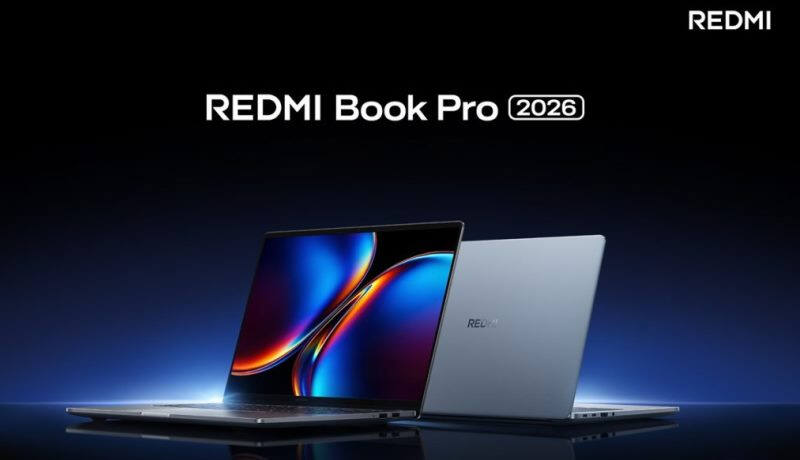
Xiaomi has updated its Redmi Book Pro lineup with two new laptops that lean hard into AI features, higher-refresh displays, and Intel’s latest mobile chips. The Redmi Book Pro 14 (2026) and Redmi Book Pro 16 (2026) are already on sale in China, and the pitch is simple: thin metal bodies, serious battery life, and enough horsepower to make ordinary office work feel underdressed.
The Redmi Book Pro 14 and Redmi Book Pro 16 are Xiaomi’s latest Intel Core Ultra laptops for China, and the company is pricing them below many premium ultrabooks. The timing is hardly accidental. Laptop makers are stuffing ”AI” into everything from power management to webcams, because that is where the buyers are now. Xiaomi is following the same playbook as rivals such as Lenovo and ASUS, but it wraps the package in tighter integration with HyperOS and a price ladder that starts below the premium ultrabook ceiling.
Redmi Book Pro 14 and 16 display specs
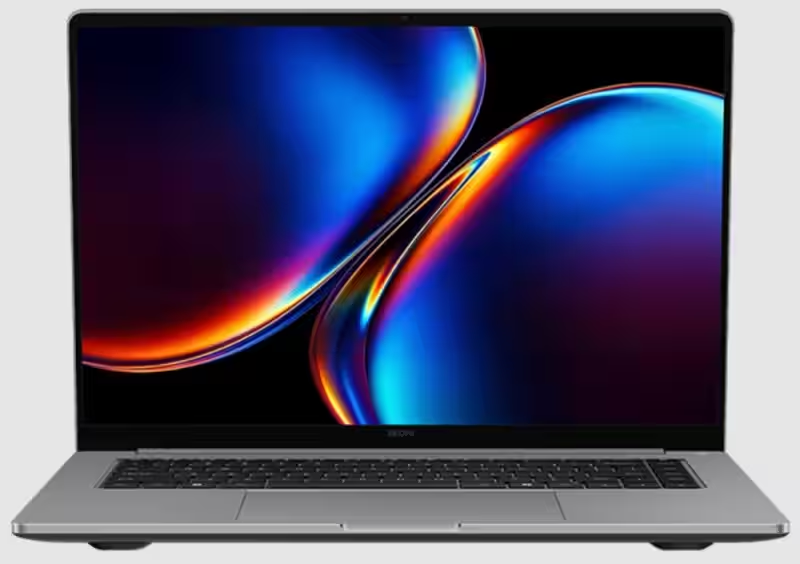
The two models are built around different screens, but both chase the same premium feel. The 16-inch Redmi Book Pro 16 uses a 3200 × 2000 panel with a 165 Hz refresh rate, 500 cd/m² peak brightness, and full DCI-P3 coverage. The 14-inch Redmi Book Pro 14 goes with a 2880 × 1800 display, 120 Hz refresh rate, 500 cd/m² peak brightness, and full sRGB coverage.
Both laptops also support AI-based brightness adjustment that reacts to ambient light and how the device is being used. That sounds small, but on a machine Xiaomi wants to position as a daily carry, these little automation tricks are exactly where battery life and comfort get won or lost.
Intel Core Ultra chips and memory options
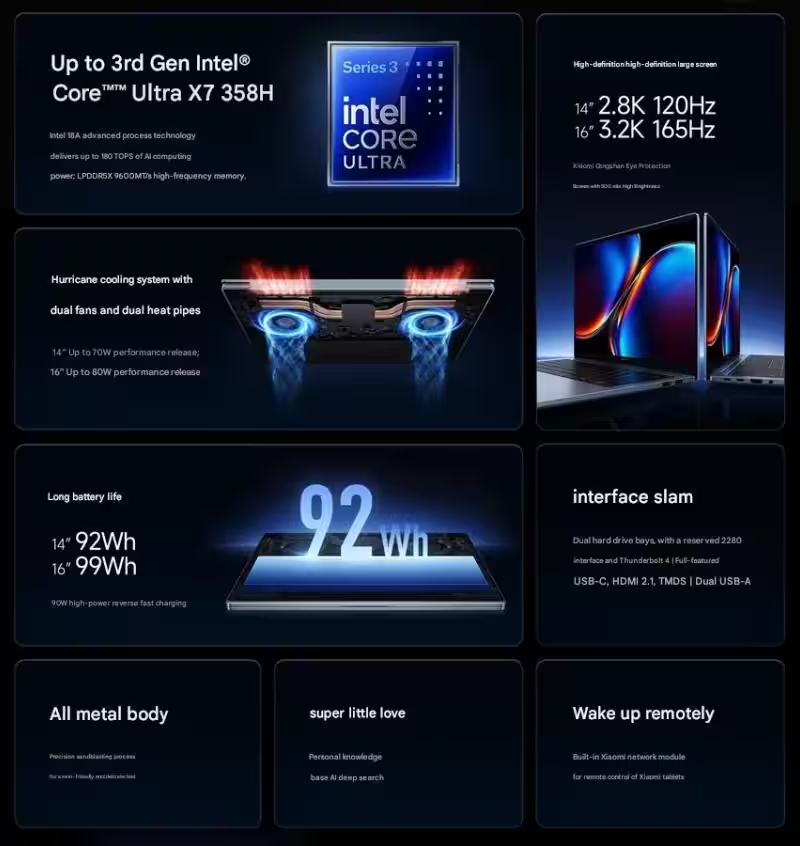
Inside, Xiaomi has gone with Intel Core Ultra third-generation processors, with configurations based on Core Ultra 5 325, Core Ultra 5 338H, and Core Ultra X7 358H. Graphics come from Intel Arc B390, and Xiaomi says the platform can deliver up to 180 TOPS of AI compute by combining CPU, GPU, and NPU resources.
- Up to 32 GB LPDDR5x memory in dual-channel mode
- Up to 1 TB PCIe 4.0 SSD
- M.2 expansion slot for an additional drive
- GPU performance: 122 TOPS
- NPU performance: 50 TOPS
That spec sheet puts the Redmi Books in the same conversation as other thin-and-light Windows laptops that now sell ”AI acceleration” as a feature, not a checkbox. The real test will be whether Xiaomi’s thermal design keeps performance steady once the novelty wears off and the fans start doing their very unglamorous job.
Battery life, cooling and HyperOS features
Xiaomi’s Hurricane Cooling System combines two 12V fans with long and short blades, two heat pipes, and a heat-dissipation plate that is 40% larger than the one used in the previous generation. Power comes from a 92 Wh battery in the Book Pro 14 and a 99 Wh battery in the Book Pro 16, with fast charging up to 100 W and reverse charging up to 90 W.
Xiaomi claims up to 20.5 hours of battery life for the smaller model and up to 30.4 hours of local video playback for the larger one. Those are big numbers, and they matter because battery bragging rights have become the new megapixels: easy to market, harder to verify outside a controlled demo.
Both laptops include a dedicated Super Xiao AI key, 1080p webcams with AI brightness optimization, TÜV Rheinland certification for reduced blue-light emission, and HyperOS Connect for linking phones, tablets, and other devices. Ports include Thunderbolt 4, HDMI 2.1, USB Type-C, two USB Type-A ports, and a 3.5 mm headset jack.
Redmi Book Pro 14 and 16 prices in China
The notebooks are available to buy in China now, and Xiaomi has kept the pricing wide enough to cover several buyer types. The Redmi Book Pro 14 starts at about $1030 for the Core Ultra 5 325 version with 24 GB of RAM and a 1 TB SSD, rises to $1170 with the Core Ultra 5 338H, 32 GB of RAM, and a 1 TB SSD, and tops out at $1390 with the Core Ultra X7 358H, 32 GB of RAM, and a 1 TB SSD.
- Redmi Book Pro 14 with Core Ultra 5 325, 24 GB RAM, 1 TB SSD: about $1030
- Redmi Book Pro 14 with Core Ultra 5 338H, 32 GB RAM, 1 TB SSD: about $1170
- Redmi Book Pro 14 with Core Ultra X7 358H, 32 GB RAM, 1 TB SSD: about $1390
- Redmi Book Pro 16 with Core Ultra 5 325: about $1055
- Redmi Book Pro 16 with Core Ultra 5 338H: about $1200
- Redmi Book Pro 16 with Core Ultra X7 358H: about $1420
The Redmi Book Pro 16 follows the same formula at slightly higher prices. That positioning makes the larger model look like the more obvious premium buy, but the smaller one may be the smarter pick for anyone who values portability over sheer screen space.
The unanswered question is whether Xiaomi will push these machines beyond China soon, because that is where the real comparison starts. If it does, the Redmi Book Pro 14 and 16 will run straight into a crowded field of Intel-powered ultrabooks that promise the same AI story, only with different stickers on the lid.