

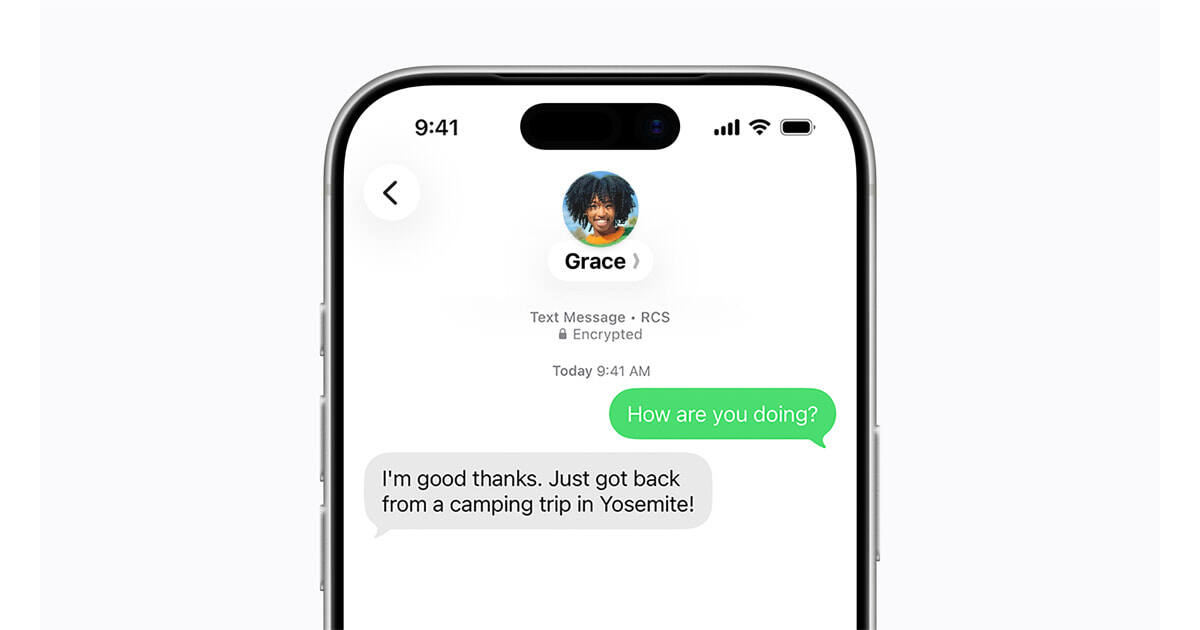
RCS chats are finally getting the privacy upgrade they have been missing: Apple and Google are rolling out end-to-end encryption for supported conversations, starting in beta today for iPhone users on iOS 26.5 and Android users on the latest Google Messages. On iPhone, the giveaway is a new lock icon in RCS chats, which should at least save everyone from guessing whether a thread is protected or just pretending to be modern SMS.
The change matters because RCS has been the awkward middle child of messaging for years – better than SMS, still not as secure as iMessage. End-to-end encryption means messages cannot be read while they travel between devices, and it is turned on by default. Apple says it will switch on automatically over time for both new and existing RCS conversations, assuming you have a supported carrier on the iPhone side.
What changes in RCS chats
- A new lock icon appears in encrypted RCS chats.
- Encryption is enabled by default.
- Rollout starts in beta on iPhone with iOS 26.5 and on Android in Google Messages.
This is also the result of a rare moment of cooperation in mobile messaging. Apple and Google have spent years defending their own ecosystems, but the move to secure RCS is a practical one: SMS has long been the weakest link, and cross-platform chats have been the obvious place to close the gap. iMessage still holds Apple’s best-in-class privacy crown, though that only helps if everyone in the conversation owns an Apple device.
Why this rollout is still only a beta
Beta is doing a lot of work here. It suggests the plumbing is ready enough to ship, but not ready enough to declare victory across every carrier, device, and region at once. That’s the story with RCS: the standard is mature, the ecosystem is not, and the real test will be whether encryption becomes boringly invisible instead of weirdly inconsistent.
For now, the lock icon is the clearest sign that the industry is finally dragging mainstream messaging toward a baseline users should have had years ago. The interesting question is whether this becomes the default expectation for all RCS traffic quickly, or whether carrier support and staggered rollouts keep the feature feeling more like a demo than a standard.