

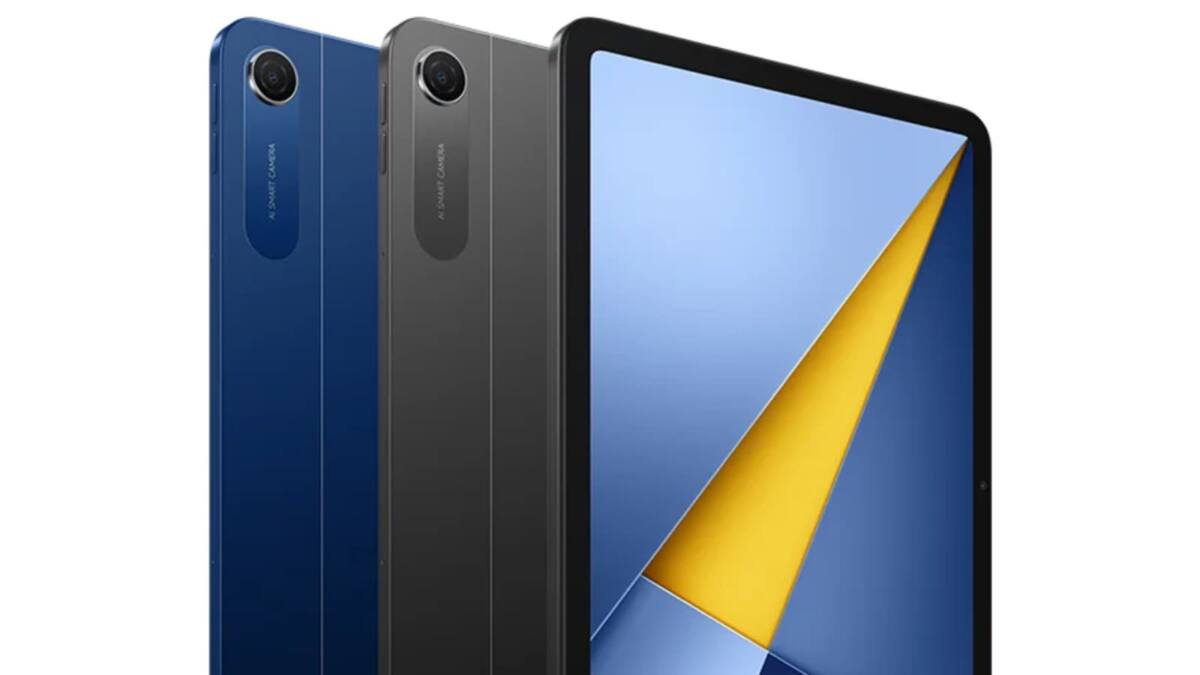
Xiaomi has taken the Poco Pad C1 outside China, and the pitch is bluntly familiar: a smaller Android tablet with a low enough price to tempt people who do not want to pay laptop money for web browsing, video, and the occasional spreadsheet. The Poco Pad C1 is now on sale in Malaysia, Singapore, and Thailand, positioned below the earlier Poco Pad M1 as a more compact and cheaper option.
That kind of move makes sense in a tablet market where midrange models often live or die on price, not ambition. Apple still owns the premium end, while Samsung and Lenovo keep pushing value-focused slates; Xiaomi is clearly trying to win on the boring but effective formula of ”good-enough hardware, aggressive pricing.”
Poco Pad C1 pricing in Asia
The Poco Pad C1 is offered in Blue and Grey, with two memory configurations. The base model has 4 GB of RAM and 64 GB of flash storage, priced at 549 Malaysian ringgit, 179 Singapore dollars, or 4,899 Thai baht, which works out to roughly $130-150 depending on the market. The higher-spec version with 6 GB of RAM and 128 GB of storage costs 629 ringgit, 199 Singapore dollars, or 5,899 baht, or about $180.
That pricing puts it squarely in the impulse-buy zone for a tablet, especially in markets where affordable Android slabs tend to be judged more on whether they feel useful than whether they feel premium. Xiaomi is betting that a slightly smaller screen and lighter body can be a feature, not a compromise.
Poco Pad C1 specs and design
Under the hood, the Poco Pad C1 uses Qualcomm’s Snapdragon 6s 4G Gen 2. It also comes with a 9.7-inch IPS display at 2048 x 1280 pixels and a 120 Hz refresh rate, plus a 7600 mAh battery with 18 W charging. Xiaomi lists the dimensions at 226.51 x 147.97 x 7.4 mm, with a weight of 406 grams.
- Chipset: Qualcomm Snapdragon 6s 4G Gen 2
- Display: 9.7-inch IPS, 2048 x 1280, 120 Hz
- Battery: 7600 mAh
- Charging: 18 W
- Size and weight: 226.51 x 147.97 x 7.4 mm, 406 grams
The specs are not flashy, and that is probably the point. Xiaomi is not chasing tablet bragging rights here; it is chasing a price tag low enough to make specs like a 120 Hz panel look better than they have any right to at this level.
A smaller Xiaomi tablet for cheaper buyers
The interesting part is not that Xiaomi launched another tablet. It is that the company is carving out a more compact category inside its Poco line, where the math is simple: if a bigger tablet feels unnecessary, sell a smaller one and shave the price until the decision gets easy. Expect this model to attract the same buyers who want media and browsing first, with performance that is adequate rather than aspirational.