• 2 min read
Palantir CEO sees a $300B AI fortune
Palantir CEO Alex Karp says AI could make him 20 times richer while middle-class salaries merely double, widening wealth inequality.
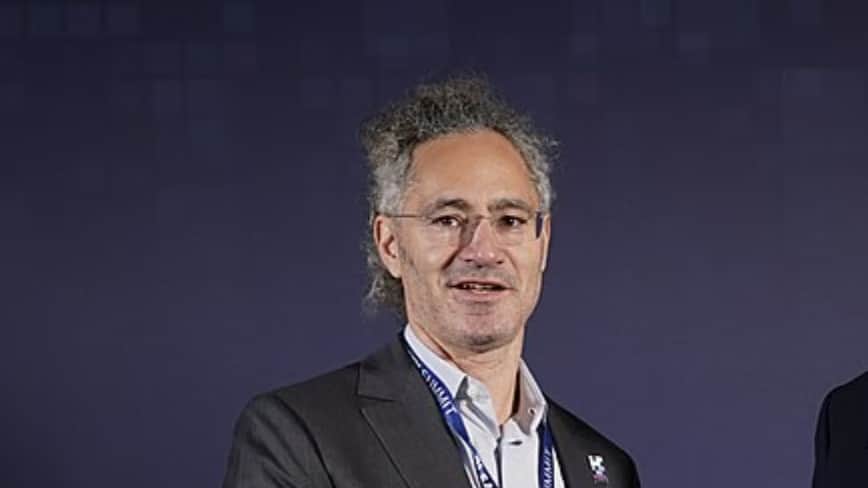
Image: TNW
Palantir CEO Alex Karp says artificial intelligence could make him 20 times wealthier, implying a fortune of nearly $300 billion—up from roughly $15 billion today. Middle-class workers, by contrast, may see their salaries merely double over the next decade, he said.
Karp described the outcome as “a complete decoupling of unimaginable wealth and normal wealth” and called it “a problem for society.” Speaking to Axel Springer CEO Mathias Döpfner on the MDMeets podcast, he said AI could raise the average person’s standard of living while making those involved in the technology “10, 100 times wealthier than they already are.”
He characterized the beneficiaries as “people you don’t really relate to, like very oddly shaped IQ specimens that you probably wouldn’t want to have over for dinner.” Karp also called the overselling of AI “disconcerting” and “depressing.”
The remarks are notable because Karp’s own company is benefiting from the trend. Palantir’s market value has reached roughly $322 billion, driven by demand for its AI products. Karp has previously predicted the full nationalization of AI companies as political backlash over concentrated wealth intensifies.

Recommended reading
AWS Billing Bug Sends Estimates to $2.5 Trillion
Warnings from BlackRock and Geoffrey Hinton
Karp is not the only prominent figure warning that AI gains could accrue mainly to capital owners. BlackRock CEO Larry Fink, speaking at Davos, said early gains are “flowing to the owners of models, owners of data and owners of infrastructure.” He asked what would happen if AI did to white-collar workers what globalization did to blue-collar workers.
Geoffrey Hinton, the Nobel-winning AI researcher, put the argument more bluntly: “Rich people are going to use AI to replace workers. That’s not AI’s fault, that is the capitalist system.” South Korea’s deputy prime minister made a similar point in May, when Samsung chip workers nearly went on strike over how AI profits should be shared.
The figures suggest the pressure is already widening. According to Oxfam, global billionaire wealth rose 16% in 2025 to $18.3 trillion, three times faster than the five-year average. Elon Musk briefly became the world’s first trillionaire this year.
Enterprise Editor
Marcus follows the money. He covers enterprise software, cloud architecture, and the tectonic shifts in Big Tech strategy. He translates dense earnings calls and complex M&A activity into actionable insights about where the industry is actually heading. If a tech giant makes a silent pivot, Marcus is usually the first to notice.
via TNW