

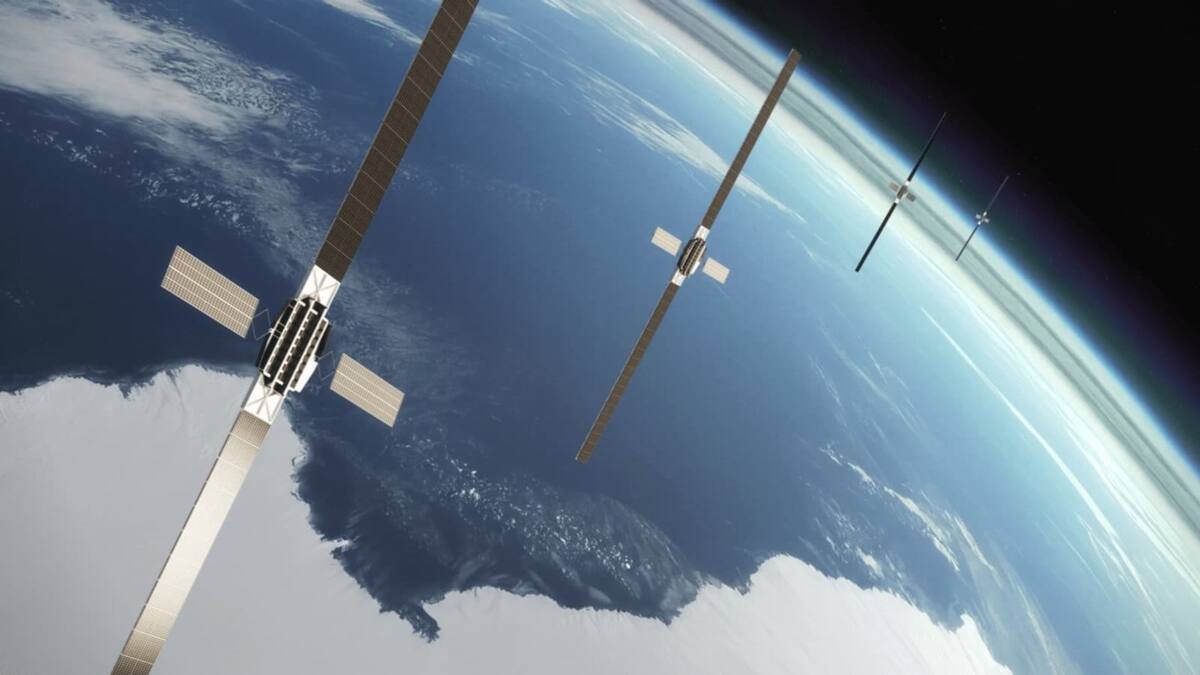
Orbital data centers are back in the argument over where the next generation of computing will live, and their supporters are making a very specific case: today’s objections sound a lot like the early doubts that once greeted the internet itself. The pitch is simple enough. Yes, putting servers in space looks expensive, awkward, and slightly unhinged. But so did a lot of infrastructure before it became boringly essential.
The core problem is still money. Launching hardware, shielding it from radiation, cooling it, and keeping it running without a human nearby creates a cost structure that is nowhere near terrestrial data centers. That is the part skeptics keep returning to, and for good reason: space does not care about optimism.
Why orbital data centers are being discussed now
The renewed interest has less to do with sci-fi vanity than with where data is being created. More satellite constellations, more defense systems, and more scientific missions mean more information is born in orbit in the first place. If that trend continues, processing data closer to the source starts to look less like a stunt and more like logistics.
There is also a familiar technology pattern at work. In the 1990s, plenty of smart people argued that the internet would not matter much, could not scale reliably, or would never replace older media. That prediction aged about as well as dial-up speed tests. Supporters of orbital data centers are banking on a similar payoff: once production scales and launches become routine, the economics may look very different from the first ugly spreadsheets.
The modular architecture pitch
The proposed model is modular by design. Standardized computing blocks would combine power systems, processors, radiation protection, and thermal radiators, then expand through repeated launches rather than through endless ground construction. In other words, the unit of scale is no longer a concrete campus tied to a power grid; it is a stream of manufactured modules sent into orbit.
- Compute happens near satellite-generated data
- Expansion comes from repeated launches of standard modules
- The main bottlenecks are production speed, launch frequency, and autonomous reliability
That is a clever idea, and also a brutally difficult one. Current limits – launch cost, autonomous cooling, and in-orbit repair – are not minor engineering glitches. They are the whole game. Still, terrestrial data centers are not exactly friction-free either: land, power, and permits slow them down in ways that are easy to forget until a new build gets stuck in paperwork.
The bet on scale versus gravity
The real wager is not that orbit is cheaper today. It is that industrial repetition can change the equation, just as it did for network hardware, cloud services, and the rest of the digital stack. If orbital platforms eventually become a standard layer of infrastructure, the early skepticism will look less like prudence and more like the usual reflex to dismiss expensive new systems before they become ordinary.
For now, the question is whether space computing can move from a neat architecture slide to a dependable production system. If launch rates rise and hardware gets easier to mass-produce, orbital data centers could become a niche for processing the data that never needed to come home in the first place. If not, they will stay what they are now: a high-orbit answer to a very grounded problem.