

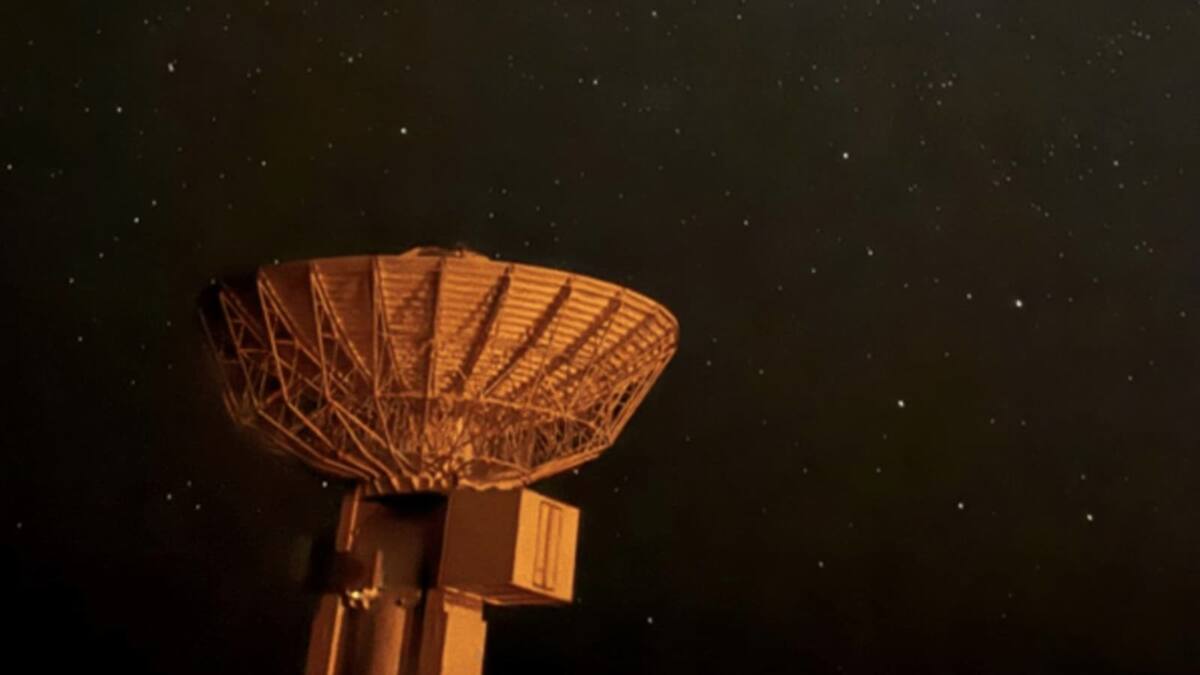
Australia is being pitched as much more than a launch site. With the first DARC radar in Western Australia already sending early tracking data to AUKUS partners, analysts say the country could become the alliance’s southern anchor for space launches, heavy-lift logistics, Starship operations, and even the industrial plumbing behind future Moon and Mars missions.
The idea is not as far-fetched as it sounds. Australia has long sold itself as a reliable defense partner, but it also brings something rarer: vast low-density land, ocean access, mineral wealth, and northern launch regions that sit close enough to the equator to make rockets slightly more efficient. Space policy tends to follow physics before politics, and Australia has both on its side.
DARC puts Western Australia on the map
The Deep Space Advanced Radar Capability is being built by the United States, the United Kingdom, and Australia to monitor deep-space objects and track potential threats to satellite infrastructure. Its first site in the Pilbara region has started producing preliminary monitoring data, with full readiness expected by 2027. That gives AUKUS something it has often lacked in space: a concrete asset, not just a press release with ambitions.
The radar network also hints at a broader shift. Rather than concentrating every sensitive space function in one place, allies are increasingly talking about distributed capacity that can keep operating if one site goes offline. In a world where satellites are now strategic targets, redundancy is a feature, not a luxury.
Why northern Australia matters for launches
If the south is about sensing, the north is about sending. Cape York and Arnhem Land sit close enough to the equator to give rockets an extra boost from Earth’s rotation, which is exactly why launch companies obsess over latitude. For heavy payloads and interplanetary missions, those small gains add up quickly.
That geography is why Australia keeps showing up in conversations about new spaceports, rocket manufacturing, and recovery operations. SpaceX has already looked at options for returning and landing Starship near Australia’s coast, and in theory the vehicle could be towed to ports in the Pilbara for servicing before flying again. Not exactly a casual weekend road trip, but the logic is hard to ignore.
Minerals, ports and the AUKUS second pillar
Australia’s case gets stronger when you zoom out from rockets to supply chains. It produces almost half of the world’s lithium and remains a major supplier of rare earths and iron ore, all of which matter for batteries, satellites, electronics, and space hardware. Port Hedland, a deep-water port already tied to heavy industry, is being floated as a future hub for servicing large space systems. That is the sort of crossover between mining and aerospace that only sounds weird until you look at the bill.
There is also a military logic here. AUKUS Pillar 2 covers joint work on hypersonics, AI, autonomous systems and quantum technologies, and some advocates want a three-way working group focused on southern-hemisphere space logistics. The pitch is not to replace American space infrastructure, but to back it up with a partner network that can absorb shocks and keep missions moving.
- First DARC site: Pilbara, Western Australia
- Full DARC readiness: 2027
- Promising launch regions: Cape York and Arnhem Land
- Key resources: lithium, rare earths and iron ore
The open question is how far this goes beyond strategic talk. If the alliance decides that resilience matters as much as speed, Australia could end up with a space role that looks less like a regional outpost and more like a permanent southern command node. If not, the country will still have the radar, the minerals, and the geography – which is a pretty solid fallback.