

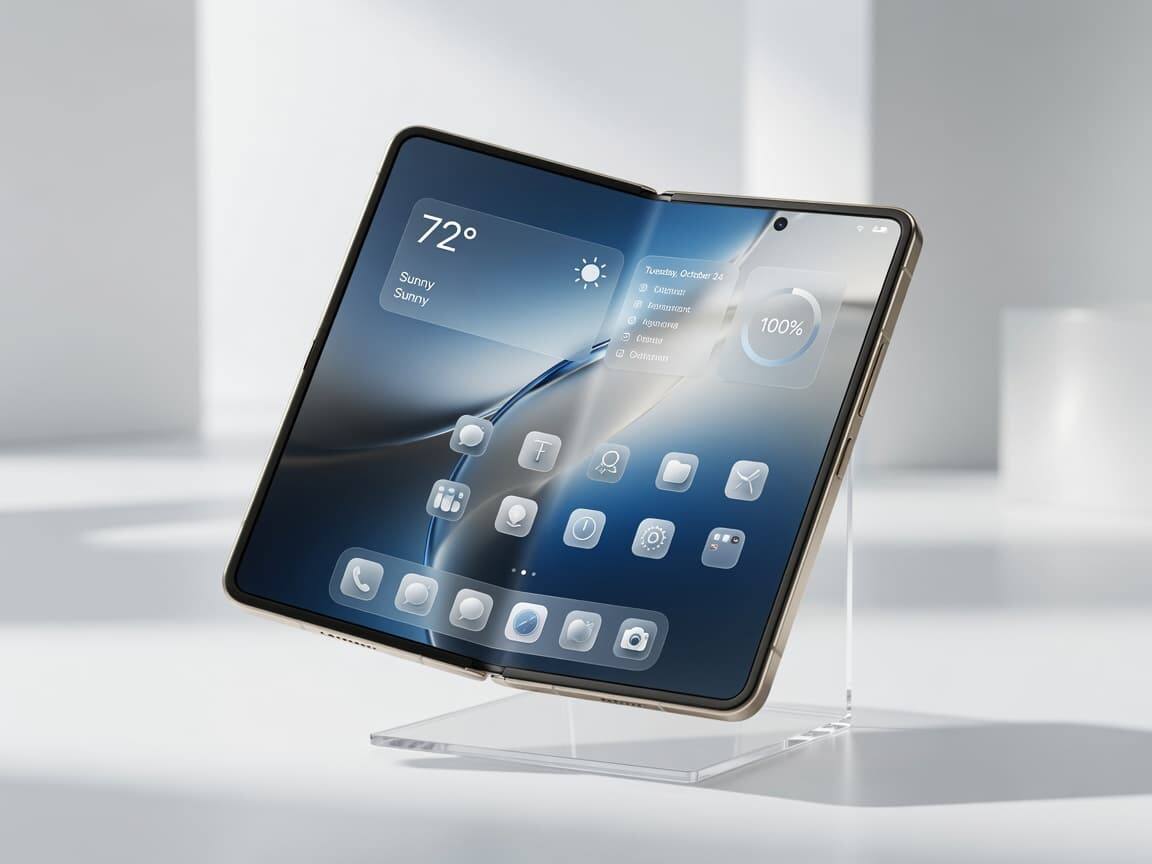
Oppo is testing a new wide-format foldable flagship that sounds less like a niche experiment and more like a straight shot at the premium end of the market: a first model with a 7.6-inch main display, a 5.5-inch cover screen, Snapdragon 8 Elite Gen 6, and a price expected to sit above 10,000 yuan, or about $1,500. It is due to debut in the first quarter of next year, and the spec sheet is clearly built to make rivals sweat a little.
The device is being positioned as Oppo’s answer to a more compact folding phone rather than the tall, narrow style that dominates much of the category. That matters because the real fight in foldables has shifted from ”can it fold?” to ”can people actually live with it?” Oppo seems to think the answer is yes – if it keeps the footprint close to the rumored iPhone Ultra-style foldable idea and loads it with enough battery and protection to survive real-world use.
Oppo’s foldable display sizes and hardware
According to the available details, the new phone pairs BOE and Samsung panels with a design aimed at one-handed use when folded. That is a sensible play: Samsung still owns much of the foldable conversation, while Chinese panel makers have been steadily closing the gap in brightness, durability, and production scale. The size combo also puts Oppo in a smaller club of foldables that try to feel like a normal phone first and a tablet second.
- Main display: 7.6 inches
- Cover display: 5.5 inches
- Chipset: Snapdragon 8 Elite Gen 6
- Battery: about 6000 mAh
- Extras: wireless charging, side fingerprint scanner, maximum water resistance
Battery, water resistance, and the premium price tag
The battery figure is the quiet headline here. Around 6000 mAh is hefty for a foldable, and if Oppo can keep that capacity without turning the phone into a brick, it would solve one of the category’s oldest annoyances: elegant hardware that taps out too early. Add wireless charging and stronger water resistance, and Oppo is clearly chasing buyers who want fewer compromises, not more gimmicks.
That premium ambition comes with a premium bill. Pricing above 10,000 yuan puts the device firmly in ultra-expensive territory, where Samsung, Honor, and Huawei have been competing for the same customers with increasingly polished foldables. Oppo’s gamble is straightforward: if the phone feels smaller in the hand, lasts longer on a charge, and survives splashes better than the competition, some buyers will pay the tax.
What Oppo is trying to fix
The broader trend is easy to spot. Foldables are no longer selling on novelty; they are selling on restraint. A device that is too tall, too fragile, or too thirsty looks dated fast, even if it has the fastest chip in the room. Oppo’s first wide-format model appears to be built around that lesson, and if the testing goes well, the first-quarter launch could make it one of the more interesting Android foldables to watch.