

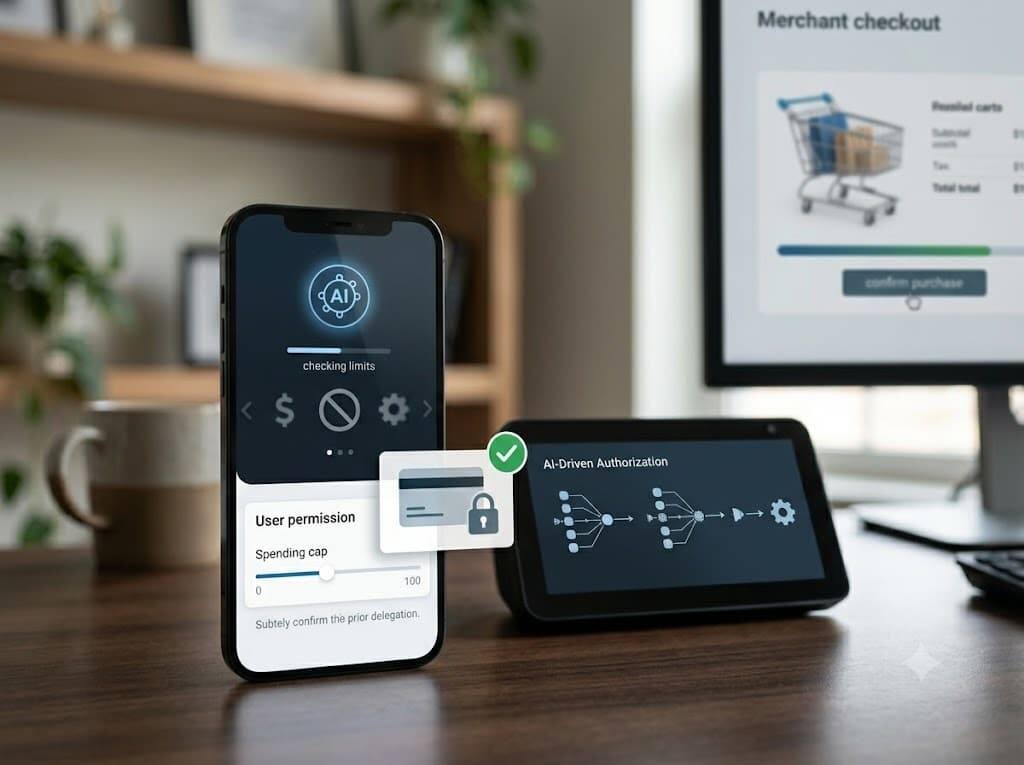
OpenAI and Visa are wiring payment infrastructure directly into AI agents, a move that could let models buy products, pay for services, and handle other transactions without asking a human to click ”approve” every time. The pitch is simple: the assistant stops being a shopping adviser and starts acting like a delegate, but with guardrails attached so users can still set spending limits, merchant restrictions, and approval rules.
That is the real shift here. Visa is effectively adapting its fraud checks, refunds, and chargeback systems for a new kind of customer: not a cardholder, but the cardholder’s software proxy. It is also a shrewd bet, because the company is moving early on the question every payments giant now faces – what happens when software, not people, becomes the buyer?
How Visa will plug into OpenAI agents
The companies say the system will include authorization controls, spending caps, and rules for when a payment must still be confirmed manually. Visa will handle the heavier lift on the financial side, including fraud screening, chargebacks, and returns. That matters because an AI agent that can spend money also needs a way to undo mistakes, and mistakes are exactly what software is good at making at speed.
The partnership is not just about consumer shopping, either. OpenAI and Visa say the same framework could be used for corporate expenses, business procurement, or technical workflows such as an agent paying for API usage, cloud compute, or inference services. In other words, this is as much about machine-to-machine commerce as it is about buying a pair of shoes while you are busy pretending to work.
Why payments companies are chasing AI agents
Visa says more than 20% of transactions are already influenced indirectly by model recommendations, even if the model is not the one actually paying. That gives the company a neat argument for why this step is overdue: the AI is already shaping the decision, so the payment stack might as well catch up. OpenAI’s side of the story is equally blunt – if agents are going to be useful, they need to do more than recommend restaurants and draft emails.
- Users can set spending limits.
- They can restrict merchant categories.
- Some transactions can still require manual approval.
- Visa keeps fraud detection, refunds, and chargebacks in the loop.
OpenAI Codex could be an early test case
One especially practical use case is OpenAI’s Codex ecosystem, where an agent could pay for extra API calls, cloud computing, or inference capacity within preset limits. That is the kind of workflow that can quietly save time and also quietly burn money if the guardrails are sloppy, which is probably why Visa and OpenAI keep stressing control rather than full autonomy.
The company line is that this is infrastructure first, product second. That sounds cautious, but it also leaves the door wide open for other platforms to build their own versions on top of the same rails. The open question is not whether agents will spend money – they already influence plenty of it – but how much trust users will hand over once software can complete the purchase on its own.