

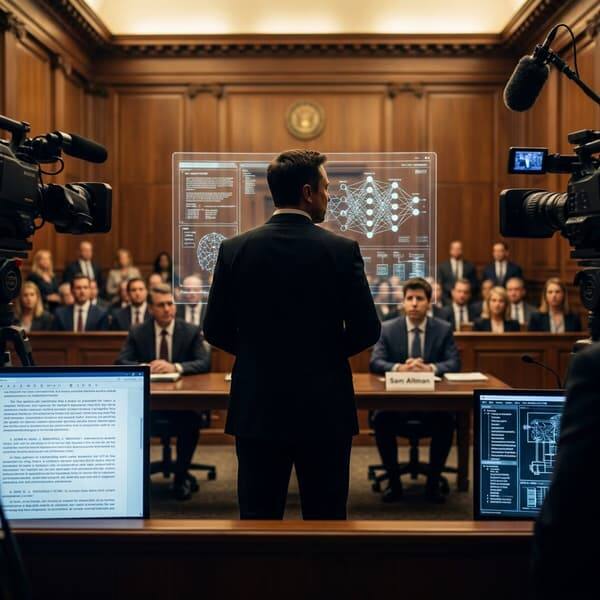
The courtroom theatrics were as much about power as contracts. Musk’s lawyers questioned Altman’s credibility, while OpenAI’s side mocked the idea that Musk’s reputation for turning entire industries upside down automatically made him right here. One lawyer even quipped that Musk’s ”Midas touch” does not work everywhere, especially not in AI.
OpenAI, Microsoft and the IPO question
OpenAI was founded in 2015 by Altman, Musk, and other entrepreneurs as a nonprofit, but Musk left the board in 2018 and the company set up a commercial arm in 2019 to attract funding. That sequence has become a playbook for the modern AI sector: start with a mission statement, then discover that building frontier models costs enough to make venture capital blush.
Now OpenAI is competing with Anthropic, Google DeepMind and xAI, Musk’s own AI company, while also reportedly considering an IPO that could value it at around $1 trillion. Musk, for his part, is also preparing possible public offerings for SpaceX and xAI, which means the rivalry is likely to keep moving from the lab to the capital markets. The next fight may not be about who owns the founding myth, but who gets to sell the future first.
The courtroom theatrics were as much about power as contracts. Musk’s lawyers questioned Altman’s credibility, while OpenAI’s side mocked the idea that Musk’s reputation for turning entire industries upside down automatically made him right here. One lawyer even quipped that Musk’s ”Midas touch” does not work everywhere, especially not in AI.
OpenAI, Microsoft and the IPO question
OpenAI was founded in 2015 by Altman, Musk, and other entrepreneurs as a nonprofit, but Musk left the board in 2018 and the company set up a commercial arm in 2019 to attract funding. That sequence has become a playbook for the modern AI sector: start with a mission statement, then discover that building frontier models costs enough to make venture capital blush.
Now OpenAI is competing with Anthropic, Google DeepMind and xAI, Musk’s own AI company, while also reportedly considering an IPO that could value it at around $1 trillion. Musk, for his part, is also preparing possible public offerings for SpaceX and xAI, which means the rivalry is likely to keep moving from the lab to the capital markets. The next fight may not be about who owns the founding myth, but who gets to sell the future first.
The courtroom theatrics were as much about power as contracts. Musk’s lawyers questioned Altman’s credibility, while OpenAI’s side mocked the idea that Musk’s reputation for turning entire industries upside down automatically made him right here. One lawyer even quipped that Musk’s ”Midas touch” does not work everywhere, especially not in AI.
OpenAI, Microsoft and the IPO question
OpenAI was founded in 2015 by Altman, Musk, and other entrepreneurs as a nonprofit, but Musk left the board in 2018 and the company set up a commercial arm in 2019 to attract funding. That sequence has become a playbook for the modern AI sector: start with a mission statement, then discover that building frontier models costs enough to make venture capital blush.
Now OpenAI is competing with Anthropic, Google DeepMind and xAI, Musk’s own AI company, while also reportedly considering an IPO that could value it at around $1 trillion. Musk, for his part, is also preparing possible public offerings for SpaceX and xAI, which means the rivalry is likely to keep moving from the lab to the capital markets. The next fight may not be about who owns the founding myth, but who gets to sell the future first.
The courtroom theatrics were as much about power as contracts. Musk’s lawyers questioned Altman’s credibility, while OpenAI’s side mocked the idea that Musk’s reputation for turning entire industries upside down automatically made him right here. One lawyer even quipped that Musk’s ”Midas touch” does not work everywhere, especially not in AI.
OpenAI, Microsoft and the IPO question
OpenAI was founded in 2015 by Altman, Musk, and other entrepreneurs as a nonprofit, but Musk left the board in 2018 and the company set up a commercial arm in 2019 to attract funding. That sequence has become a playbook for the modern AI sector: start with a mission statement, then discover that building frontier models costs enough to make venture capital blush.
Now OpenAI is competing with Anthropic, Google DeepMind and xAI, Musk’s own AI company, while also reportedly considering an IPO that could value it at around $1 trillion. Musk, for his part, is also preparing possible public offerings for SpaceX and xAI, which means the rivalry is likely to keep moving from the lab to the capital markets. The next fight may not be about who owns the founding myth, but who gets to sell the future first.
The courtroom theatrics were as much about power as contracts. Musk’s lawyers questioned Altman’s credibility, while OpenAI’s side mocked the idea that Musk’s reputation for turning entire industries upside down automatically made him right here. One lawyer even quipped that Musk’s ”Midas touch” does not work everywhere, especially not in AI.
OpenAI, Microsoft and the IPO question
OpenAI was founded in 2015 by Altman, Musk, and other entrepreneurs as a nonprofit, but Musk left the board in 2018 and the company set up a commercial arm in 2019 to attract funding. That sequence has become a playbook for the modern AI sector: start with a mission statement, then discover that building frontier models costs enough to make venture capital blush.
Now OpenAI is competing with Anthropic, Google DeepMind and xAI, Musk’s own AI company, while also reportedly considering an IPO that could value it at around $1 trillion. Musk, for his part, is also preparing possible public offerings for SpaceX and xAI, which means the rivalry is likely to keep moving from the lab to the capital markets. The next fight may not be about who owns the founding myth, but who gets to sell the future first.
The courtroom theatrics were as much about power as contracts. Musk’s lawyers questioned Altman’s credibility, while OpenAI’s side mocked the idea that Musk’s reputation for turning entire industries upside down automatically made him right here. One lawyer even quipped that Musk’s ”Midas touch” does not work everywhere, especially not in AI.
OpenAI, Microsoft and the IPO question
OpenAI was founded in 2015 by Altman, Musk, and other entrepreneurs as a nonprofit, but Musk left the board in 2018 and the company set up a commercial arm in 2019 to attract funding. That sequence has become a playbook for the modern AI sector: start with a mission statement, then discover that building frontier models costs enough to make venture capital blush.
Now OpenAI is competing with Anthropic, Google DeepMind and xAI, Musk’s own AI company, while also reportedly considering an IPO that could value it at around $1 trillion. Musk, for his part, is also preparing possible public offerings for SpaceX and xAI, which means the rivalry is likely to keep moving from the lab to the capital markets. The next fight may not be about who owns the founding myth, but who gets to sell the future first.
- Musk said he invested about $38 million in the project.
- The case was filed in 2024.
- The trial lasted 11 days.
- The jury deliberated for less than two hours.
- Microsoft said it has invested more than $100 billion in its OpenAI partnership.
The courtroom theatrics were as much about power as contracts. Musk’s lawyers questioned Altman’s credibility, while OpenAI’s side mocked the idea that Musk’s reputation for turning entire industries upside down automatically made him right here. One lawyer even quipped that Musk’s ”Midas touch” does not work everywhere, especially not in AI.
OpenAI, Microsoft and the IPO question
OpenAI was founded in 2015 by Altman, Musk, and other entrepreneurs as a nonprofit, but Musk left the board in 2018 and the company set up a commercial arm in 2019 to attract funding. That sequence has become a playbook for the modern AI sector: start with a mission statement, then discover that building frontier models costs enough to make venture capital blush.
Now OpenAI is competing with Anthropic, Google DeepMind and xAI, Musk’s own AI company, while also reportedly considering an IPO that could value it at around $1 trillion. Musk, for his part, is also preparing possible public offerings for SpaceX and xAI, which means the rivalry is likely to keep moving from the lab to the capital markets. The next fight may not be about who owns the founding myth, but who gets to sell the future first.
Elon Musk has lost his lawsuit against OpenAI, with a federal court in Oakland ruling that his claims came too late and that the company is not legally liable for the grievances he brought. The ruling means Musk’s challenge to OpenAI’s shift from nonprofit ideals to a commercial AI giant will not move forward.
The dispute stretched far beyond one billionaire’s bruised ego. At stake was whether OpenAI drifted from its original nonprofit mission into a profit-seeking machine powered by huge outside money, and whether that shift violated the understanding that brought Musk into the project in the first place. The court said no, at least for the purposes of this case.
Why the court sided with OpenAI
Musk filed the suit in 2024, arguing that OpenAI, Sam Altman, and Greg Brockman broke the original arrangement by turning a nonprofit into a commercial business and bringing in tens of billions of dollars from Microsoft and other partners. He said he had been persuaded to put in about $38 million for a system meant to build safe AI for the public good, only to be edged out as the structure changed.
OpenAI’s response was simple: Musk waited too long. That defense matters because the AI sector has moved from idealistic lab talk to a capital race where every major player is raising or planning to raise absurd sums, and courts are generally not fond of retroactive regret. OpenAI also argued that the industry’s transformation into a market with hundreds of billions of dollars in investment made the timing especially awkward for Musk’s claims.
The numbers behind the feud
- Musk said he invested about $38 million in the project.
- The case was filed in 2024.
- The trial lasted 11 days.
- The jury deliberated for less than two hours.
- Microsoft said it has invested more than $100 billion in its OpenAI partnership.
The courtroom theatrics were as much about power as contracts. Musk’s lawyers questioned Altman’s credibility, while OpenAI’s side mocked the idea that Musk’s reputation for turning entire industries upside down automatically made him right here. One lawyer even quipped that Musk’s ”Midas touch” does not work everywhere, especially not in AI.
OpenAI, Microsoft and the IPO question
OpenAI was founded in 2015 by Altman, Musk, and other entrepreneurs as a nonprofit, but Musk left the board in 2018 and the company set up a commercial arm in 2019 to attract funding. That sequence has become a playbook for the modern AI sector: start with a mission statement, then discover that building frontier models costs enough to make venture capital blush.
Now OpenAI is competing with Anthropic, Google DeepMind and xAI, Musk’s own AI company, while also reportedly considering an IPO that could value it at around $1 trillion. Musk, for his part, is also preparing possible public offerings for SpaceX and xAI, which means the rivalry is likely to keep moving from the lab to the capital markets. The next fight may not be about who owns the founding myth, but who gets to sell the future first.