• 3 min read
Apple may lift OLED notebook growth while phones cool
Apple is shaping up to be the bright spot in the OLED market, which is losing steam elsewhere. A new Counterpoint Research forecast says OLED notebook shipments should grow 33% in 2026, helped by Apple’s expected move to
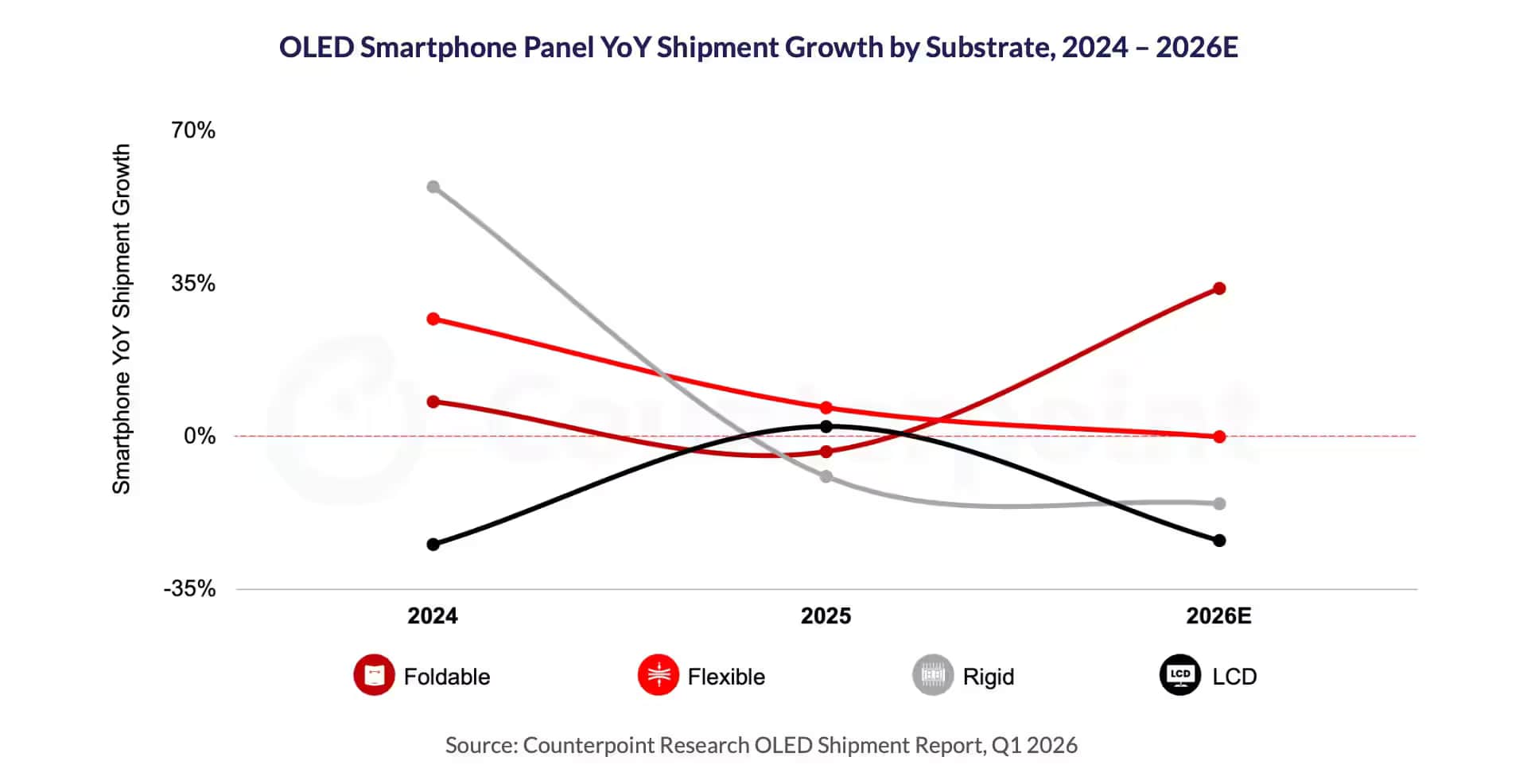
Image: 9to5Mac
Apple is shaping up to be the bright spot in the OLED market, which is losing steam elsewhere. A new Counterpoint Research forecast says OLED notebook shipments should grow 33% in 2026, helped by Apple’s expected move to OLED MacBook Pro models, even as smartphone demand gets squeezed by higher memory prices and softer buying.
That split tells the story: premium laptops are still a place where display upgrades can survive a cost crunch, while phones are much more exposed to shoppers balking at pricier hardware. In other words, OLED is not dying – it is just becoming pickier about where it grows.
Smartphone OLED growth gets cut back
Counterpoint trimmed its 2026 outlook for several smartphone OLED categories. Foldable OLED panels are now expected to grow 34% year over year, down from an earlier 46% forecast, while flexible OLED smartphone panels are projected to be flat after a prior estimate of 2% growth.
Rigid OLED panels took the hardest hit: the firm now expects a 15% year-over-year decline, versus an earlier call for flat growth. The pressure point is higher memory prices, which make it harder for phone makers to absorb display costs without passing them on to buyers.
MacBook Pro OLED could steer notebook demand
Notebook PCs are a different story. Counterpoint says Apple’s upcoming transition to OLED in MacBook Pro models should help drive 33% growth in the segment, alongside continued expansion of premium AI PCs, where higher average selling prices help offset rising memory costs.

Recommended reading
Samsung’s July 22 event points to three new foldables
That is a neat workaround for the display industry: if phones are sensitive to every extra dollar, laptops can still justify a pricey panel when the rest of the machine is already in premium territory. Apple has done this before with technologies that spread from its top-end Macs to the broader market, and OLED looks set to follow the same script, just with more expensive ingredients.
OLED monitors, tablets and cars keep the wider market afloat
Look beyond phones and notebooks, and the overall OLED market still looks basically flat in 2026. Counterpoint expects gains in OLED monitors, tablets, and automotive displays to be offset by softness in smartphones.
- OLED notebooks: 33% growth
- Foldable smartphone OLED panels: 34% growth
- Flexible smartphone OLED panels: flat
- Rigid smartphone OLED panels: 15% decline
- OLED monitors: 45% growth
- OLED tablets: 13% growth
Those numbers make one thing clear: OLED is not broadening evenly anymore. It is tilting toward expensive devices where buyers tolerate premium pricing, which is great for panel makers serving Apple and high-end PC brands, and a little less cheerful for anyone hoping phones alone would carry the whole category.
Apple’s OLED timing could decide the pace
The open question is how quickly Apple’s OLED MacBook rollout lands, and how much of that demand shows up in 2026 rather than later. If the transition is smooth, notebook panels could become one of the strongest parts of the OLED business; if it slips, the market’s growth story gets thinner fast.

Gadgets Editor
Eli is obsessed with the tangible future. He reviews phones, wearables, and everything with a battery. Known for his rigorous testing protocols and unabashed teardowns, Eli has broken more review units than he cares to admit, all in the name of discovering the truth about durability and repairability.
via 9to5Mac