

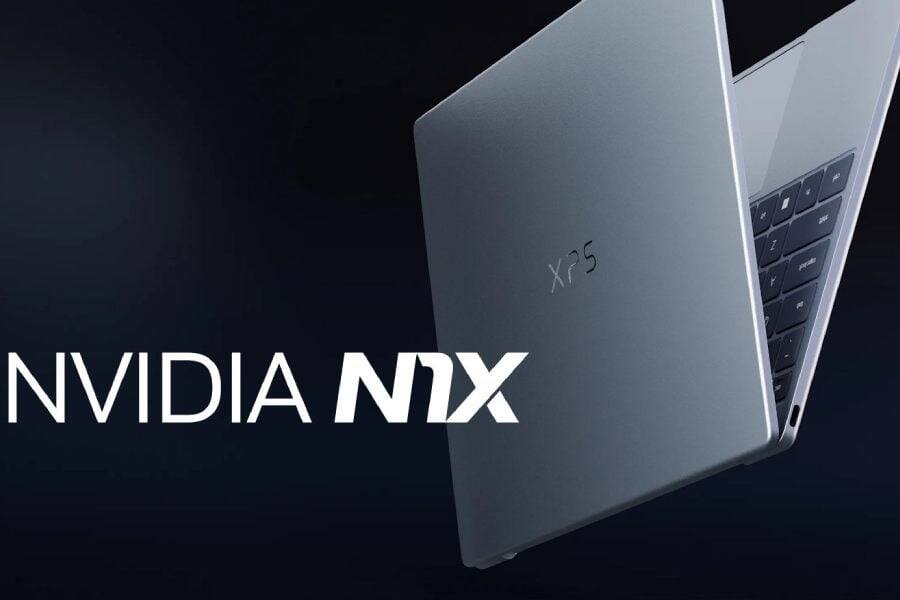
Nvidia is heading into Computex with what looks less like a teaser and more like a full-blown ambush: detailed specifications for its first Arm-based PC chips have leaked, including the N1 and N1X families. If the documents are real, Nvidia is not just joining Windows on Arm – it is arriving with enough CPU muscle and Blackwell graphics to make Qualcomm and even Intel pay attention.
The leak points to at least four variants spread across premium and mainstream laptops, with the biggest parts aimed squarely at high-performance machines rather than featherweight ultrabooks. That tracks with Nvidia’s usual playbook: don’t enter a market quietly, enter it with too many cores and a GPU that wants to show off.
N1X aims at laptops that usually carry Intel H-class chips
The headline act is the N1X. The top version is said to use 20 CPU cores split between ten Cortex-X925 performance cores and ten Cortex-A725 efficiency cores, plus a Blackwell 2.0 GPU with 48 Streaming Multiprocessors, or 6,144 CUDA cores. A second N1X variant reportedly drops to 18 CPU cores and a 40-SM GPU with 5,120 CUDA cores.
Both chips are listed with a 45W to 80W power range, but that figure covers the whole package, CPU and GPU together. In other words, Nvidia is not pretending this is a tiny fanless experiment. It is aiming at the kind of laptop that competes on sustained performance, not just battery-life bragging rights.
Standard N1 chips target thinner laptops
The regular N1 family looks more mainstream. One variant combines eight Cortex-X925 performance cores and four Cortex-A725 efficiency cores with a 20-SM GPU rated at 2,560 CUDA cores. The lower-end option steps down to ten CPU cores – seven performance and three efficiency – and a 16-SM GPU with 2,048 CUDA cores.
- N1X: up to 20 CPU cores and a 48-SM Blackwell 2.0 GPU
- Trimmed N1X: 18 CPU cores and a 40-SM GPU
- Standard N1: 12 CPU cores and a 20-SM GPU
- Entry N1: 10 CPU cores and a 16-SM GPU
All of the standard N1 chips sit in an 18W to 45W envelope, which makes them far more plausible for thin laptops and lower-cost designs. That is also where Windows on Arm has historically needed the most help: not in flashy demos, but in machines people can actually buy without selling a kidney.
Memory and storage tell the real story
The memory and storage limits make the split between the two families even clearer. N1X reportedly supports up to 128GB of LPDDR5X memory across a 16-channel interface and up to three M.2 SSDs. The standard N1 tops out at 64GB, uses an 8-channel setup, and supports two M.2 drives.
That kind of configuration suggests Nvidia is thinking beyond simple ”Arm laptop” checkboxes. It wants workstation-class credibility on the high end and a cleaner, more affordable story on the low end – a familiar strategy in PCs, where the chip that wins headlines is often not the chip that wins volume.
A leak that suggests Nvidia has been planning for a while
VideoCardz says at least one of the leaked slides is dated 2024, which hints that Nvidia has been building this effort for two years or more. That is not unusual for a serious platform push: by the time a chip shows up on stage, the roadmap is usually already old enough to vote.
Not every part in a leaked roadmap survives to launch, of course, and some variants may disappear quietly. But if these specs hold, Nvidia’s first Arm PC chips will do something Qualcomm has managed only partially so far: make Windows on Arm look less like a compromise and more like a fight.