

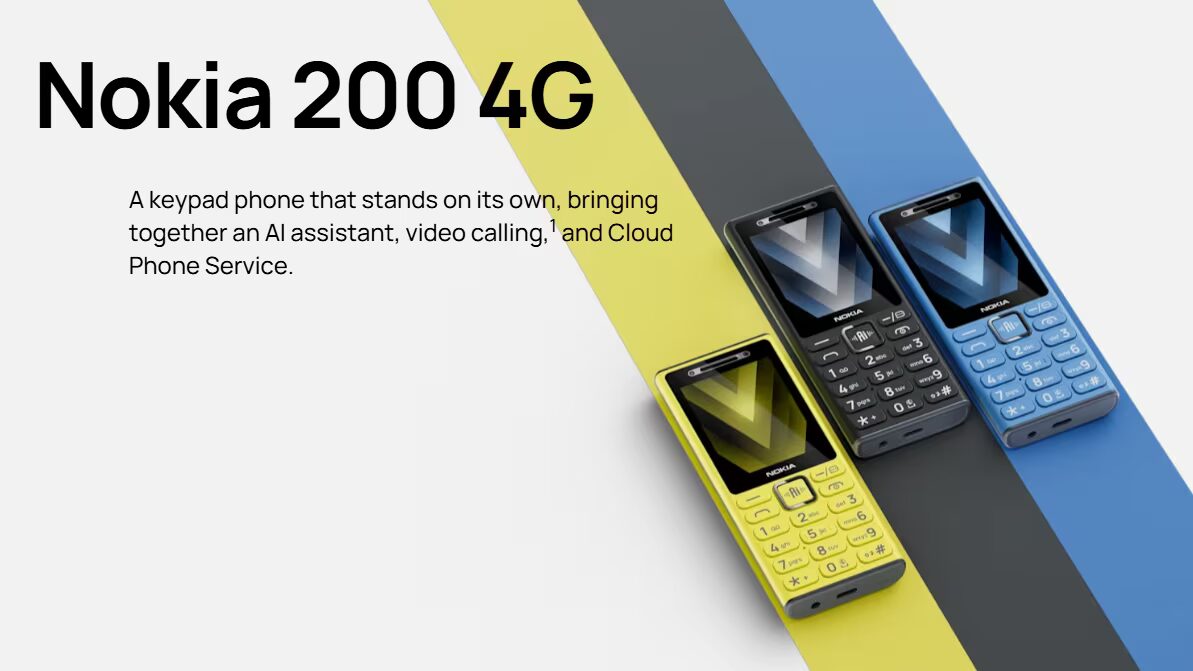
HMD Global has quietly expanded its lineup of Nokia feature phones with four new 4G models that blend classic keypad design with smartphone-style AI features. The Nokia 210 4G, 235 4G 2nd Edition, 215 4G 2nd Edition, and 200 4G all include a dedicated AI button, cloud services, and USB-C charging-a notable upgrade for devices typically known for simplicity.
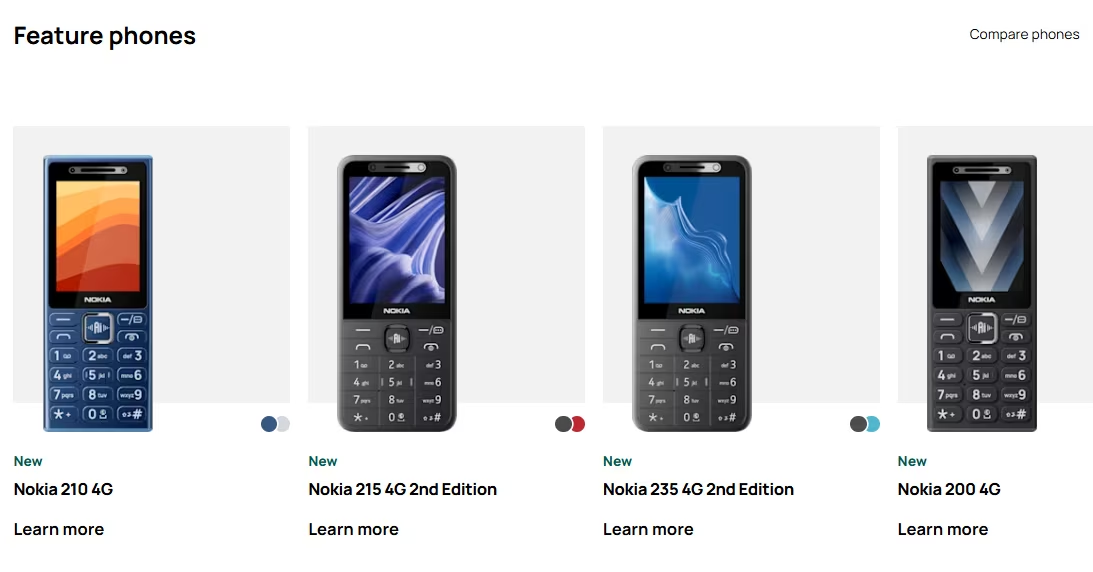
The standout feature is the new AI key on the navigation pad, which launches the Sikey AI voice assistant running directly on the device. This assistant lets users toggle the flashlight, open the camera, set alarms or reminders, make calls, and ask simple questions-all without digging through menus.
AI features are free for 180 days, after which HMD will switch to a subscription model. Alongside AI, these Nokia feature phones tap into cloud services to stream videos, weather updates, sports scores, and other content without using up internal storage. It’s a rare middle ground-devices that look like basic feature phones but aren’t fully offline anymore.
Nokia feature phones specs overview
- Models: Nokia 210 4G, 235 4G 2nd Edition, 215 4G 2nd Edition, 200 4G
- Dedicated Sikey AI button
- Screen sizes: 2.8-inch on 215 and 235; 2.4-inch on 210 and 200
- Battery capacity: 1,450 mAh
- Operating system: S30+
- USB-C charging, FM radio, and 3.5mm headphone jack
- Xpress Chat app with video calling support
- Camera options: VGA and 2 megapixels depending on model
The screen and camera specs follow a predictable pattern: the 215 and 235 models feature 2.8-inch displays, while the 210 and 200 have 2.4-inch panels. Cameras vary between VGA and 2 megapixels, depending on the model. Meanwhile, practical touches like wired headphone support, USB-C charging, FM radio, and the classic 3.5mm port remain intact. In Europe, USB-C charging becomes mandatory after 2024, so this feature keeps these phones up to date.
Visually, HMD sticks to Nokia’s tried-and-true formula-durable monoblocks with physical keyboards-enhanced with cleaner finishes and metal accents around the camera and speaker. These phones target users who want a straightforward device for calls and long battery life, either as their main phone or a reliable backup.
HMD’s focus on reviving the feature phone category is more than nostalgia. The ”smart” feature phone concept isn’t new-KaiOS-powered devices like the Nokia 8110 4G and JioPhone previously brought apps like WhatsApp and YouTube to keypad phones. Now, AI takes center stage with a dedicated button, highlighting how feature phones can edge closer to smartphones without losing their simplicity.
HMD hasn’t announced pricing or specific target markets yet, but if these Nokia feature phones remain close to the price range of typical 4G feature phones, they could find traction in regions like India, Africa, and areas where secondary phones are common. In these places, affordability, reliable connectivity, and multi-day battery life often matter more than high-resolution cameras or app ecosystems.
Going forward, it will be interesting to see if integrating AI assistants into feature phones becomes a wider trend or stays a niche experiment. Can a simple AI button bring meaningful convenience to people who prefer minimal devices? And how will subscription fees influence adoption in price-sensitive emerging markets? The next wave of Nokia’s feature phones might offer a glimpse of low-cost AI computing outside the smartphone bubble.