

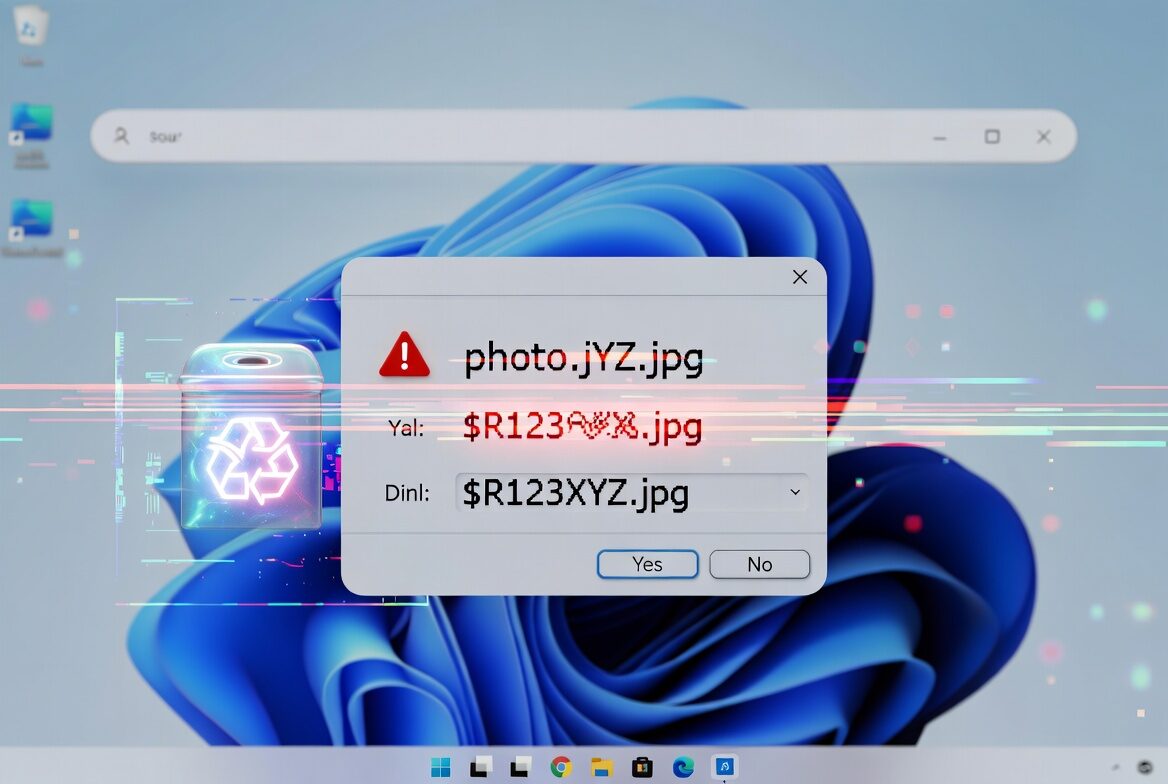
Microsoft has confirmed a new Windows bug that shows the wrong file names in the Recycle Bin delete prompt after the June update KB5094126, but the good news is that it is only a visual glitch. The files themselves are fine, restores still work, and the messy-looking technical names do not mean your documents have suddenly gone feral.
The Windows Recycle Bin bug affects all current versions of Windows, including client and server editions. In the confirmation dialog for deleting files, users may see internal names such as ”$R12345.docx” instead of the friendly name they actually know, like ”report.docx”. Microsoft says the Recycle Bin list itself still displays filenames correctly, which is a small mercy for anyone who enjoys not being gaslit by their own operating system.
What the Windows Recycle Bin bug changes
This is not a data-loss problem, and it does not break the Recycle Bin’s core functions. The file returns under its real name when restored, and its contents are untouched. So the damage is limited to one dialog box, which is exactly the sort of weird, confidence-draining bug that makes users suspicious of everything else on screen.
Microsoft says it is working on a fix that will arrive in a future cumulative update. For business customers who need an immediate workaround, the company is offering one through Microsoft support, while regular users are stuck doing the least glamorous thing in tech: waiting.
Why Microsoft is treating this as a low-risk issue
The classification makes sense. A cosmetic bug in a delete prompt is annoying, but it is not the sort of failure that sends IT departments into incident-response mode. It also fits a familiar pattern: Windows updates often surface odd interface regressions before they produce anything more serious, and Microsoft typically pushes those fixes through the next servicing round rather than rushing out a separate patch.
For enterprises, the bigger headache is perception. When a basic system dialog looks wrong, users assume something is broken deeper in the stack, even if the filesystem is behaving normally. Microsoft’s temporary workaround is aimed at organizations, which suggests the company expects the issue to be more irritating at scale than dangerous in practice.
What users should expect next
Home users do not have much to do except keep an eye on the next cumulative update. If Microsoft moves quickly, the bug will disappear quietly and join the long Windows tradition of tiny UI failures that were real, reproducible, and deeply unhelpful. If not, the Recycle Bin will keep reminding everyone that even a delete confirmation can get its naming wrong.