

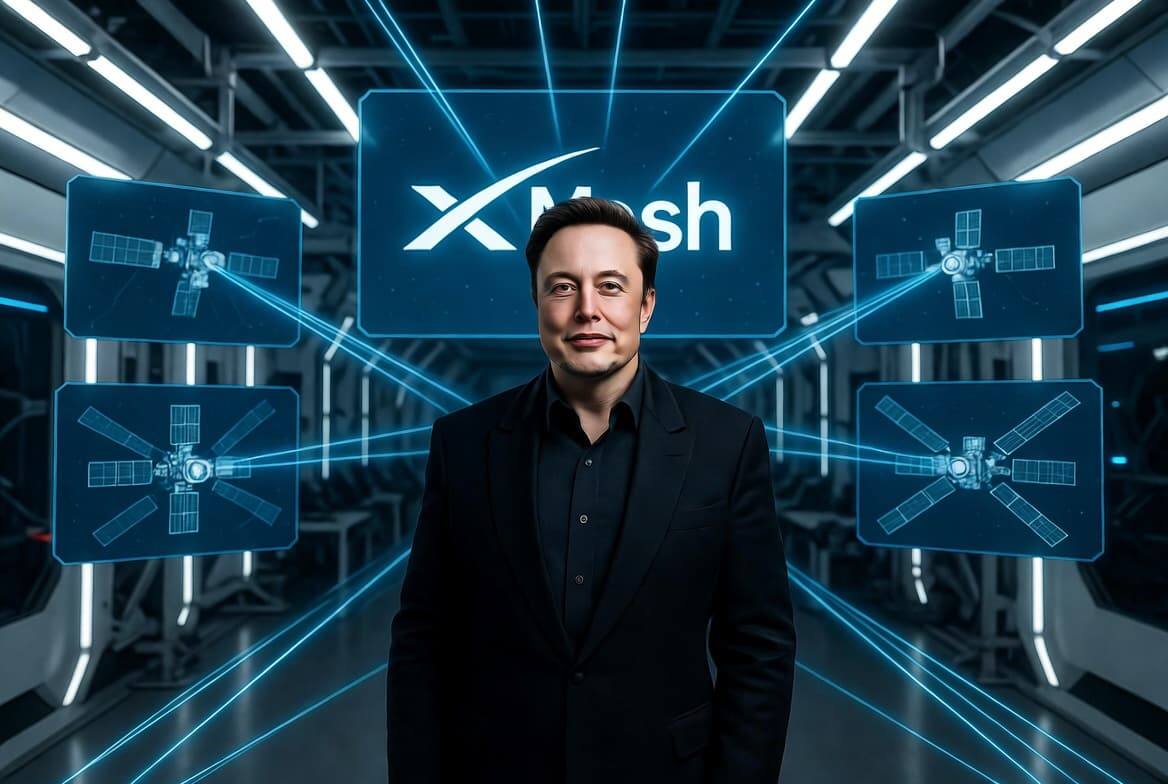
Elon Musk has cleared a regulatory hurdle to buy Mesh Optical Technologies, a startup founded by former SpaceX engineers who worked on the laser links that help Starlink satellites talk to each other. Mesh is not building consumer gadgets or a flashy AI demo; it is building optical transceivers for data centers, a market where lower latency and better energy efficiency can matter more than marketing gloss.
The company only raised $50 million from Thrive Capital in February, which makes the acquisition look fast even by Silicon Valley standards. It also raises a familiar question: how much of the startup’s value was always tied to SpaceX-adjacent expertise, and how much was a standalone bet on optical networking? The answer is usually uncomfortable for founders and convenient for the buyer.
What Mesh actually builds
Mesh’s core product is an optical transceiver that uses light to send and receive data between data centers. The company says the approach is more energy-efficient and has lower latency than existing options, which is the sort of claim that gets serious operators interested and everyone else reaching for a benchmark chart.
- Product: optical transceivers
- Use case: data-center communications
- Claimed advantages: lower latency and better energy efficiency
SpaceX talent keeps circling back
The founders came out of SpaceX work on laser communication for Starlink, so this is less a random shopping spree than a reunion with a new corporate logo. That matters because space-and-networking hardware is becoming an increasingly small club: the same engineering teams that built one fast, reliable optical system are now being courted to build the next one.
Mesh has also said it is interested in deploying its technology in space, which neatly overlaps with Musk’s latest ambitions. SpaceX recently introduced its first space data center satellite, code-named AI1, and the company is building a new 1 million-square-meter factory to make those satellites. If the orbital computing business grows, it will almost certainly need the same sort of laser-linked communications Mesh was born around.
Starmind, AI1 and the orbital compute race
SpaceX’s future system of data centers has reportedly been given the name Starmind, and it is expected to use laser links between satellites, just like Starlink. Musk has already said these orbital AI data centers should be much simpler to build than Starlink communications satellites, which sounds optimistic in the way only a launch company can manage.
The acquisition suggests SpaceX wants more control over the hardware stack before rivals do. Optical networking is one of those unglamorous layers that becomes very glamorous the moment bandwidth gets expensive, and the companies that can combine terrestrial data-center know-how with space-grade engineering may have a real edge if Musk’s orbital AI plans keep moving.
The open question is whether Mesh becomes a standalone product line inside Musk’s empire or just another internal supplier feeding SpaceX’s own ambitions. Either way, the buying pattern is clear: if the future depends on light-speed links, Musk seems determined to own as much of the light as possible.