

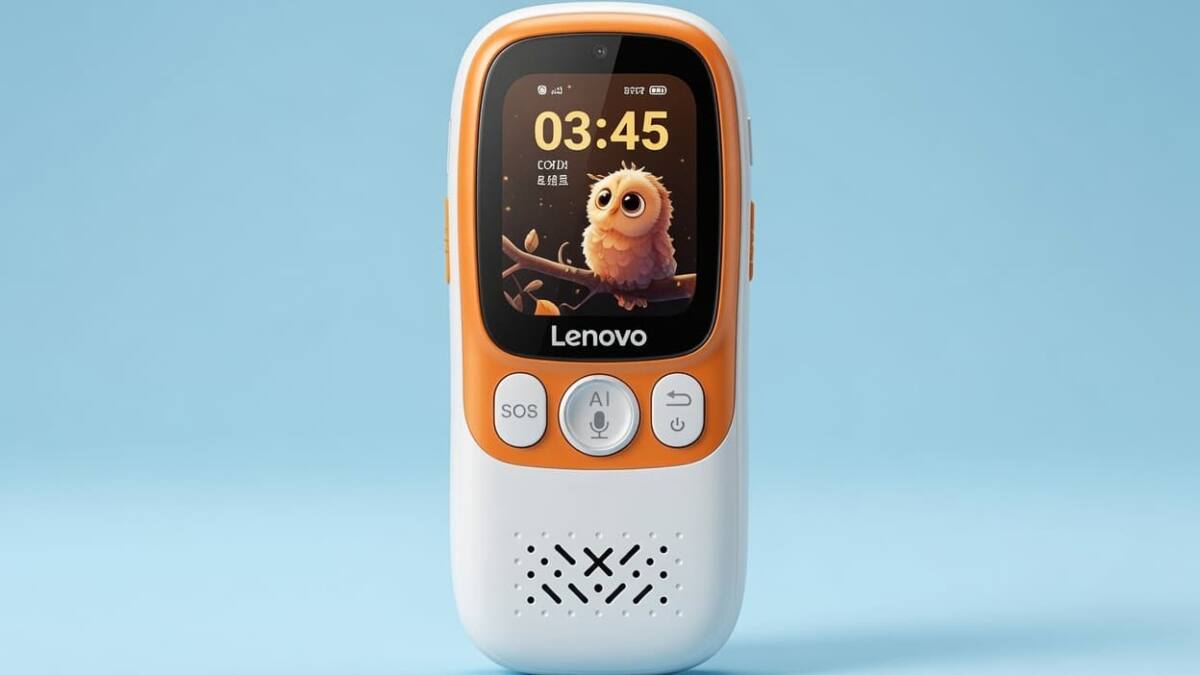
Lenovo has launched the AI Student Phone in China for schoolchildren, and it costs 299 yuan, or about $44. The compact handset is built around simplified software, an AI helper button, and parental controls instead of the usual parade of games and distractions.
That pitch is clear: make a phone that behaves more like a supervised tool than a pocket entertainment machine. It also fits a broader trend in youth devices, where manufacturers are increasingly selling safety and focus as features, because a basic handset with decent controls is easier to defend to parents than another miniature smartphone clone.
Lenovo AI Student Phone price and launch
The device is already on sale in China through JD.com. Lenovo has set the price at 299 yuan, which puts it well below the cost of most mainstream smartphones and even many rugged feature phones once add-ons are included. For that money, the company is betting that parents will accept fewer apps in exchange for more control.
Lenovo is not alone in chasing this niche. Schools and parents have been pushing back against always-online phones for years, and manufacturers have responded with kid-focused models that restrict browsing, limit contacts, or add monitoring tools. Lenovo’s version goes a step further by making distraction reduction part of the product’s identity rather than an optional setting buried in a menu.
Lenovo AI Student Phone specs and features
At the center of the phone is a dedicated button for an AI assistant that can answer by voice and help with schoolwork. Lenovo also includes real-time GPS tracking, geofencing with automatic alerts for parents, video calling, mobile payments with spending limits, and a remote-control app that can block unknown numbers, set schedules, disable the phone during class, and trigger a reboot from afar.
Here are the headline specs and functions:
- 299 yuan price, about $44
- 1.83-inch touchscreen with handwriting input
- 1850 mAh battery
- 4G connectivity with VoLTE support
- Can work without a physical SIM card
- Panda protective glass and a removable neck strap
A kid phone with homework built in
The hardware is modest, which is the point. A 1.83-inch screen is tiny by modern smartphone standards, but it keeps the device compact, and the handwriting support suggests Lenovo is trying to make the interface usable for younger children. The bundled learning content covers mathematics, Chinese language, and other school subjects, turning the phone into a study aid as much as a communication device.
That mix could make sense in a market where parents want connectivity without constant access to TikTok-style chaos. The real test is whether the AI assistant and remote controls feel genuinely useful or just like a neat brochure feature with a school uniform on.
One open question is whether this kind of tightly managed phone becomes a small but durable category, or whether families decide that a basic smartwatch, a feature phone, or just a heavily restricted regular handset does the job with less fuss.