

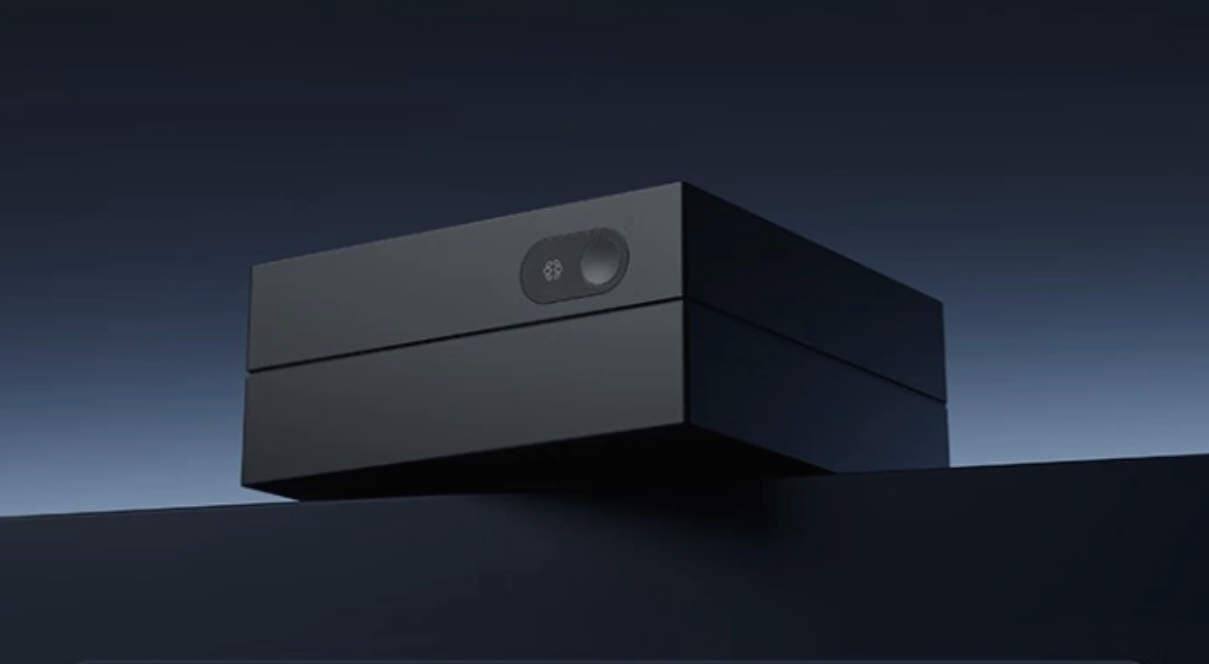
Lenovo has started selling a tiny desktop PC in China that skips Intel and AMD entirely, leans on an Arm-based chip, and is pitched as a box for local AI rather than a traditional office machine. The AI Host Mini costs 2999 yuan ($445), weighs about 373 grams, and promises 45 TOPS of AI performance – a lot of marketing muscle for something smaller than a paperback.
That positioning makes sense. The industry’s current obsession is not just bigger AI models, but putting some of that work on the device itself, where latency drops and cloud bills stop creeping up. Lenovo is also clearly chasing the enthusiast and developer crowd with Ubuntu support and a developer mode, a combination that usually means ”we expect people to tinker, not just click around.”
Cixin P1 CD8180 and 45 TOPS in a tiny box
At the center of the AI Host Mini is the Cixin P1 CD8180, a 6-nanometer Arm SoC with 12 Armv9.2 CPU cores, an Immortalis-G720 GPU with 10 cores, and a built-in neural processor. Lenovo says the system can handle some AI tasks locally without leaning on cloud services, which is the whole point of the machine.
- Processor: Cixin P1 CD8180
- CPU: 12 Armv9.2 cores
- GPU: Immortalis-G720 with 10 cores
- AI performance: 45 TOPS
- Memory: 8 GB LPDDR5-6000
- Storage: 256 GB SSD
The hardware spec is modest by desktop standards, but that is partly the trick. This is not trying to replace a gaming tower or a serious workstation; it is Lenovo’s play for compact, always-on AI workloads, where efficiency and integration matter more than brute force. Arm PCs have spent years trying to prove they belong outside phones and tablets, and this is another swing at that argument.
Lenovo Tianxi Claw and the setup flow
The mini PC runs Lenovo Tianxi Claw, the company’s platform for local AI functions. Setup is designed to be simple: activate the system through a smartphone by scanning a QR code. Lenovo says the software includes more than 20 built-in AI tools, a store with more than 8,000 extra modules, and integration with QQ, WeChat, and Feishu.
There is also support for multiple AI agents working at once, which sounds ambitious for a machine with 8 GB of RAM and a 256 GB SSD. Still, that kind of software layer is exactly where Lenovo can differentiate the product from the usual silent mini-PC crowd that mostly sells on ports and price.
Ports, size, and the July 1 shipment date
The chassis measures 100 × 100 × 48.65 mm, with a volume of 0.48 liters and a weight of about 373 grams. Lenovo has packed in a surprisingly broad set of ports for something this small: two USB 3.2 Type-A, two full-function USB-C ports, two USB 2.0 ports, DisplayPort 1.4, HDMI 1.4, and 2.5-gigabit Ethernet.
Preorders are already open in China, and the first units are due to ship on 1 July. Ubuntu support and a developer mode make the AI Host Mini easier to recommend to tinkerers than many branded mini PCs, while the Arm-only approach hints at where Lenovo thinks the next wave of compact computing is headed: less x86 nostalgia, more local inference, and a lot more software trying to justify the hardware.