

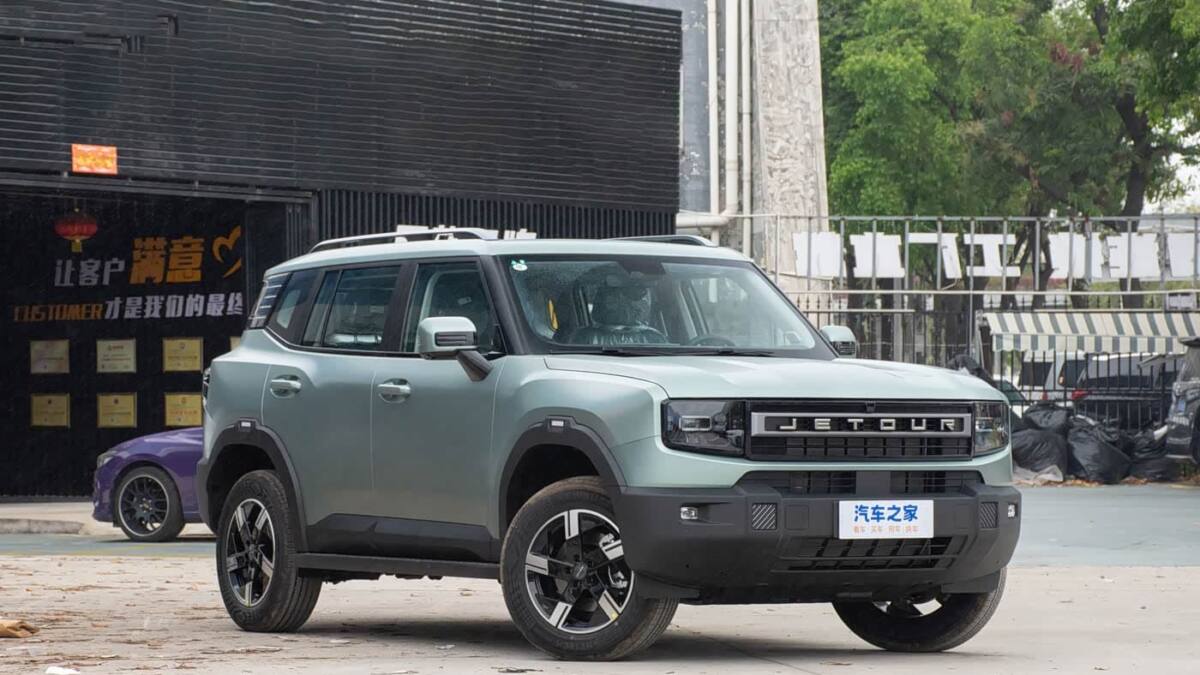
Jetour has put the updated Freedom on sale in China with a far leaner drivetrain than the Jetour T1 sold in Russia: front-wheel drive only, a 1.5-liter turbo engine, and a 7-speed ”robot”. The upside is price. Entry versions start at 115,000 yuan, with first-buyer pricing from 110,000 yuan, and trade-in discounts can pull that down to 90,000 yuan.
That makes this a very different kind of T1 than the one Russian buyers see. In Russia, the model gets a 2.0-liter engine, an 8-speed automatic, and all-wheel drive, which pushes the 2026 model-year car to 3.775 million rubles even after discounts. Same badge, different priorities.
Jetour Freedom prices and trim levels
Jetour is offering the Freedom in three trims. Official recommended prices range from 115,000 to 135,000 yuan, which the company itself positions as roughly 1.3 million to 1.5 million rubles. For early buyers, the sticker drops to 110,000 to 130,000 yuan, or about 1.25 million to 1.45 million rubles.
Trade-in buyers get the sharpest deal, with prices lowered to 90,000 to 110,000 yuan. That is the sort of number that makes a compact crossover look aggressively ordinary in a market where feature lists often matter as much as horsepower.
What comes standard on the Chinese version
The equipment list is respectable rather than flashy. Jetour fits a leather cabin, a 10-inch digital instrument cluster, and a 12.8-inch infotainment screen. For a car priced this low, that is enough to keep it competitive without pretending it is something it is not.
- 1.5-liter turbo engine
- 184 hp
- 7-speed robotized gearbox
- Front-wheel drive only
- Leather interior
- 10-inch digital instrument panel
- 12.8-inch media display
Why the Russian Jetour T1 is a different machine
The contrast with the Russian T1 is hard to miss. There, buyers get a 2.0-liter, 245-hp engine, an 8-speed automatic, and all-wheel drive – the sort of spec sheet that suggests Jetour is chasing a broader, more expensive audience outside China. In China, the brand is clearly happy to chase volume with simpler hardware and a lower entry price.
That split is common among Chinese automakers, which often tune the same nameplate for very different markets. The lesson is simple: a familiar badge does not guarantee a familiar car, and the cheaper one is not always the one with the more elaborate drivetrain.
The price gap buyers will notice first
The real headline is not just that the Chinese Freedom is cheaper. It is that Jetour is using the same family of compact SUV to serve two entirely separate buyers: one looking for value and front-wheel-drive practicality, the other paying for power, an automatic transmission, and all-wheel traction. Expect more of this kind of split-personality strategy as Chinese brands keep exporting nameplates while localizing the hardware underneath.