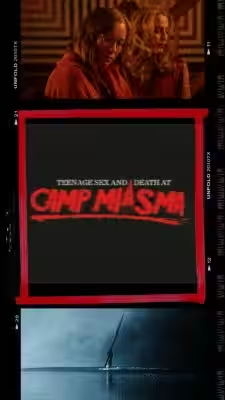

Jane Schoenbrun’s new film, ”Teenage Sex and Death at Camp Miasma,” has landed with a thud of approval at Cannes. After its world premiere on Wednesday night, 13 May, the movie quickly earned a 100% Rotten Tomatoes score from 12 reviews – the kind of opening that turns a festival title into instant conversation.
The reaction suggests Schoenbrun has made the leap from cult curiosity to must-watch filmmaker. Their earlier features, ”I Saw the TV Glow” and ”We’re All Going to the World’s Fair,” already hinted at a director more interested in unease, identity, and emotional dislocation than simple genre mechanics, and this one appears to push those ideas into sharper, louder territory.
A slasher tribute with a new target
Critics are describing the film as a love letter to 1980s and 1990s slashers, but not the lazy kind that just recycles machetes and neon nostalgia. The familiar genre pieces are being used in a fresh setting, with sexuality and identity at the center rather than as side themes. That combination is catnip for festival audiences and usually a headache for studios trying to package the film into something neat.
Jillian Anderson and Hannah Einbinder lead the cast, and the early praise also points to a strong script with plenty of humor. That matters: horror that knows how to joke tends to travel better, and it gives a film like this a wider runway than straight-faced misery ever could.
What reviewers like, and where they still hesitate
The praise is not totally unqualified. Some reviewers say the film loses rhythm, especially early on, and that it is less emotionally devastating than Schoenbrun’s previous work. Still, when the complaints amount to ”it doesn’t hit hard enough” rather than ”it doesn’t work,” that’s usually a sign the movie is doing a lot right.
For Cannes, this is the sort of response programmers love: a distinctive voice, a strong reaction, and enough genre blood in the water to keep the title circulating beyond the Croisette. The bigger question is whether the film can keep that momentum once it leaves the festival bubble and faces audiences who are less interested in tone poems and more interested in the next thing on the menu.