

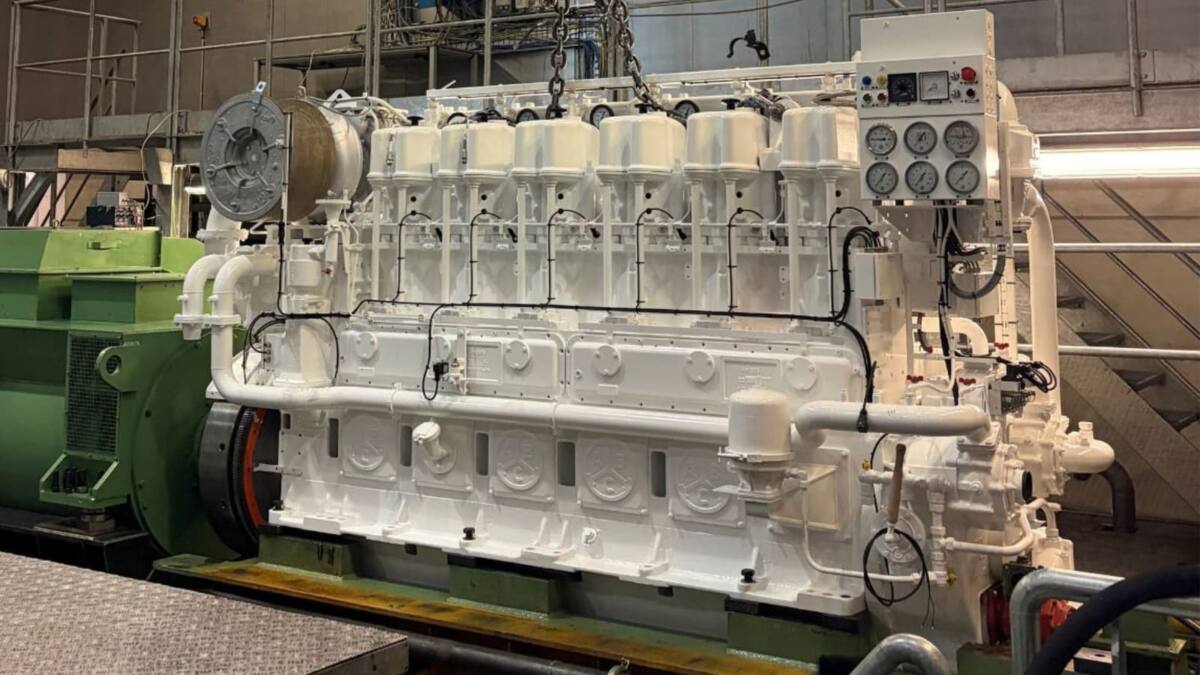
BeHydro has cleared a major regulatory hurdle: Lloyd’s Register has issued Type Approval for a marine hydrogen engine that runs only on hydrogen. That puts it among the first engines of its kind to be formally recognised for safety, reliability, and operating performance in shipping, and it also gives shipbuilders something the sector has been short on – a certified path away from fossil fuels without bolting on a diesel crutch.
The appeal is obvious. If hydrogen is the only fuel, there is no need for diesel ignition, which simplifies the ship and trims some of the auxiliary hardware that usually comes with alternative-fuel systems. The harder part, as always, is scaling a technology that sounds elegant on paper into something operators can trust at sea.
BeHydro hydrogen engine power ratings
The certified range covers engines from 900 to 2670 kW, or 1224 to 3630 hp. That is enough to serve as a vessel’s main propulsion system or to drive generators, which makes the platform more flexible than a niche demo unit. BeHydro is also aiming beyond ships, with potential uses in rail transport and stationary power.
That matters because hydrogen hardware has often been stuck in pilot-project limbo. A certified marine engine changes the conversation from ”could this work?” to ”who actually buys it?” – and in shipping, certification is the toll gate before anything meaningful gets deployed.
What the exhaust leaves behind
BeHydro says the engine produces no CO2, NOx, SOx or soot. The exhaust is described as water vapor and air, which is about as clean as combustion gets without going fully electric. In a sector under pressure to cut emissions fast, that is a serious claim, even if the real-world economics of green hydrogen still decide how fast this spreads.
The design also avoids lithium, cobalt, platinum and rare earth elements, a quiet but important advantage at a time when supply chains for critical minerals are a headache for everyone from automakers to grid operators. The engine can also tolerate small impurities in the hydrogen, which should make deployment a bit less fussy than many zero-carbon systems.
The next test is adoption, not approval
Approval from Lloyd’s Register will not magically solve hydrogen storage, fuel availability or onboard safety integration. But it does put BeHydro ahead of the usual ”future technology” label and into the far more useful category of certified equipment. The real question now is whether shipowners – and maybe rail operators and power companies – are ready to build around it.