

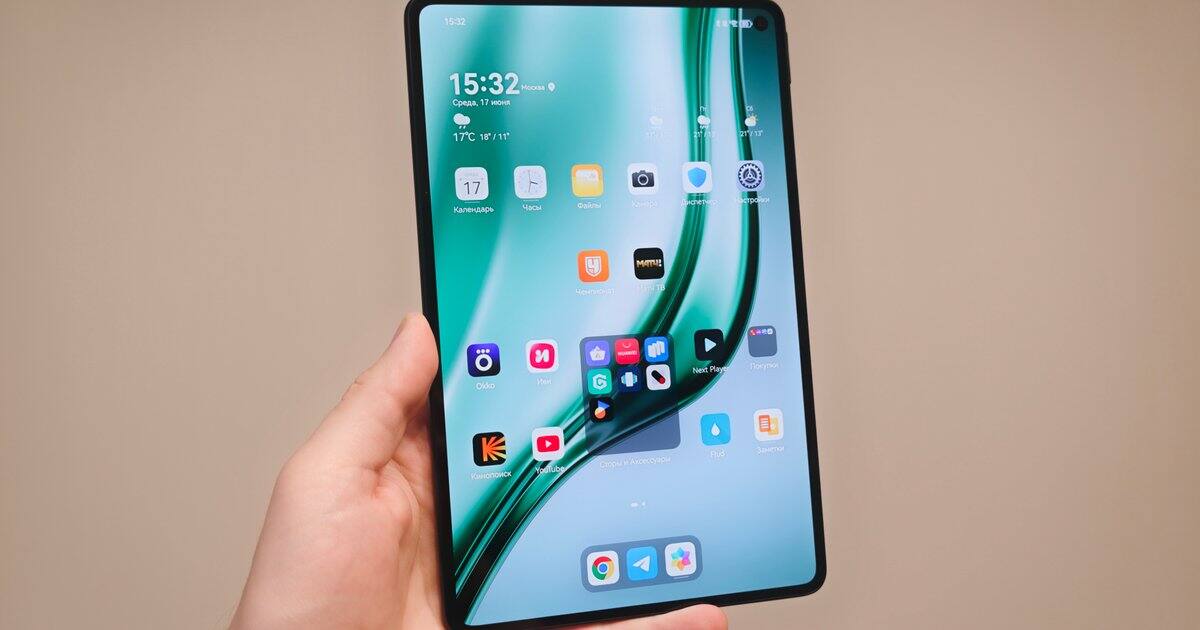
Huawei has done something rare with the Huawei MatePad Mini: it made a small tablet that feels like a deliberate product, not a shrunken compromise. At a time when many tablets are trying too hard to act like laptops, this one leans into the one job compact tablets actually do well – reading, streaming, note-taking, and getting out of the way.
The Huawei MatePad Mini starts at 40,000 rubles in Russia for the 8 + 256 GB version with a bundled case, while the 12 + 256 GB PaperMatte model costs 46,000 rubles with the case included. It is an 8.8-inch compact tablet with an OLED display, 120 Hz refresh rate, and HarmonyOS 4.3, aimed at people who want portability without giving up a premium screen.
That matters because the category has been oddly neglected. Apple’s iPad mini still sells the idea, but its 60 Hz IPS panel and chunky bezels look a bit tired next to newer rivals. Meanwhile, bigger Android tablets often become keyboard attachments pretending to be laptops, which is usually more expensive and less convenient than just carrying a notebook.
Huawei MatePad Mini specs and price
- Colors: green, black
- Dimensions and weight: 198.6 × 127.3 × 5.1 mm, 255 g
- Display: 8.8-inch OLED, 1600 × 2560 pixels, 120 Hz, up to 1800 nits, HDR Vivid
- Cameras: 50 MP main, 8 MP ultrawide, 32 MP front
- Chipset: 6-core Kirin 9010B, 7 nm, according to unofficial data
- Memory and storage: 8/12 GB, 256 GB
- Battery: 6400 mAh, 66 W charging
- Connectivity: USB-C 2.0, Wi-Fi 6, Bluetooth 5.2
- Price in Russia: from 40,000 rubles
Why the design works
The MatePad Mini’s real trick is not the 8.8-inch size on paper, but the way Huawei has packaged it. At 255 g and just 5.1 mm thick, it lands closer to a large phone than a classic tablet, which makes it easy to hold in one hand, slip into a small bag, or actually bring along without planning a whole second bag for it.
The hardware is clean and premium, though not flawless. The rear camera bump slightly spoils the flat-back look, and the front camera sitting in the corner of the display will annoy anyone who hates seeing a cut-out during 16:9 video. Huawei’s own book cover solves some of that, and it also doubles as a stand and stylus holder – which is exactly the sort of accessory that should have been bundled from the start.
One practical detail: the green version is only sold with the PaperMatte display, so buyers who want the glossy panel are stuck with black. That is a mildly annoying piece of product planning, but also very on-brand for the category, where every nice thing seems to come with one small catch.
OLED, PaperMatte and everyday use
The Huawei MatePad Mini display is the headline feature for good reason. Huawei uses an OLED panel with 120 Hz refresh, sharp resolution, and enough brightness to stay usable outdoors, with manual peak brightness around 600 cd/m² and up to 900 cd/m² in strong light with auto brightness enabled. That puts it well ahead of the tired little LCD panels still clinging to some compact rivals.
The optional PaperMatte finish is more than a simple matte film. It changes the way the glass feels under a finger, cuts reflections, and makes the stylus experience closer to writing on paper. If your main use case is reading and handwriting, that version makes a lot of sense; if you mostly watch video, the glossy panel is probably the better call.
Huawei also adds useful display controls: vivid color modes, blue light filtering, ebook mode with color or black-and-white output, and an automatic white-balance feature similar to Apple’s True Tone. The result is not just a good panel, but a surprisingly flexible one.
HarmonyOS, accessories and performance
Inside, the MatePad Mini is not trying to win spec-sheet bragging rights. Huawei does not officially name the chip, and unofficial data points to a 6-core Kirin 9010B built on 7 nm. That is enough for browsing, notes, video, multitasking and casual app switching, but not the kind of silicon you buy for heavy gaming.
HarmonyOS 4.3 brings the usual Huawei ecosystem tricks: Super Device, multi-screen features, acting as a second monitor, and the company’s app and file-sharing flows across devices. Google services are not included out of the box, though they can be installed through Huawei’s app ecosystem, which is still one more step than most buyers would like.
There is no keyboard case, which is the right decision for a product that is not pretending to replace a laptop. Bluetooth and wired keyboards still work, and stylus support is there for note-taking and drawing. GoPaint is included, so Huawei is clearly courting people who want a pocketable creative slab rather than a miniature work machine.
Battery life, cameras and the missing bits
The 6400 mAh battery sounds modest for a tablet, but the device’s size and power needs keep expectations in check. In practice, Huawei says it can handle a long-haul flight, and daily use with a couple of hours of reading and web browsing means charging every 3 to 5 days, sometimes less often. The included 66 W charger is the part everyone should appreciate: less waiting, fewer excuses.
Cameras are another pleasant surprise. A 50 MP main camera, 8 MP ultrawide, and 32 MP selfie camera are overkill for a tablet in the best possible way. They are there for documents, quick snaps, whiteboards and occasional video calls – not for pretending the device is your holiday camera, because no one should be that person.
The omissions are easier to spot. There is no SIM version, no microSD slot, and the USB-C 2.0 port will slow down large file transfers. That last one feels especially stingy on a device sold as a portable media companion. Still, the 256 GB base storage and support for external drives soften the blow.
For buyers in Russia, the pricing starts at 40,000 rubles in retail for the 8 + 256 GB version with a bundled case, while the 12 + 256 GB PaperMatte model costs 46,000 rubles with the case included. Marketplaces shave off a few thousand rubles, but then you may have to buy the case separately, which makes the bargain less exciting than it first looks.
The more interesting question is who this is really for. If you want a tablet that behaves like a laptop, this is not it. If you want the kind of device you reach for without thinking – for trains, flights, cafes, or a couch session that turns into one more chapter – Huawei has found a gap the industry mostly ignored. The Huawei MatePad Mini makes the strongest case for compact tablets by being honest about what a small tablet should do.