

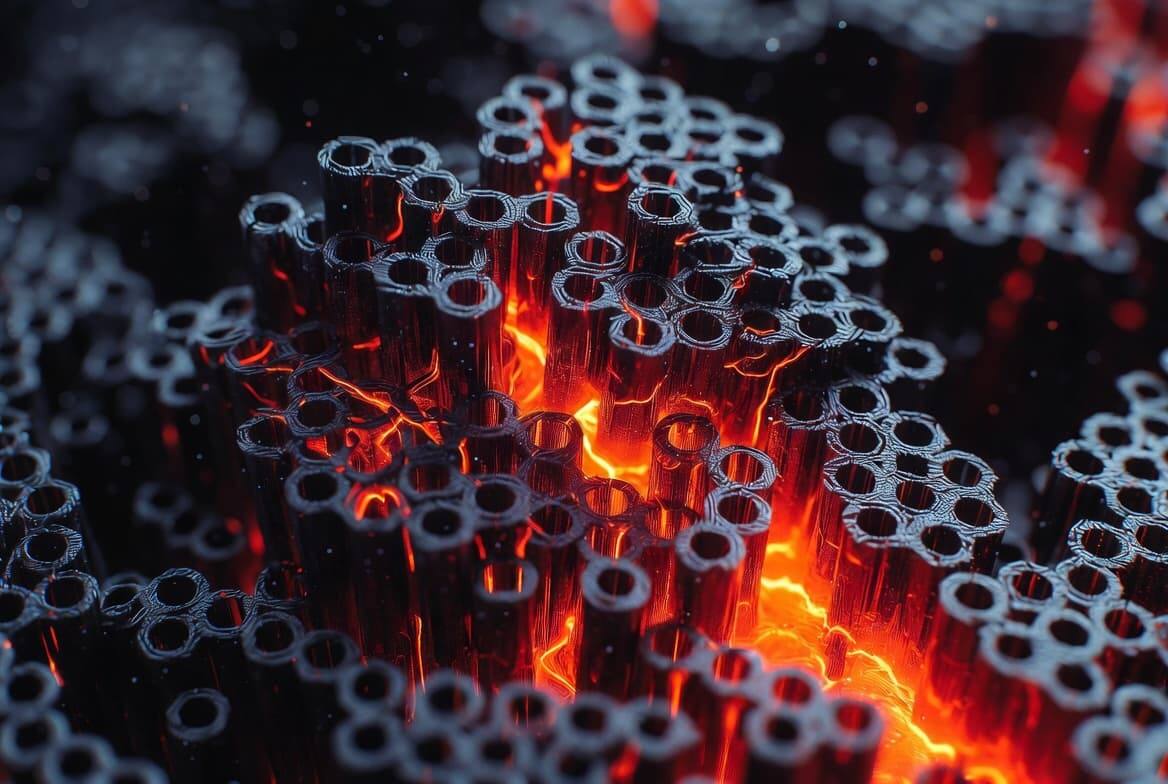
A South Korean research team says it has found a way to trap heat inside silicon long enough to turn more of it into electricity, using hollow nanotubes instead of the solid nanowires that have dominated thermoelectric experiments. The pitch is simple and appealing: squeeze useful power out of the waste heat pouring off servers, electric vehicles, and factory gear without leaning on pricey rare materials.
The work comes from POSTECH and leans on a familiar manufacturing material – silicon – rather than substances such as bismuth and tellurium, which are common in thermoelectric systems but expensive and harder to source. That matters because the thermoelectric field has long had a bad habit of sounding promising in the lab and then getting awkward at scale.
Hollow silicon nanotubes cut heat flow
In the experiments, the hollow silicon nanotubes reduced thermal conductivity by 70% compared with solid structures. Even when the surface area was the same, the reduction was still about 33%, which suggests the shape itself is doing real work rather than just changing the amount of material involved.
The mechanism is phonon localization. Phonons are the quasiparticles that carry heat through solids, and in these hollow structures part of that energy gets effectively trapped and spreads more slowly. That is the whole trick: keep heat hanging around long enough to extract more electricity from it instead of letting it escape into the air like a budget item nobody tracked.
Why room-temperature operation matters
Researchers say the effect is notable because it was observed at room temperature in a relatively simple structure. That has been a stubborn barrier in thermoelectrics, where impressive ideas often lose steam once you move away from idealized conditions and into actual devices.
- Material: silicon
- Structure: hollow nanotubes, not solid nanowires
- Thermal conductivity change: 70% lower than solid structures
- Same surface area comparison: about 33% lower
Data centers and EVs are obvious targets
The timing is convenient, because the appetite for electricity is rising fast in exactly the places where waste heat is abundant. Data centers built for artificial intelligence, electric vehicles, and industrial production all throw off heat in volumes that are increasingly hard to ignore. Companies have been hunting for better ways to recycle that energy for years, and most options are either too expensive, too fragile, or too niche.
If the POSTECH approach scales, compatibility with standard chip manufacturing could be the real selling point. Silicon is already the workhorse of the semiconductor industry, so a thermoelectric design built around it has a much cleaner path than one that depends on exotic ingredients and custom fabrication lines. The catch, as always, is whether a neat lab structure survives contact with production.
The next test is scale, not theory
The science is attractive, but the commercial question is louder: can hollow silicon nanotubes be made cheaply, consistently, and in large enough numbers to matter? If the answer is yes, the technology could become one more small but useful weapon in the fight to recover energy that is currently just warming rooms nobody asked to heat.