

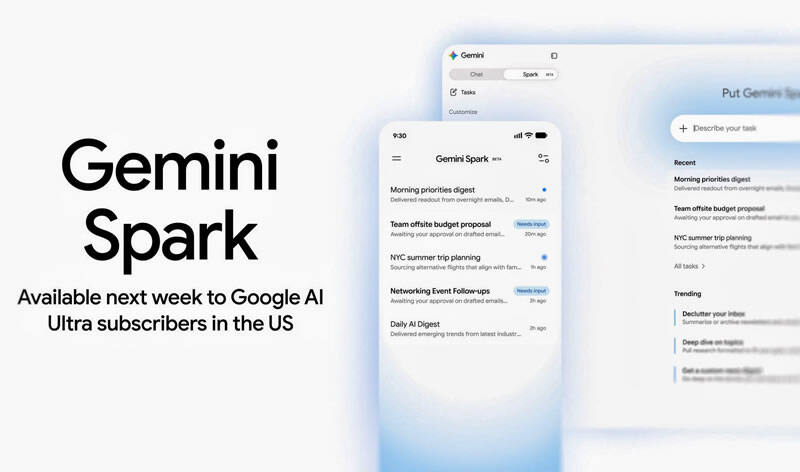
Google has unveiled Gemini Spark, a personal AI agent designed to work around the clock rather than wait around like a polite chatbot. Built on Gemini 3.5 and shown at I/O 2026, the tool is being pitched as a partner that can handle recurring chores, dig through Google’s apps, and act only when asked. It is Google’s latest push into the AI agent race.
That positioning matters. AI assistants are quickly moving from answer engines to task runners, and Google is clearly trying to make sure its own ecosystem stays sticky while rivals push similar automation inside productivity suites and browsers.
Deep ties to Gmail, Docs and Slides
Gemini Spark plugs directly into Google Workspace, including Gmail, Google Docs, and Google Slides. In practice, that means it can sift through mail, turn chat notes into reports, and build to-do lists without asking the user to copy-paste everything by hand. It can also be trained for one-off jobs or repetitive routines, which is the sort of feature that sounds minor until it saves an hour every Monday.
Google is also opening the door to outside services at launch, with support for Canva, OpenTable, and Instacart. That is a sensible move: assistants that stay trapped inside one company’s apps are useful, but assistants that can reach a booking platform or shopping service are the ones people may actually keep around.
- Base model: Gemini 3.5
- Built for: round-the-clock task execution
- Connected apps: Gmail, Google Docs, Google Slides
- Initial third-party support: Canva, OpenTable, Instacart
Human approval is still the brake pedal
The system is not fully unsupervised, and that is the right call. Spark requires human confirmation before critical actions such as sending money or sending email, which is exactly where these products need friction rather than bravado.
In the coming weeks, Google plans to add text messaging and browser control, expanding Spark from office helper into something closer to a general-purpose operator. That also raises the usual question: how much autonomy do users really want once the agent can move beyond documents and into the rest of their digital life?
Who gets access first
According to Engadget, Gemini Spark will first reach a limited group of testers, then roll out to Google AI Ultra beta participants in the US next week. Google also plans to bring the agent into the Gemini desktop app this summer, giving it direct access to files on personal computers.
That desktop move is the interesting one. The cloud is where AI demos live; the desktop is where real work hides. If Spark can jump cleanly from inbox to document to local files, Google may have found a better answer to the productivity-agent race than another shiny chatbot with a new name.