

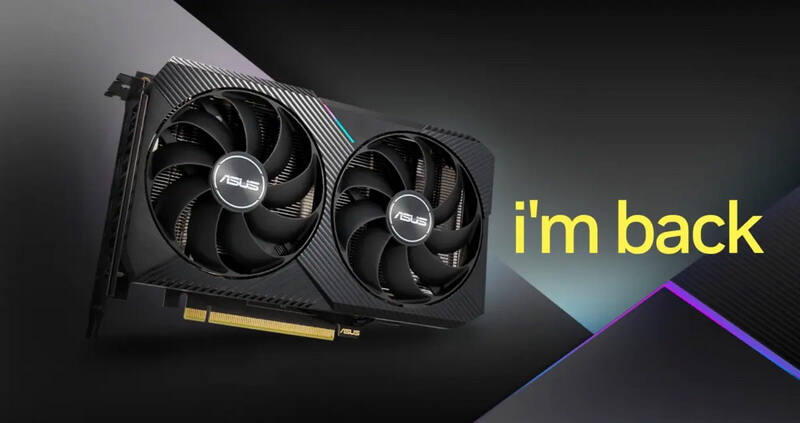
GeForce RTX 3060, the once-overlooked Nvidia card that refuses to die, is reappearing in European and US stores after years of newer launches. The twist is that its comeback is happening during a memory shortage, not because Nvidia suddenly rediscovered thrift.
Retail listings in Germany now include RTX 3060 boards from Asus, Gigabyte, MSI, and PNY, and the cheapest one spotted there is the Asus Dual GeForce RTX 3060 OC V2 at €333,64. In the US, Tom’s Hardware says the card has also turned up at Newegg for $339,99, which is a pretty awkward price for a model originally framed as the affordable choice.
RTX 3060 listings return to Western retailers
According to the German price tracker Geizhals, the Asus card is listed by 30 retailers, while Hardwareluxx notes that comparable RTX 3060 models were available for as little as €245 in the summer of 2025. That gap matters: this is not a budget rescue mission; it is Nvidia using an older part to fill holes in the supply chain.
The broader pattern was telegraphed earlier this year at CES 2026, when Jensen Huang said it would be ”nice to bring back some older graphics card models” amid shortages of advanced memory chips and the resulting lack of entry-level GPUs. Now that idea is moving from stage talk to store shelves.
GeForce RTX 3060 still has 12GB on paper
The GeForce RTX 3060’s main selling point remains the 12GB of GDDR6 memory, which is still more than many cheaper modern cards offer. The problem is the rest of the design: Ampere is old enough that it lacks dynamic and multi-frame generation, so raw memory capacity does not automatically translate into a smarter buy.
That leaves Nvidia in an odd spot. It can point to a familiar name and generous memory, but newer budget cards are already faster in games, which makes the RTX 3060 feel less like a comeback and more like inventory management with branding.
- GeForce RTX 3060 uses 12GB GDDR6 memory
- Built on the older Ampere architecture
- Does not support dynamic or multi-frame generation
- RTX 3060 listings have appeared in Germany and the US
A stopgap, not a bargain
The real question is how long this lasts. If memory shortages keep squeezing the lower end of the market, older cards like the RTX 3060 could keep resurfacing in more stores. But unless pricing comes down sharply, consumers are likely to see it for what it is: a familiar name returning to cover for a very unglamorous supply problem.