

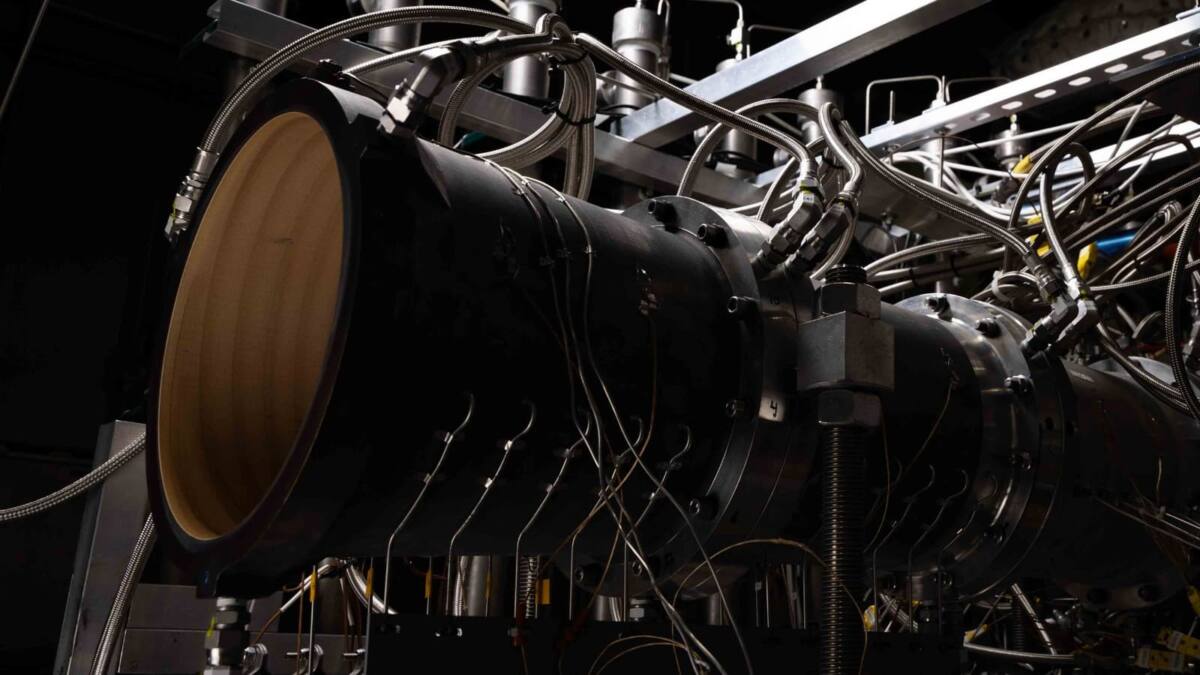
GE Aerospace says artificial intelligence has cut the early design work for a hypersonic engine from months to seconds, a claim that sounds like marketing until you notice the first generated concept reportedly cleared key flight-safety checks. The company is using the tool on the preliminary layout of a hypersonic ramjet, one of the toughest problems in aviation engineering, where even the basic architecture usually demands weeks of calculation and simulation.
The bigger shift is not that AI is ”designing” engines on its own. It is that engineers can now throw many flight scenarios, operating modes, and environmental conditions at a system that produces hundreds of candidate configurations in a single run, then spend their time pruning instead of starting from a blank sheet. That is exactly the sort of workflow aerospace companies have been chasing while rivals race to compress development cycles and governments keep pushing for faster, more efficient propulsion.
A hypersonic ramjet in seconds
A hypersonic direct-airbreathing engine is not a neat desktop exercise. The airflow is brutal, the thermal loads are unforgiving, and the design space is full of dead ends, which is why a basic configuration has traditionally taken long stretches of modelling before anyone gets to the fun part. GE Aerospace says its AI can now generate workable options almost instantly, shifting the bottleneck from drafting ideas to testing them.
- Engine type: hypersonic ramjet
- Old timeline: weeks or months for a baseline scheme
- New timeline: seconds for initial variants
- Output: hundreds of design options per session
Safety checks still matter
The detail that makes the announcement more than a buzzword parade is the safety review. According to the company, the first AI-generated design passed checks against key flight-safety requirements, which suggests the system is not simply drawing pretty shapes in a vacuum. That said, passing an early screen is a long way from surviving the real world, where hot sections, materials, and maintenance tend to be less forgiving than slide decks.
GE Aerospace says it wants to use the same approach in civil aviation too, including the CFM International RISE programme for a new generation of more efficient, cleaner engines with an open-fan architecture. That is a sensible place to start: commercial engine makers live and die by development time, fuel burn, and certification cost, so any tool that trims the front end of the process is likely to get a serious look. The competition is already moving in the same direction, with aerospace groups and defence contractors pouring money into generative design, digital twins, and simulation-heavy workflows.
What GE Aerospace is really betting on
The real prize is speed with fewer false starts. If AI can narrow the design space before human engineers commit to expensive testing, it could shorten the path from concept to prototype and make it easier to explore unconventional engine layouts without burning months on each dead end. The open question is whether these gains stay limited to early design, or whether the same approach starts reshaping certification, testing, and eventually serial production.