

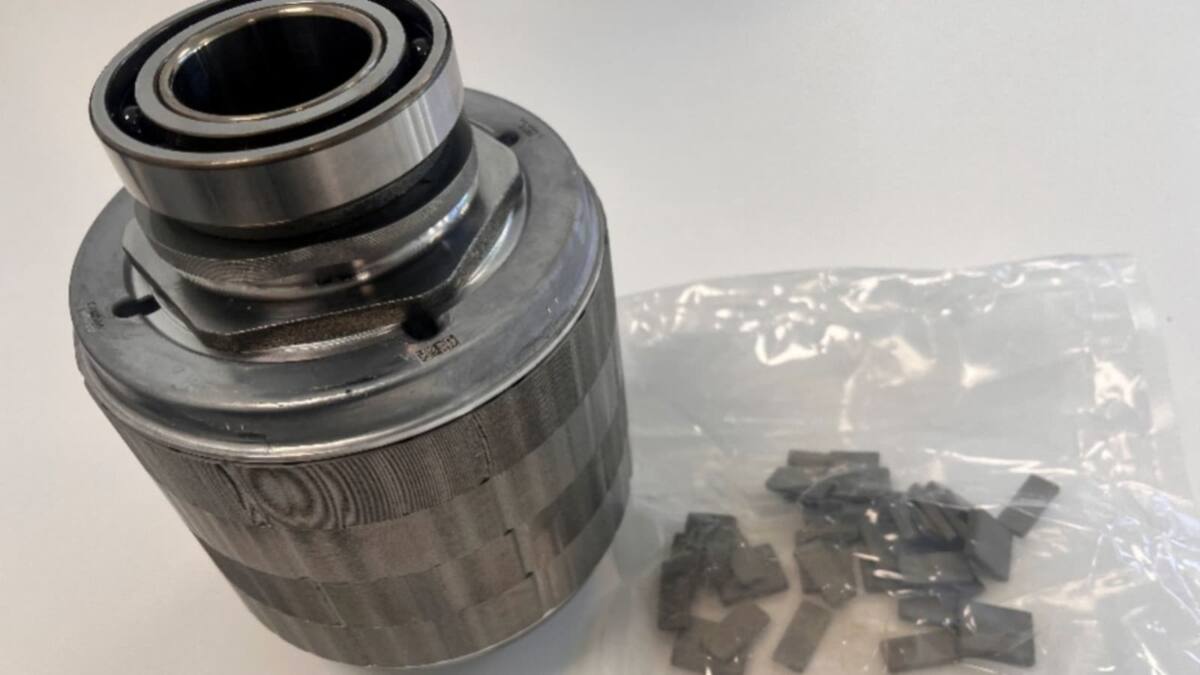
Ford and Ionic Technologies have pulled off a useful bit of industrial alchemy: an electric motor built with magnets made entirely from recycled rare-earth materials has passed automotive testing and performed like a conventional unit made from freshly mined material. The result matters because rare-earth supply chains are still heavily exposed to China, and automakers have spent years trying to reduce that dependency without giving up heat resistance, durability, or performance.
The tests were carried out at Ford’s research centre in Dunton, in the UK, with the recycled material path running from old NdFeB magnet scrap to purified oxides, then to metal, then to finished permanent magnets, and finally into test rotors assembled at Ford’s Halewood plant. That end-to-end chain is the real story here: recycling rare earths is one thing, but turning them back into parts that survive commercial automotive standards is where most clean-sounding plans quietly die.
How the recycled magnet chain was built
Ionic Technologies, a subsidiary of Ionic Rare Earths, processed the scrap at its demonstration plant in Belfast and extracted high-purity oxides: neodymium oxide at 99.87%, dysprosium oxide at 99.56%, and terbium oxide at 99.75%. Less Common Metals converted those oxides into metal and a specialist alloy, while Germany’s GKN made the finished magnets. Ford then installed them in two test rotors and ran endurance trials.
- NdFeB magnet scrap was recycled into purified oxides
- Less Common Metals turned the oxides into metal and alloy
- GKN produced the permanent magnets
- Ford tested the rotors at its Halewood site
Why dysprosium and terbium matter
Neodymium gets the headlines, but dysprosium and terbium are the expensive insurance policy. They help magnets keep their strength at high temperatures, which is exactly what matters inside a working car motor. That is also why the result has broader relevance than a neat lab success: if recycled material can match virgin material here, the bottleneck is less about physics and more about scale, cost, and political will.
The timing is no accident. Europe has been pushing harder to build local mineral supply chains after years of dependence on imported critical materials, and the UK’s Critical Minerals Strategy aims to source 20% of its needs from recycling by 2035. Ford’s test gives that target something more useful than a policy slide deck: evidence that recycled rare earths can actually survive the automotive grind.
The Belfast plant is the next test
Ionic Technologies is now moving toward an investment decision on a full-scale commercial plant in Belfast, with a projected cost of 85 million pounds sterling and capacity for up to 400 tonnes of refined rare-earth oxides a year. That is still a long way from changing global supply chains, but it is enough to matter if automakers start demanding recycled content the way they now demand traceability, lower carbon footprints, and fewer geopolitical headaches.
The open question is less whether the chemistry works and more how quickly the industry can turn one successful trial into a repeatable supply. If this scales, recycled rare-earth magnets stop being an environmental footnote and become a strategic input. If not, China keeps its leverage, and automakers keep hunting for the next workaround.