

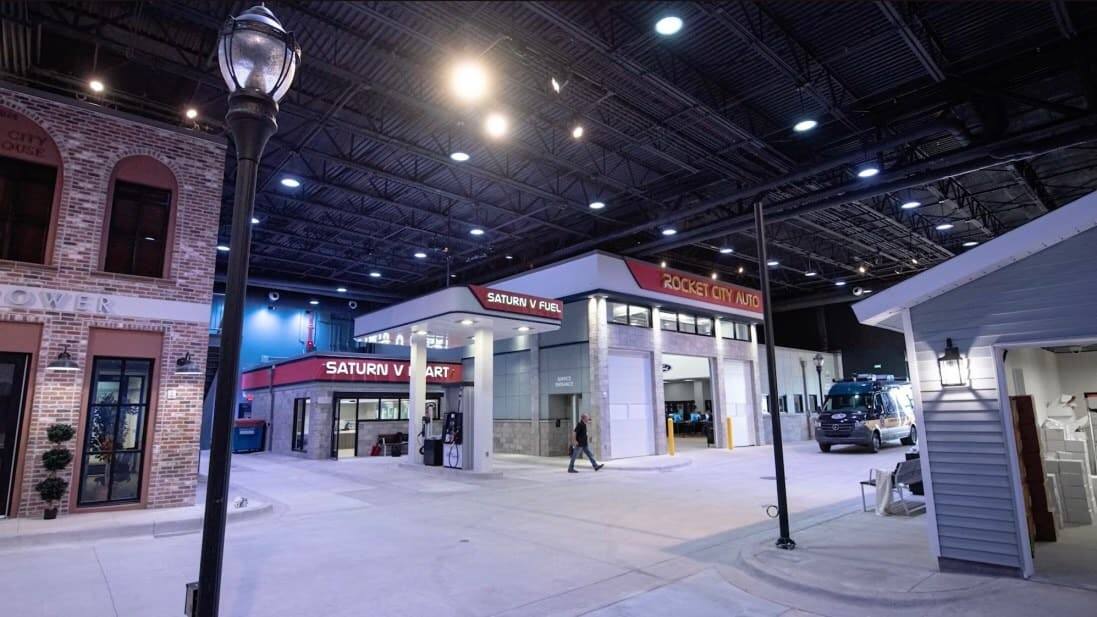
The FBI has built a fake American town in Alabama for ransomware training and other cybercrime exercises. The Kinetic Cyber Range is a 2,000-square-meter replica of a small city, complete with homes, a hotel, a gas station, a grocery store, a courthouse, a hospital, and an energy company – plus the roads and traffic lights to glue it all together.
The timing is not subtle. The bureau says cybercrime losses in the US hit a record $20.9 billion in 2025, based on more than a million complaints, up 26% from the previous year. Ransomware remains one of the biggest threats, which explains why the FBI is now training people to think beyond firewalls and toward emergency response, evidence collection, and damage control under pressure.
Inside the FBI’s Kinetic Cyber Range
What makes the site unusual is that the buildings are not props. They run with real devices and live digital systems, but the whole setup is isolated from external networks so trainers can break things without accidentally breaking the real world. That is a smart move, and a fairly expensive one, but so is discovering your hospital systems are down only after an actual attack.
The centerpiece is a data center packed with more than 200 Windows and Linux servers, built to mirror the sort of corporate environments investigators encounter during raids and breach response. According to the program lead, the server rooms are deliberately cramped, cold, noisy, and badly lit, which sounds less like a classroom and more like a punishment – but that is the point.
Ransomware drills and hospital shutdown scenarios
Since launch in February 2025, more than 1,400 people have trained there, including FBI staff and local, regional, and federal officials. The exercises cover ransomware incidents and hospital outages, where every minute matters and the wrong decision can turn a cyber incident into a public safety problem.
- Facility size: about 2,000 square meters, or 22,000 square feet
- Server count: more than 200 machines running Windows and Linux
- Training volume: more than 1,400 people since February 2025
- Losses reported by the FBI: $20.9 billion in 2025
Digital forensics gets its own test city
The range is also being used to teach digital forensics, including the extraction of data from modern locked-down devices during criminal investigations. That work often depends on specialized tools that exploit software flaws unknown to the manufacturer, which is precisely why the practice draws criticism from Apple, Google, and other companies that would rather not have hidden vulnerabilities kept in circulation.
The bigger story here is not that the FBI likes shiny training toys. It is that cybercrime has become so costly, and ransomware so operationally disruptive, that law enforcement now needs mock cities to rehearse the boring but vital parts of a response: preserving evidence, coordinating agencies, and keeping a hospital online when attackers try to shut it down.
Expect more agencies to copy the model
Other governments have already leaned on cyber ranges and simulation labs, but the scale of this one makes the FBI’s priorities unusually clear. As attacks keep moving from data theft to real-world disruption, the agencies that can practice faster than criminals adapt are the ones most likely to keep pace.