

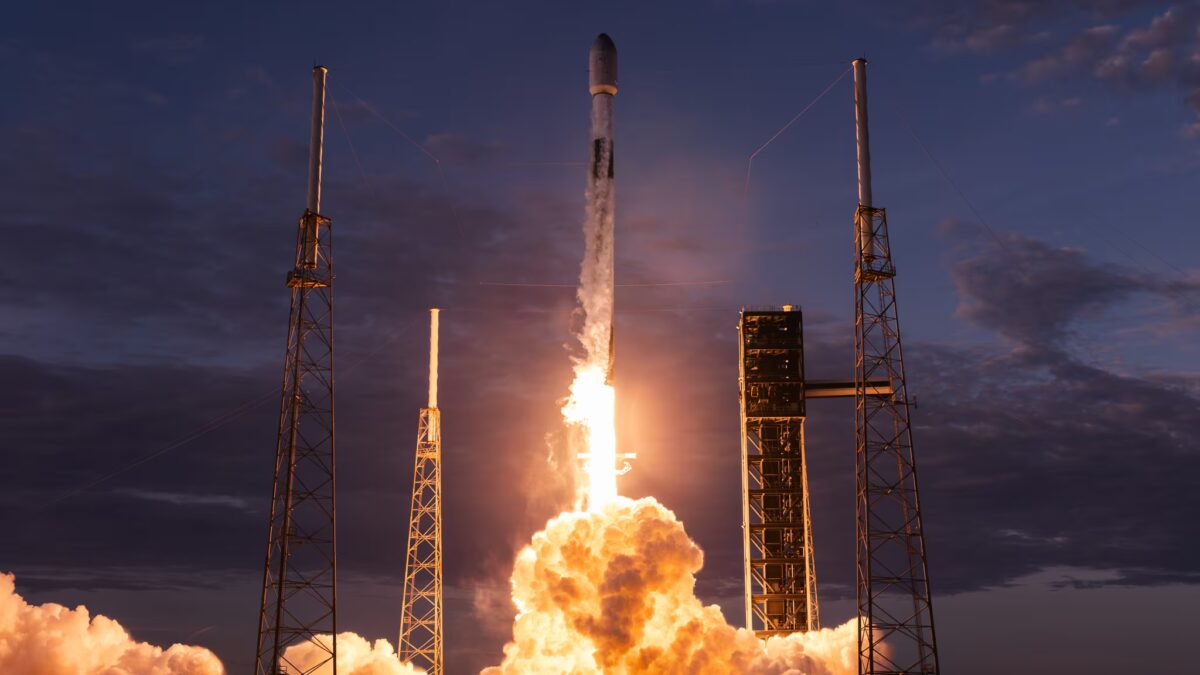
On July 5, SpaceX’s Falcon 9 Block 5 rocket launched 29 Starlink satellites into low Earth orbit and simultaneously conducted a suborbital test flight of two reusable manufacturing capsules from Besxar called Fabships. The launch lifted off from Cape Canaveral’s SLC-40 pad as part of the Starlink-10.50 mission, combining routine satellite deployment with experimental hardware testing.

After booster separation, the Falcon 9’s first stage touched down on SpaceX’s drone ship A Shortfall of Gravitas in the Atlantic Ocean. This marked the booster’s 13th flight, underscoring SpaceX’s mastery of reusable rocketry. Such landings have become routine milestones rather than headline-grabbing events in SpaceX’s launch cadence.
The spotlight of this mission was on the Fabship capsules mounted on the booster. These small spacecraft were sent on a suborbital trajectory to test their ability to withstand the intense heat and forces of atmospheric reentry. Besxar aims to develop these platforms for orbital and suborbital manufacturing, where microgravity conditions combined with rapid cargo return to Earth could transform materials and pharmaceutical production in space.
The commercial microgravity manufacturing sector is still emerging, with several companies racing to establish reusable payload platforms. Besxar joins the ranks of American company Varda Space-which has successfully flown several return capsule missions-and the UK-based Space Forge, both targeting space-based production of materials and semiconductors. Launching Fabships on a Falcon 9 mission offers Besxar a cost-effective way to test hardware without needing dedicated rockets.
For SpaceX, this launch exemplifies how Starlink missions fuel a steady drumbeat of flights that can integrate secondary payloads and experiments with minimal disruption. Should Besxar’s Fabships prove reliable, Falcon 9 could expand its multifunctional use cases by supporting in-space manufacturing platforms alongside its primary role of deploying satellites.