

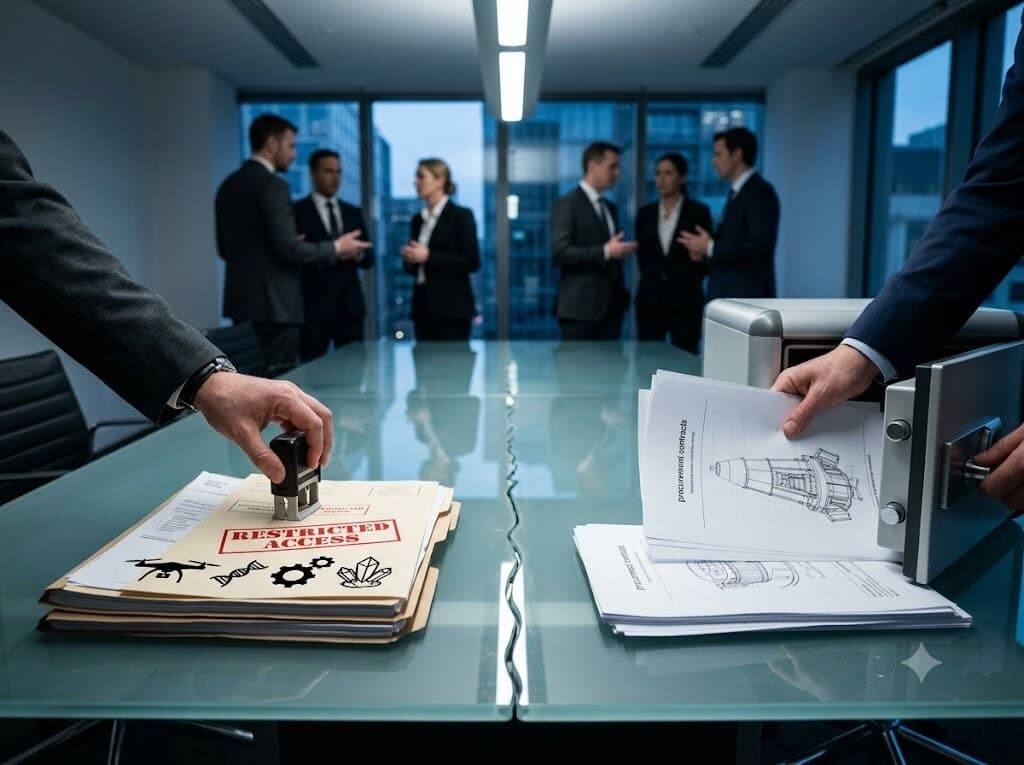
China has widened its trade retaliation against US companies, putting 10 American industrial and technology suppliers under export controls and barring 46 firms from government procurement after Washington expanded a Pentagon-linked blacklist targeting Chinese tech groups. The latest move keeps the tit-for-tat going, but the practical damage may be limited: most of the companies named by Beijing do little business in China anyway.
The Ministry of Commerce said the export-control list covers MP Materials and USA Rare Earth, drone developers Teal Drones and Jaia Robotics, electronics maker Aveox Inc., aerospace company Ball Aerospace, and military vehicle supplier Oshkosh Defense. Beijing is also blocking exports of dual-use goods to those companies, a move aimed at industrial and security-linked supply chains rather than consumer trade. That makes the headline sound bigger than the commercial impact may prove to be.
China’s export-control list hits rare earths, drones and aerospace
China’s finance ministry separately removed 46 US companies, mostly defence contractors, from participation in state procurement. The restrictions also extend to affiliated entities registered in China with foreign capital, which is a neat way of making sure the paperwork is just as annoying as the policy.
Beijing framed the measures as a response to the US ”Section 1260H” list, which was updated to include Chinese technology companies such as Alibaba Group, Baidu, and BYD on concerns they could support Chinese military structures. That list does not trigger immediate sanctions, but it can block access to Pentagon contracts and slowly tighten pressure on commercial partners as well.
How much pressure these restrictions really add
Analysts at The Asia Group described the Chinese move as largely symbolic, and the reasoning is hard to dispute. When both sides are aiming at companies with little direct exposure to the other market, the point is less to cause instant pain than to signal that retaliation is still available and politically useful.
Still, the pattern is familiar: Washington uses procurement and security screening to squeeze Chinese firms, and Beijing answers with export controls and blacklist-style exclusions of its own. The next round is likely to stay focused on defence-adjacent suppliers, because that is where both governments can look tough without immediately blowing up broader trade.