

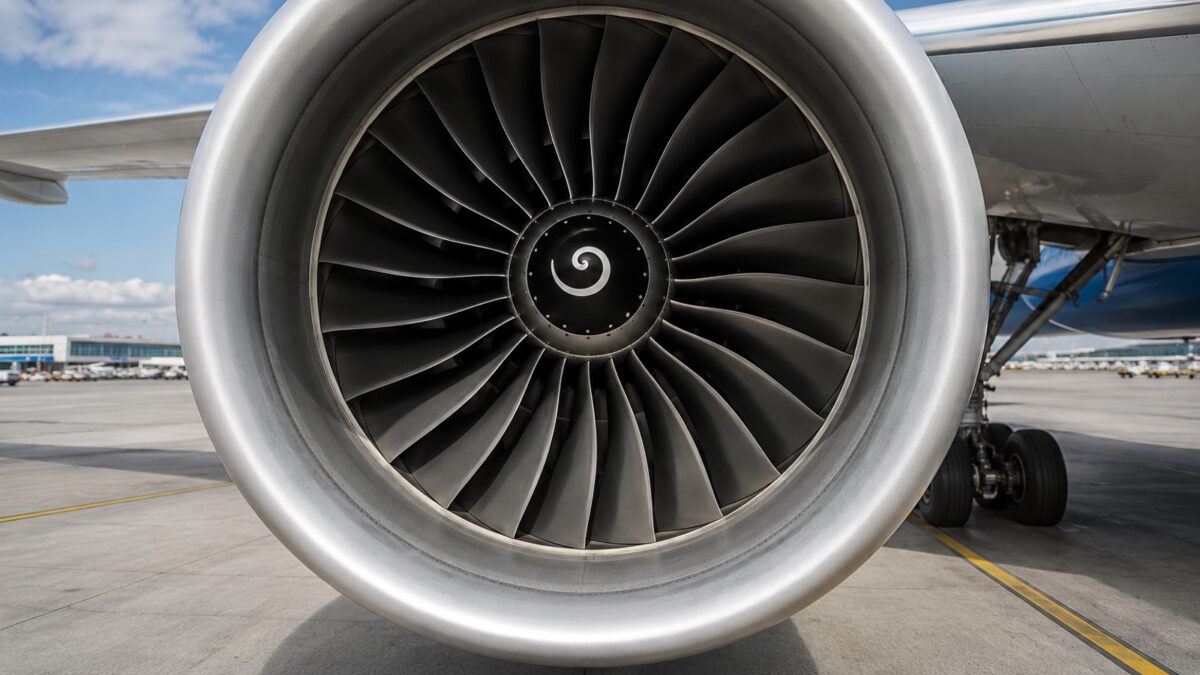
China says it has mastered one of jet engineering’s toughest tricks: making single-crystal turbine blades for jet engines. That puts it alongside the United States, Russia, the United Kingdom, and France in a tiny club that can produce parts designed to survive brutal heat, pressure, and hot exhaust without falling apart.
The part is tiny. The engineering is anything but. Turbine blades sit at the sharp end of a jet engine, and they are the kind of component that separates a functioning powerplant from a very expensive lawn ornament. China’s pitch is that its homegrown DD6 nickel superalloy can match Western equivalents on key properties while being cheaper to make.
Why single-crystal turbine blades are such a big deal
These blades are not made from ordinary metal. They are grown so that the finished part has no grain boundaries, which is where cracks usually begin when heat gets extreme. That lets the blade work close to the alloy’s melting point, which is exactly what modern jet engines demand when designers want more thrust and better efficiency.
For decades, this has been a badge of industrial maturity. The manufacturing process is fussy, slow, and expensive, involving more than 10 main stages and dozens of separate operations. In other words, it is the sort of thing countries brag about after they have spent years quietly trying to get it right.
DD6 and China’s long climb in aero materials
According to Chinese reports, DD6 was developed at the AECC Beijing Institute of Aeronautical Materials. The country’s aerospace sector has been working on its own monocrystalline superalloys since the 1980s, first reaching cast solid blades and later hollow single-crystal versions before arriving at DD6 as the main result of that effort.
That timeline matters. Western engine makers have spent generations protecting this know-how, and supply chains around turbine materials remain among the most guarded corners of aerospace manufacturing. China closing the gap does not mean instant parity in finished engines, but it does reduce one of the most annoying dependencies in the industrial chain.
What this means for China’s jet engines
The obvious question is whether a domestic blade alloy translates into broader competitiveness for Chinese jet engines. The answer is probably ”partly” at first. Materials capability is a major step, but certification, manufacturing yield, and real-world durability under flight conditions are where aerospace claims go to be tested, and sometimes to die.
- Only five countries are said to make these blades independently: the United States, Russia, the United Kingdom, France, and China.
- China’s alloy is DD6, a nickel-based superalloy developed by the AECC Beijing Institute of Aeronautical Materials.
- The manufacturing process spans more than 10 main stages and dozens of separate operations.
If China can keep improving yield and durability, the pressure will shift from materials science to engine integration. That is a harder test, but also the one that decides whether this becomes a prestige announcement or a genuine change in the global jet engine pecking order.