

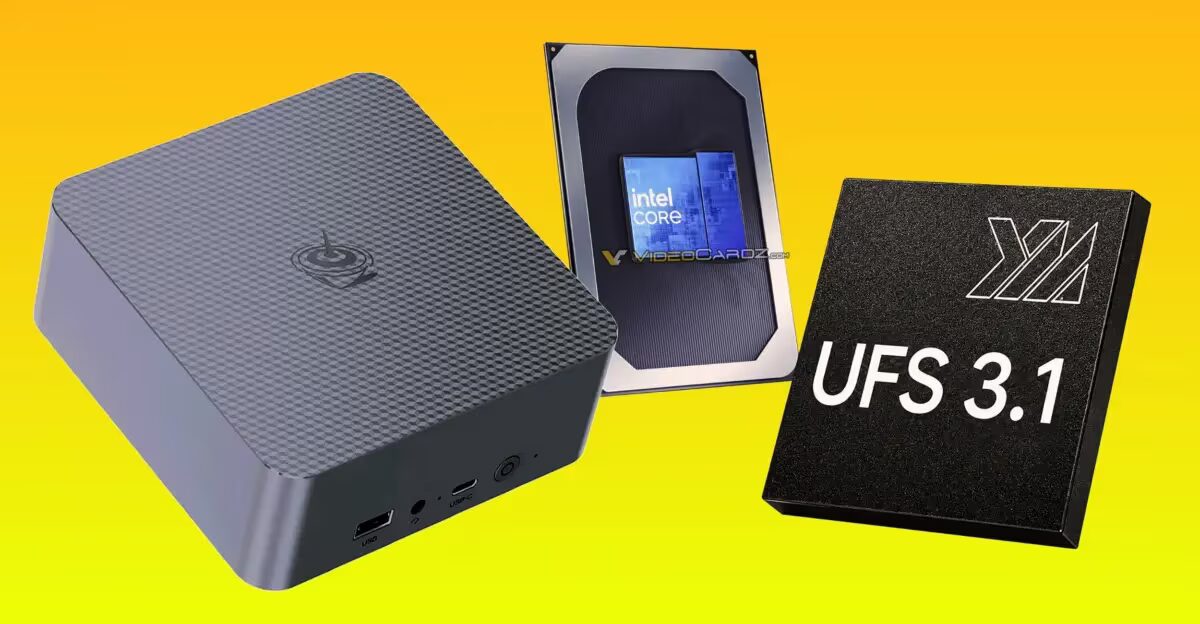
Beelink has launched the EQi 304 mini PC based on Intel’s Wildcat Lake platform, notable for swapping the usual NVMe SSD for UFS 3.1 storage in its base version-a technology typically found in smartphones and tablets. This unconventional choice for a compact PC might seem limiting, but Beelink hasn’t locked down upgrade options entirely.
The Wildcat Lake chipset clarifies the EQi 304’s target: it’s not designed for heavy video editing or gaming but rather for office use, media playback, thin clients, or home servers where connectivity and compactness matter more than raw power. With two Thunderbolt 4 ports and a 10 Gb Ethernet interface, the I/O setup is surprisingly generous for a machine powered by a modest 5-core Core i3 processor. Against this backdrop, the UFS 3.1 storage-common in mobile devices-feels out of place since the rest of the hardware is quite advanced.
Beelink EQi 304 mini PC specifications and features
- Processor: Intel Wildcat Lake 5-core Core i3
- Storage: Base model uses UFS 3.1; includes dual M.2 slots for expansion
- Memory options: 16 GB RAM and 24 GB RAM variants
- I/O ports: Two Thunderbolt 4 ports, 10 Gb Ethernet interface
- Target usage: Office tasks, media playback, thin clients, home servers
- Compact chassis with advanced connectivity
Pricing starts at $500 for the 16 GB RAM model, while the 24 GB RAM variant goes for $740. By comparison, mini PCs from brands like Beelink itself, Minisforum, and Geekom, priced between $400 and $700, generally include full NVMe SSDs right out of the box. This suggests the EQi 304’s main selling points are its compact chassis, up-to-date Intel platform, and extensive port selection rather than its stock storage.
Comparison to other mini PCs with NVMe SSDs
Beelink might attract buyers who want a quiet, small PC with Thunderbolt 4 and fast networking-and plan to swap out the built-in storage immediately. However, retail success largely depends on pricing. If the savings from using UFS storage are minimal, most buyers will likely favor systems equipped with conventional NVMe drives and no question marks attached.