


AvtoVAZ has delivered the first SKM M7 minivan in Russia, marking the brand’s debut sale in the commercial vehicle segment. The vehicle was handed over to a corporate buyer at the Pragmatika LADA Parnas dealership in Saint Petersburg. This sale signals SKM’s real entry into a segment dominated by established players like GAZ, Sollers, and imported Chinese vans.

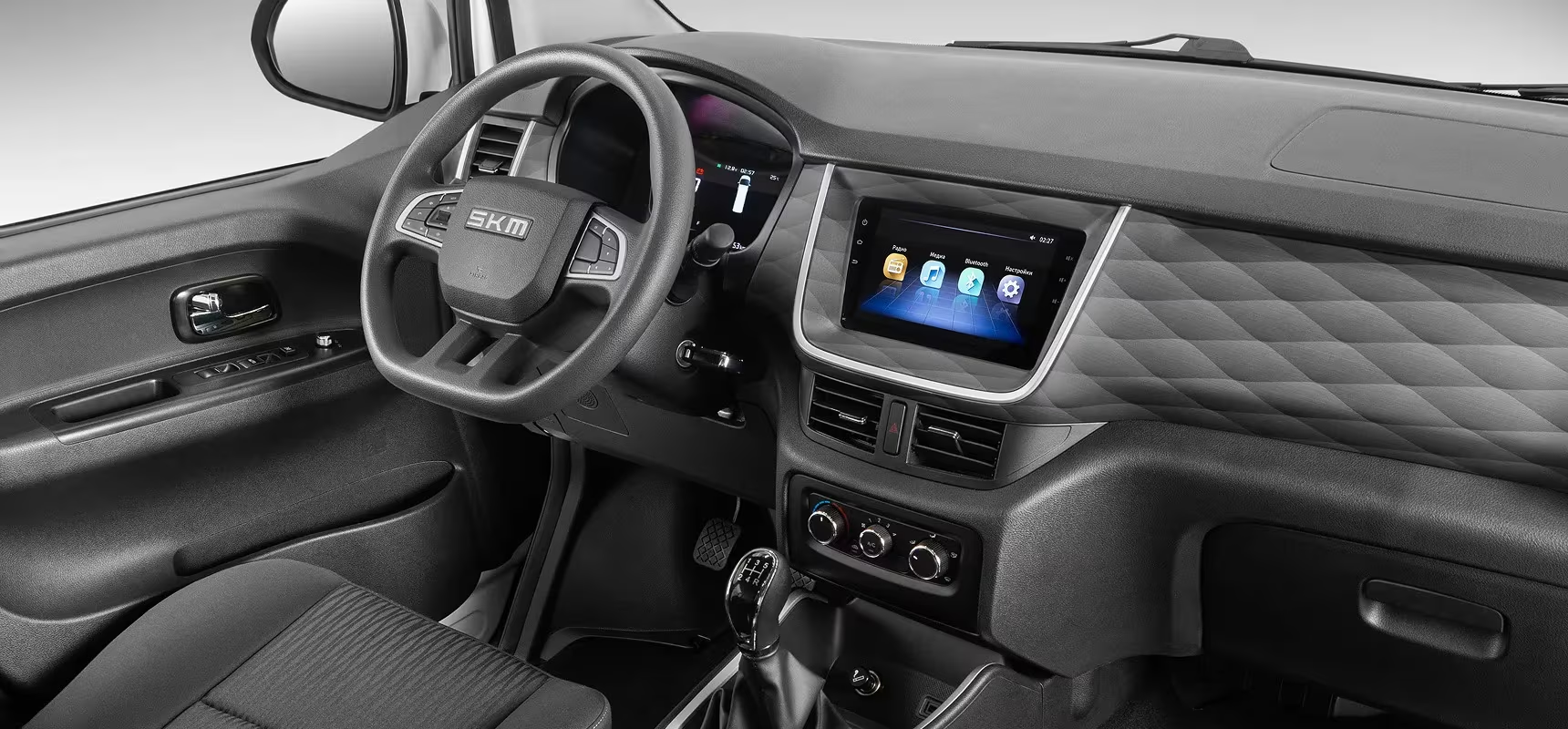
The first SKM M7 sale was a passenger ”Comfort” version, purchased by a corporate client, according to the Pragmatika dealer. Alongside the passenger variant, AvtoVAZ offers a cargo version called ”Praktik.” SKM was launched as a separate AvtoVAZ brand focused on commercial vehicles, with the M7 positioned between basic cargo vans and pricier minibuses.
Such vans appeal to a wide range of commercial users-hotel shuttles, delivery companies, smaller transport firms, and service providers who need flexible interiors but don’t want a heavy bus. The M7’s removable third row stands out as a practical feature, arguably more important than the ”minivan” label itself.
- Engine: 2.0L naturally aspirated gasoline, 137 hp
- Transmission: 5-speed manual
- Drive layout: rear-wheel drive
- Rear suspension: solid axle with leaf springs
- Variants: passenger ”Comfort” and cargo ”Praktik”
- Equipment: air conditioning, ESP, rearview camera, parking sensors
- Optional extras: multimedia system, seat heaters, LED daytime running lights
- Price: from 2.863 million rubles (~$38,000)
The SKM M7 competes with models like the GAZ Sobol NN, Sollers Atlant, and Chinese commercial vans adapted or assembled locally. AvtoVAZ’s strategy is straightforward: leverage the existing LADA dealer network, offer simple manual mechanics, and avoid complicated electronics.
The M7 prioritizes durability over passenger comfort. Its naturally aspirated engine, rear-wheel drive, and leaf-sprung solid rear axle are designed for heavy daily use, full loads, and rough roads-a typical scenario for corporate fleets that value reliability over panoramic sunroofs and premium amenities.
In Russia, the light commercial vehicle (LCV) segment remains one of the few automotive categories sustained by business and government contracts despite weak consumer demand. For AvtoVAZ, the SKM launch is a strategic move to gain a foothold here. The real test won’t be the first sale but whether the brand can deliver solid shipment volumes to dealers in the second half of the year and move beyond a pilot run.
Compared to Western markets where brands like Ford and Mercedes dominate LCVs, and automakers focus on fuel efficiency and advanced driver aids, SKM’s approach is more utilitarian and cost-conscious, catering to the practical needs of Russian commercial operators. How successfully SKM captures that niche will shape its future in this competitive sector.