

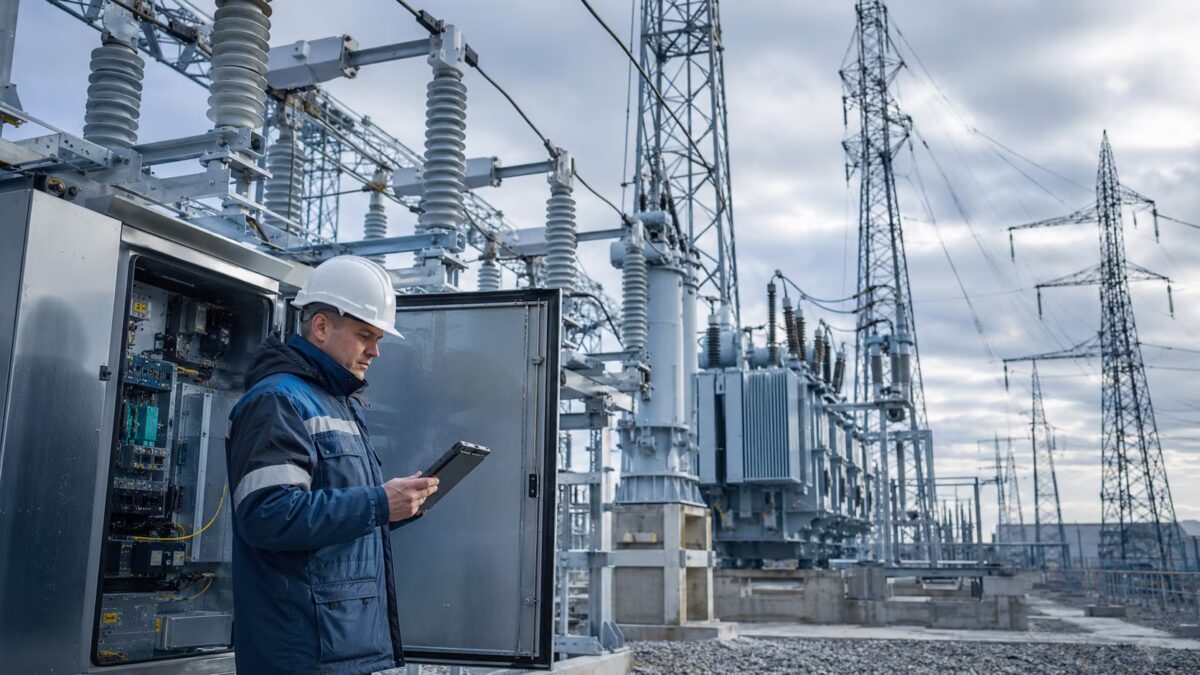
Rossetti Siberia is on the brink: 86% of its grid equipment has exceeded its rated lifespan, and current tariffs barely cover routine repairs, let alone upgrades. The Russian government has ordered federal and regional authorities to urgently draft financial support measures to prevent a full infrastructure crisis in one of the country’s key power distributors.
According to Kommersant, a letter from Rossetti’s CEO, Andrey Ryumin, to Prime Minister Mikhail Mishustin warns that by 2026, funding for investment and maintenance programs could effectively dry up. This threatens widespread failures in Siberia’s power networks, where delaying repairs risks turning localized outages into systemic blackouts.
The company’s finances are strained: a cumulative loss exceeding 24 billion rubles, total debt at 51.5 billion rubles, and a debt-to-EBITDA ratio over 6x. For a utility business, such leverage sharply restricts options-debt servicing costs balloon while scarce cash is funneled toward creditors instead of modernization.
Tariff-setting disputes complicate the picture. Regional regulators have long rejected certain operating expenses as unjustified, forcing Rossetti Siberia to cover critical network costs out of pocket. In 2023, the company’s financial costs hit 8.9 billion rubles, while net profit was a modest 1.1 billion, almost entirely consumed by debt burdens.
The operational fallout is tangible. Rossetti Siberia holds around 40,000 unfulfilled contracts for discounted technical connections, delaying new hookups for private homes, small businesses, and development projects. Across Russia, subsidized connection fees often fall short of covering actual grid expansion costs, sparking chronic disputes and bottlenecks.
Prime Minister Mishustin has instructed the Ministry of Energy, Federal Antimonopoly Service, Ministry of Finance, and regional governments to propose solutions by year-end, including tariff reforms. One plan from Rossetti’s board suggests unifying tariff zones across Siberia’s federal districts and shifting tariff-setting authority from regions to the federal level to streamline funding.
Tariff struggles and debt challenges for Rossetti Siberia
The Siberian subsidiary’s woes underline chronic issues faced by regional electricity distributors in vast, sparsely populated areas. Russia’s expansive geography, with long transmission lines and scattered consumers, makes network upkeep costly-often prohibitively so without tariff adjustments.
In recent years, regulators have pushed consolidation in Russia’s electricity grid segment, favoring large players like Rossetti to absorb weaker local operators struggling with aging infrastructure and rising interest rates. But consolidation alone can’t fix the fundamental tariff shortfall that leaves critical maintenance underfunded.
The longstanding conflict over subsidized technical connections further crowds the problem. Politically sensitive, connection fees for households and small businesses cannot be raised significantly, meaning network operators absorb unreimbursed costs. Fast-growing regions face connection backlogs, while older or remote areas like much of Siberia suffer from underfunded network care.
Rossetti’s proposal to establish a unified Siberian tariff zone aims to balance financial pressures across richer and poorer regions. Currently, regional tariff commissions prioritize local social constraints and budgets, often ignoring the stability of the wider interregional grid. A federal tariff framework could redistribute funding burdens but risks political pushback from wealthier regions subsidizing others.
Experts from the National Research University Higher School of Economics, cited by Kommersant, see a 10-15% tariff hike above current forecasts as almost inevitable if authorities want to plug the funding gap rapidly. While frustrating for consumers, delaying investments often leads to far greater costs down the line-neglected repairs make future restoration exponentially more expensive.
Russia’s electricity network spans over 2.5 million kilometers of transmission lines, per Rossetti’s own reports. Even slight acceleration in equipment wear can translate to billions in unplanned expenses. With a 51.5 billion ruble debt, Rossetti Siberia’s crisis is less a case of mismanagement and more a symptom that tariff policies in some regions no longer maintain viable networks.
The government’s decision, expected by year-end, will reveal whether authorities opt for a targeted bailout or a broader tariff overhaul across distribution grids. A short-term fix risks letting the problem resurface quickly-equipment overdue by 86% of its lifespan won’t wait for the next tariff cycle to fail.