

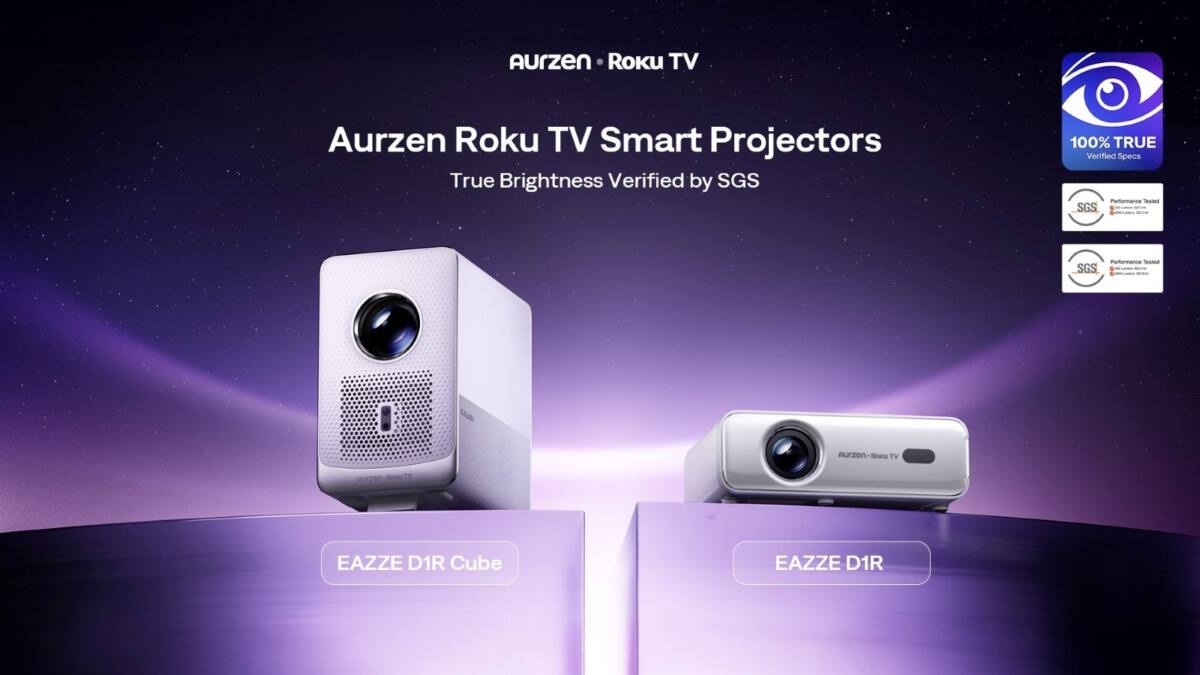
Aurzen’s Roku TV projectors are trying to make big screens simpler, with a new lineup built around native 1080p, SGS-certified brightness, and a decent interface. The EAZZE D1R is the cheaper model, while the D1R Cube adds more brightness and extra setup features for a more TV-like experience.
Projectors have spent years getting better at the picture part and worse at pretending the rest of the experience matters. Aurzen is trying to flip that script with a new Roku TV smart projector lineup that puts streaming front and center instead of treating it like an accessory.
Roku TV is the real selling point
Most affordable projectors still make streaming feel like homework: plug in a stick, sign in again, fight a clumsy menu, repeat. Aurzen says this lineup puts Roku TV inside the projector itself, which is a smarter move than bolting on software that ages badly six months later. For renters, students, and anyone using a projector in a bedroom or apartment, that matters more than another inflated lumen number.
That approach also puts Aurzen in a small but interesting lane. Samsung and LG have spent years making TV interfaces smoother, while projector brands have often acted like streaming convenience was somebody else’s problem. Roku’s ecosystem gives Aurzen an immediate familiarity advantage, and in the budget category, familiarity can beat novelty pretty quickly.
Aurzen D1R vs D1R Cube specs
Both projectors use native 1920 x 1080 resolution and support screen sizes from 60 to 200 inches. Aurzen also says the lineup uses SGS-certified ANSI brightness ratings measured under ANSI/ISO standards, which is a helpful correction in a category where brightness claims are often more marketing than measurement.
- D1R: 280 ANSI lumens, built-in Roku TV, native 1080p, promotional price of $129.99.
- D1R Cube: 330 ANSI lumens, auto focus, auto keystone correction, Dolby Audio, dual 5W speakers, dual-band Wi-Fi, two-way Bluetooth, promotional price of $179.99.
The Cube is the more convincing all-in-one option because it adds the kind of features people actually notice after unboxing: easier setup, stronger audio, and a sealed optical engine designed to reduce dust buildup and black spots over time. That makes it the model with the better shot at replacing a TV in a shared space, even if neither projector is pretending to be a brightness monster.
Aurzen portable Roku TV projector plans
Aurzen is also teasing a portable Roku TV smart projector, which suggests the company sees projector ownership drifting away from fixed living rooms and toward flexible, grab-and-go setups. If that product arrives with the same emphasis on verified specs and built-in streaming, it could be the more interesting play of the bunch. Portable projectors have long relied on wishful thinking and weak apps; this category is overdue for something less flimsy.
For now, the D1R looks like the value bet and the Cube looks like the one to watch if you want a projector that behaves more like a smart TV than a hobbyist gadget. The bigger question is whether buyers care enough about reliable brightness numbers and integrated Roku TV to choose these over the usual suspects from Anker, XGIMI, and other budget rivals that still lean heavily on specs over usability.