

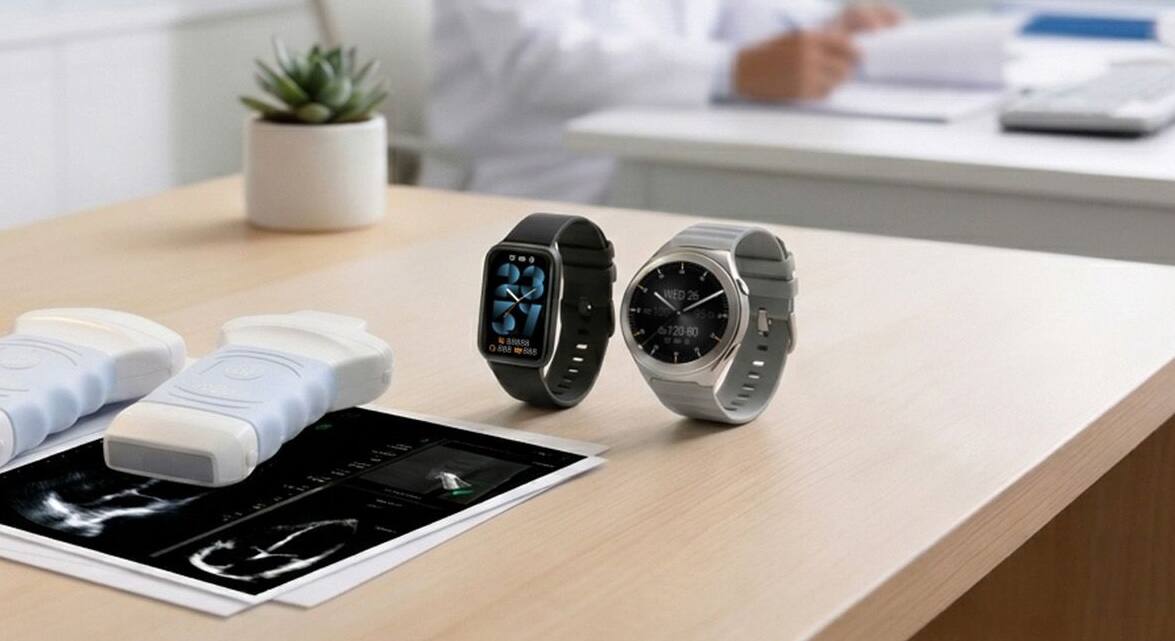
ASUS has launched the VivoWatch 6, a new smartwatch that puts AI-powered health tracking front and center while still trying to look like a premium wearable. The Taiwanese company is not a major force in smart wearables, but it is clearly betting that polished hardware and a crowded list of health features can help the watch stand out.
The pitch is familiar enough: make the case feel expensive, add serious-looking sensors, and hope buyers see value beyond step counting. That is a tougher sell now that Apple, Samsung, Garmin, and Fitbit have trained people to expect polished apps and long-term ecosystem support, not just a nice-looking case. ASUS is leaning on hardware first, which may appeal to users who want a more medical-device vibe than a sporty gadget.
ASUS VivoWatch 6 design and display
The VivoWatch 6 comes with a titanium alloy case and a 1.43-inch AMOLED display protected by sapphire-crystal glass. That combination should help it feel more durable and a bit more upscale than the usual plastic-and-aluminum crowd, even if the spec sheet is doing a lot of the emotional heavy lifting.
- 1.43-inch AMOLED display
- Titanium alloy case
- Sapphire-crystal glass
Health features go well beyond basics
The real hook is the health package. ASUS says the watch supports blood pressure monitoring and ECG tracking, along with newer metrics such as sleep breathing movement and gait analysis. It also offers real-time health feedback, which is the sort of phrase that sounds reassuring right up until you start asking how much of that feedback is meant for everyday wellness versus anything genuinely clinical.
Those features put the VivoWatch 6 in the same conversation as other premium health-first wearables, but ASUS still has to prove the software is as polished as the hardware. The hardware race is easy to understand; the trust race is harder, and that is usually where smaller wearable brands stumble.
Availability and pricing are still missing
ASUS launched the watch alongside the Handheld Ultrasound DuoScan as part of a new AI-powered push for ”modern medical environments.” For now, though, the company has not said when the VivoWatch 6 will go on sale or how much it will cost. That leaves the most important question unanswered, because premium health wearables are only premium if buyers can actually buy them.
If ASUS prices it aggressively, the VivoWatch 6 could attract curiosity from people who want something more medical-looking than a typical smartwatch. If it lands too high, it risks becoming another competent niche gadget that looks impressive in a press release and vanishes in the real world.