

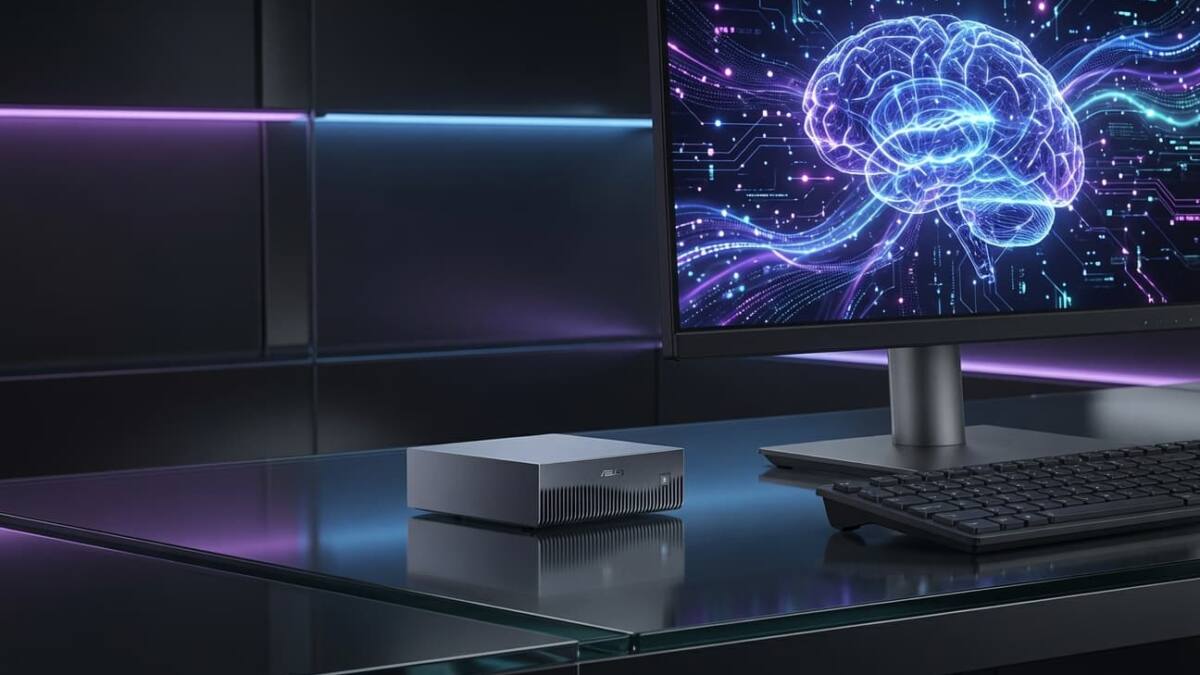
Asus has given its Ascent GX10 mini-supercomputer a pricier, beefier version: 128 GB of RAM, 4 TB of SSD storage, and a price of 36,999 yuan, or almost $5,500. The Asus Ascent GX10 is a tiny box built to run big AI models locally, not a desktop made for spreadsheets and good intentions.
Under the hood sits Nvidia’s GB10 Grace Blackwell superchip, pairing a 20-core Grace CPU with Blackwell graphics. Asus says the system can reach up to 1000 TOPS, enough for large language models above 200 billion parameters, which puts it in a very different class from the usual mini-PC vanity project.
Asus Ascent GX10 specs and price
The hardware list is unusually dense for something with a 150 x 150 x 51 mm footprint. Alongside the unified 128 GB of LPDDR5X memory, the machine uses a GPU with 6144 CUDA cores and FP4 support aimed at AI workloads. That combination matters because local inference is quickly becoming the new status symbol in pro hardware: Nvidia has been pushing this direction for a while, and rivals are scrambling to offer their own compact AI boxes.
- Memory: 128 GB LPDDR5X
- Storage: 4 TB SSD
- Chip: Nvidia GB10 Grace Blackwell
- CPU: 20-core Grace, Arm architecture
- GPU: 6144 CUDA cores with FP4 support
- Power: up to 1000 TOPS
Cooling and networking for AI work
For a device this small, heat management is doing a lot of heavy lifting. Asus says the GX10 uses multiple heat pipes and two large fans, which sounds sensible given the density of the components inside. The system also includes ConnectX-7 high-speed networking and support for linking two units together, a detail that hints at how Asus expects buyers to scale this thing: less ”one tiny PC” and more ”stack them until the budget complains.”
A tiny workstation with a very large invoice
The GX10 is not trying to win over ordinary PC buyers. It is aimed at teams and developers who want serious local AI compute without a rack-mounted monster humming in the corner. The price makes it a tough sell for everyone else, but that is the point: Asus is betting that compact, on-premises model work is valuable enough to justify a premium, and that buyers who need it will pay first and ask questions later.
The bigger question is how far this category can stretch before it becomes crowded. Dell, HP, Lenovo and smaller specialist vendors have all been circling AI workstation hardware, and once Nvidia standardizes the silicon, the real differentiator is no longer raw specs – it is packaging, thermals, and how much pain you are willing to pay to avoid cloud bills.