

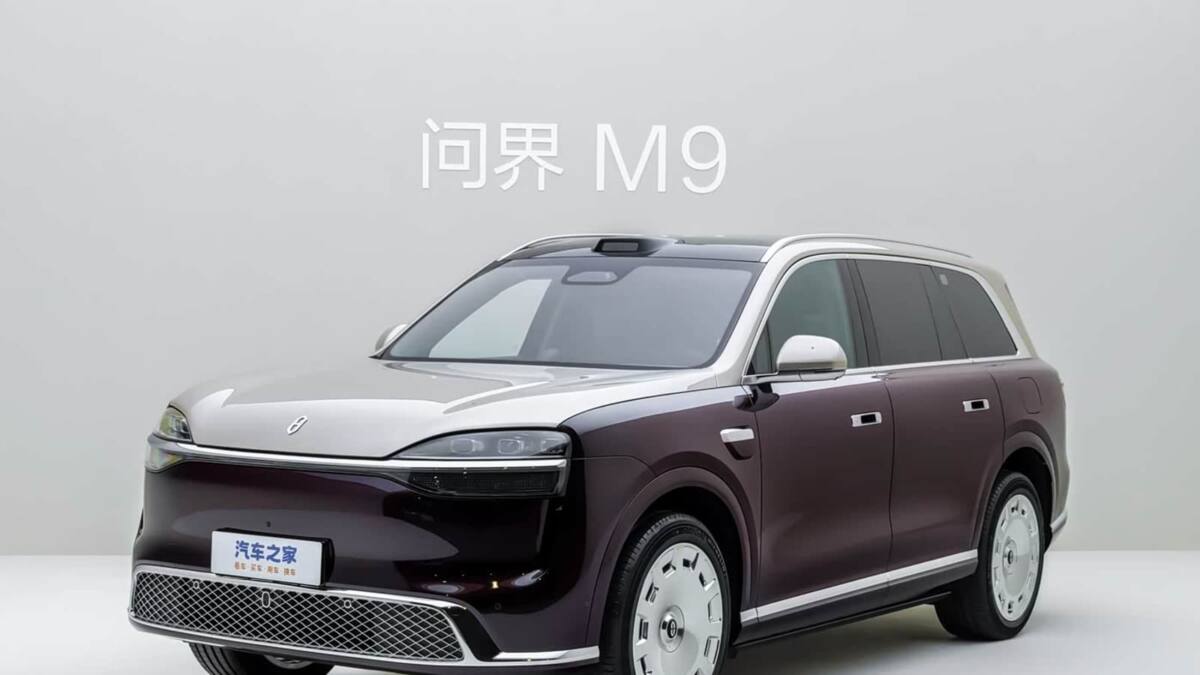
Huawei’s updated Aito M9 is not trying to be subtle. The Aito M9, a full-size SUV, arrives with up to 903 hp, six lidars, an 800-volt electrical architecture, and enough rear-seat theater to make some luxury sedans look underdressed. Prices start at 479,800 yuan and climb to 649,800 yuan for the top Ultimate Extended Edition, which is exactly the kind of number that tells you this is aimed squarely at wealthy buyers who want their tech bragging rights served in SUV form.
The new M9 is also bigger than before, with more than 140 updates over the previous model and a visibly more aggressive luxury playbook: more chrome, interactive lighting, hidden-ish door handles, and doors that swing open to 77 degrees. That sounds flashy because it is, but it also reflects a wider Chinese premium-car trend: brands now compete on screen count, sensor count, and cabin trickery as much as on leather and badge prestige.
Aito M9 prices and body sizes
The Aito M9 line-up spans Max+, Ultra, and Ultimate Extended Edition. Standard versions measure 5285 x 2026 x 1845 mm with a 3125 mm wheelbase, while the flagship stretches to 5402 mm and 3236 mm between the axles. The body also comes in seven colors, with wheels up to 22 inches and a two-tone black-and-gold finish reserved for the top version.
- Max+: 479,800 yuan
- Ultra: 539,800 yuan
- Ultimate Extended Edition: 649,800 yuan
Screens, seats and the laser TV
Inside, the Aito M9 goes straight for the wow factor. There are three front displays, including a 17.2-inch 3.4K center screen and a matching passenger display, plus an augmented-reality head-up display. Rear passengers get a 32-inch laser TV, a 7.1-liter refrigerator, and a Huawei Sound Ultimate system with 39 speakers and 2920 W of output, rising to 43 speakers in the Ultimate trim.
The cabin can be configured as a five- or six-seater, with heated, ventilated, and massaging Hysoft seats. Three of them are said to offer a ”zero-gravity” position, while a graphene-based foot-heating system is marketed as a ”Scandinavian fireplace.” Yes, that is a real phrase, and yes, someone signed off on it.
Six lidars and Huawei ADS 5
Where the Aito M9 really flexes is in its driver-assistance hardware. Huawei has packed in 40 sensors, including six lidars, five 4D millimeter-wave radars, 11 cameras, and six external microphones. That feeds HUAWEI Qiankun Intelligent Driving ADS 5, which is designed to handle highway and city driving autonomously, along with parking.
Safety hardware is equally overbuilt: there are 13 airbags and a body structure made 91% from aluminum alloys and ultra-high-strength steel. Competitors in the premium electric and extended-range SUV class will not love that hardware list, because the M9 is clearly being positioned as a rolling showcase for Huawei’s ecosystem rather than just another expensive family hauler.
Range, powertrains and the 800-volt platform
Two powertrain families are offered. The REEV version uses a 1.5-liter turbo engine as a generator with two electric motors producing 676 hp, paired with 60 kWh or 75 kWh batteries for 340 km or 422 km of electric range and a total range of 1345 to 1405 km. The flagship Ultimate swaps in a 2.0-liter engine and three motors for 903 hp. The BEV uses the same 676 hp dual-motor setup with a 120 kWh battery and a range of up to 750 km.
Underneath, the SUV rides on a fully independent suspension, air springs, adaptive dampers, rear-wheel steering of up to +/- 8 degrees, and active stabilization. It also supports V2L and V2H power export, which is a fancy way of saying the car can help run things outside the car. The bigger question is whether this kind of ultra-loaded spec sheet becomes the new normal for Chinese premium SUVs, or whether Aito just built the most aggressively overequipped one first.