

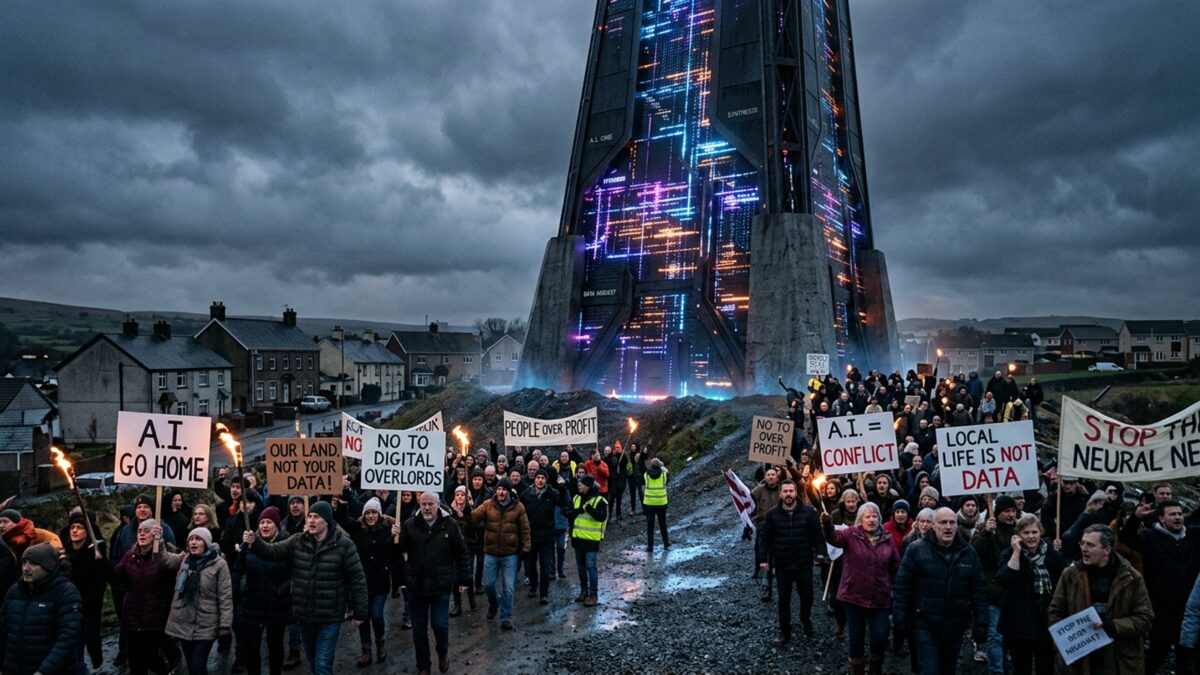
A new Gallup survey suggests AI infrastructure has crossed a political line in the United States: 70% of Americans now oppose building data centers near homes and neighborhoods, up sharply from 47% in the previous poll. The backlash is so strong that, according to The Washington Post, some residents would rather live next to a nuclear power plant than an AI data center. That is not subtle.
The numbers help explain why AI data centers are getting stuck. Data centers sit at the center of the AI boom, but they also bring the bill for power, water, noise, and grid upgrades into local communities. When residents see electricity prices rising and infrastructure plans expanding around them, enthusiasm tends to evaporate fast.
Why communities are pushing back
The resistance is no longer just a handful of angry town halls. In 69 jurisdictions in the United States, lawmakers have already imposed restrictions or moratoriums on new data center construction. Even approved projects are being reopened, delayed, or dragged back into hearings, which is exactly the sort of friction Silicon Valley likes to pretend does not exist.
Local anger is being driven by a very practical fear: higher utility bills. In some parts of the country, electricity prices have reportedly climbed as much as 267% as data center infrastructure expands, while grid upgrades can cost states billions. Add complaints about water use, environmental impact, and low-frequency vibration, and the glossy AI pitch starts looking a lot less futuristic from the front porch.
The rural relocation strategy is not fixing it
Developers have tried shifting projects to rural and less populated areas, where zoning battles are usually easier to win. But moving the problem does not make it disappear. It just changes who gets the noise, the power lines, and the cooling demand.
The White House has tried to lower the temperature by bringing major AI companies together and urging them to help fund infrastructure themselves, but that has not yet produced meaningful regulatory relief. The bigger issue is simple: the AI industry wants speed, while communities want proof that the price will not be paid in their utility bills and daily life. Right now, the locals are winning the argument.