

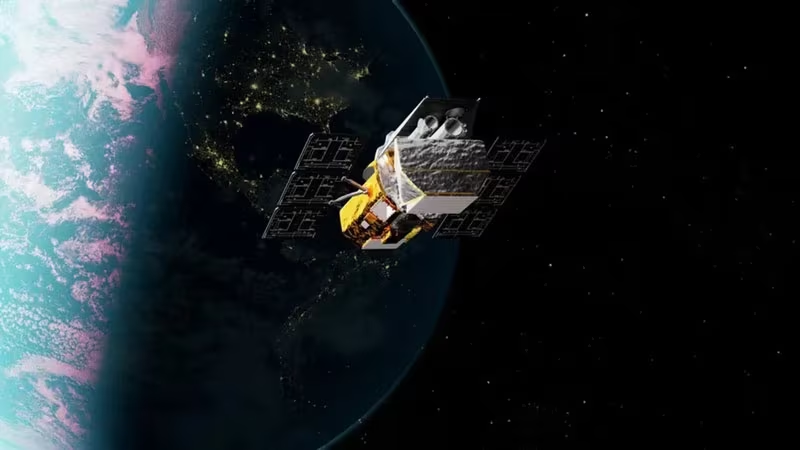
NASA has kicked off a daring mission to save the aging Neil Gehrels Swift Observatory from falling out of orbit and burning up in Earth’s atmosphere. The observatory, which lacks onboard propulsion or refueling capabilities, has been steadily losing altitude due to increased atmospheric drag fueled by heightened solar activity. To counter this, NASA deployed the LINK spacecraft from Katalyst Space-a robotic space tug designed to dock with Swift and raise its orbit for the first time in history.
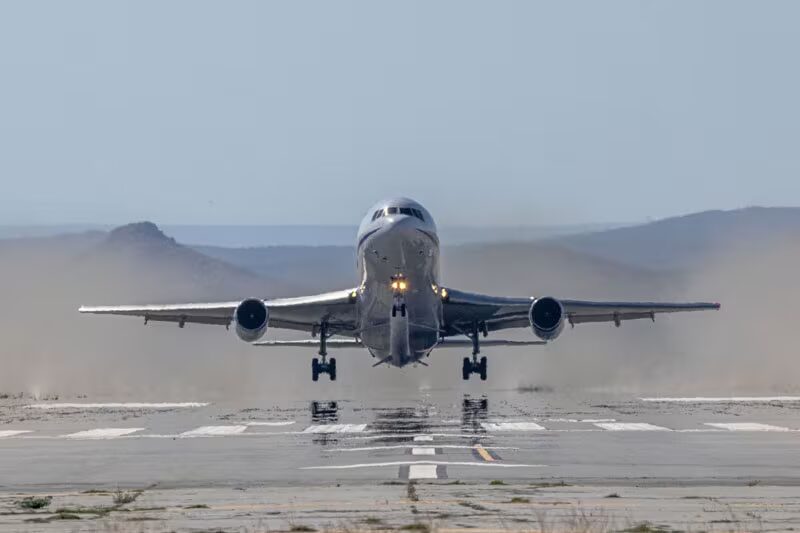
The LINK spacecraft launched aboard a Pegasus XL rocket, which was dropped mid-air on July 3 by an L-1011 Stargazer over the Pacific near Kwajalein Atoll. The launch proceeded smoothly, placing LINK into low Earth orbit. This flight may mark the final use of the Pegasus XL rocket, a once-novel air-launch system that has been eclipsed by more cost-effective and flexible small rocket options.
Swift has been monitoring gamma-ray bursts, X-ray sources, and transient cosmic events across multiple wavelengths since 2004. But it was never built with a propulsion system. Following a recent spike in solar activity, Earth’s upper atmosphere expanded, increasing drag and accelerating Swift’s orbital decay beyond engineering estimates.
Currently, NASA engineers are thoroughly testing LINK’s engine, navigation, power, and onboard systems. In the coming weeks, LINK will approach Swift to survey the observatory, select secure docking points, and attach itself using three robotic arms. This operation is highly risky, given Swift was not designed for servicing missions nearly 20 years after launch.
Orbit-boosting mission extends Swift Observatory’s operational life
If LINK successfully docks, it will spend several months gradually raising Swift’s altitude. The maneuver is expected to take around 60 days, aiming to boost the observatory to roughly 600 km altitude. This extension not only buys Swift more operational time but also proves that aging satellites without built-in servicing capabilities can have their lives extended in orbit.
Such orbital servicing is rapidly evolving from niche experiments into a growing industry segment. In 2020, Northrop Grumman’s Mission Extension Vehicle 1 (MEV-1) became the first spacecraft to dock with a commercial satellite-Intelsat 901-taking over its orientation and orbit corrections. Since then, Northrop Grumman has launched a second MEV, while startups like Astroscale and Starfish Space develop platforms for satellite inspection, refueling, and tugs.
The concept isn’t new: NASA’s Space Shuttle serviced the Hubble Space Telescope five times, repairing and upgrading it over decades. But with the shuttle retired, robotic servicing is the only path forward-offering a less expensive, safer alternative to human missions for satellite maintenance.
NASA’s investment in LINK-valued at about $30 million-is a fraction of what it would cost to design and launch a new science observatory, often running into hundreds of millions with multi-year lead times. Extending Swift’s life is a pragmatic choice driven by both economics and science.
Swift has outlasted its planned service life but remains invaluable for astronomers thanks to its ability to swiftly pinpoint cosmic explosions and relay coordinates to other observatories. As transient phenomena like neutron star mergers and rare gamma-ray bursts take center stage in astrophysics, losing Swift would leave a significant gap in global space observation capabilities.
The orbital servicing industry is still in its infancy but is expected to blossom into a multibillion-dollar sector over the next decade. The upcoming weeks will reveal if NASA’s robotic tug can successfully capture Swift. Success would not only rescue a critical scientific asset but also establish a blueprint for prolonging the operational lives of countless aging satellites without expensive replacements.