

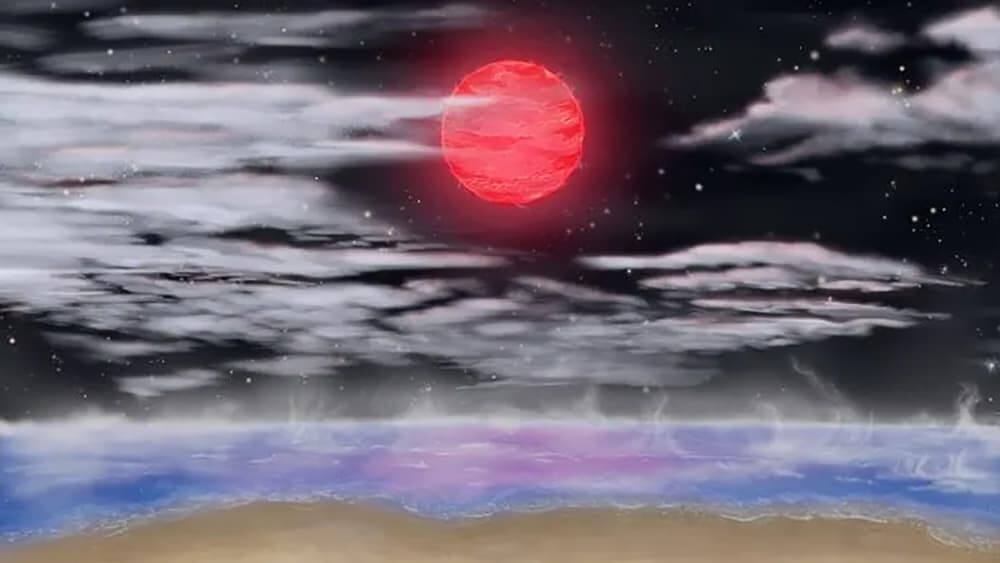
GJ 3378b, a planet about 25 light years away, has moved up the shortlist of nearby worlds that might actually be worth staring at for decades. New calculations suggest GJ 3378b is likely a rocky super-Earth in the habitable zone of its star, not the puffed-up mini-Neptune scientists once suspected.
The revised picture matters because habitability is a numbers game before it is anything else. A world with the wrong mass, the wrong orbit, or the wrong atmosphere gets knocked out quickly; GJ 3378b now clears at least the first two hurdles and sits in a spot where liquid water could exist if the air stays put.
A much smaller planet than first thought
When astronomers first identified GJ 3378b in 2024, they estimated its mass at about 5.3 Earth masses. That made it look more like a mini-Neptune, with a thick gas envelope and a less hospitable surface underneath. A reanalysis of the observations has now pushed that estimate down to 2.3 Earth masses, which is a far more encouraging number for anyone hoping for rock rather than runaway gas.
The orbit has also been tightened up. Instead of taking about 25 days to circle its star, GJ 3378b appears to complete one lap in 21 days. That is a quick year, but the planet still lands in the habitable zone because its host is a cool red dwarf, not a Sun-like star blasting out similar energy levels.
GJ 3378b gets nearly Earth-like energy
According to the researchers, GJ 3378b receives around 90% of the energy Earth gets from the Sun. That does not make it Earth 2.0 – the atmosphere, if it exists, could change everything – but it does put the planet in the narrow band where surface water is at least physically plausible.
- Distance from Earth: about 25 light years
- Estimated mass: 2.3 Earth masses
- Orbital period: 21 days
- Stellar energy received: about 90% of Earth’s
Atmosphere is the real test
The catch is familiar. Red dwarfs are notorious for flares and strong stellar winds, both of which can strip atmospheres from close-in planets. That is the annoying part of the habitable-zone story around these stars: the temperature can look right on paper while the air gets shredded in the background.
For now, nobody can tell whether GJ 3378b still has an atmosphere. The earliest realistic answer is not expected until the 2040s, when NASA’s Habitable Worlds Observatory is supposed to begin probing nearby exoplanets for atmospheres and possible biosignatures. That puts the planet in a promising but very unresolved category: close enough to tempt astronomers, far enough from certainty to keep them busy for years.
A strong target for future telescopes
Even with all the unknowns, GJ 3378b is now one of the more interesting nearby candidates for potential habitability. The bigger story is not that scientists found a second Earth – they did not – but that better data can flip a planet from probably gaseous to plausibly rocky, and that single shift changes what future telescopes will prioritize.
If the next round of observations confirms an atmosphere, GJ 3378b jumps from ”interesting” to ”make the schedule.” If it does not, the planet still tells astronomers something useful about how often red-dwarf worlds can hold onto the ingredients life would need. Either way, it is now firmly on the list.