

Amazon is pushing deeper into its own silicon, saying custom chips will help power a broader family of devices from Echo Show and Fire TV products to future AI gadgets. The pitch is straightforward: if Amazon controls the chips, it can tune hardware, software, and cloud services to work together more cleanly – and keep more AI processing on-device instead of shipping everything to the cloud.
That strategy also reflects a wider shift in consumer electronics. More device makers are chasing local AI processing because it can improve speed, reduce latency, and limit how much personal data needs to leave the device. Amazon clearly wants to be seen as part of that club, not just a reseller of other companies’ silicon.
AZ3 and AZ3 Pro are built for on-device AI
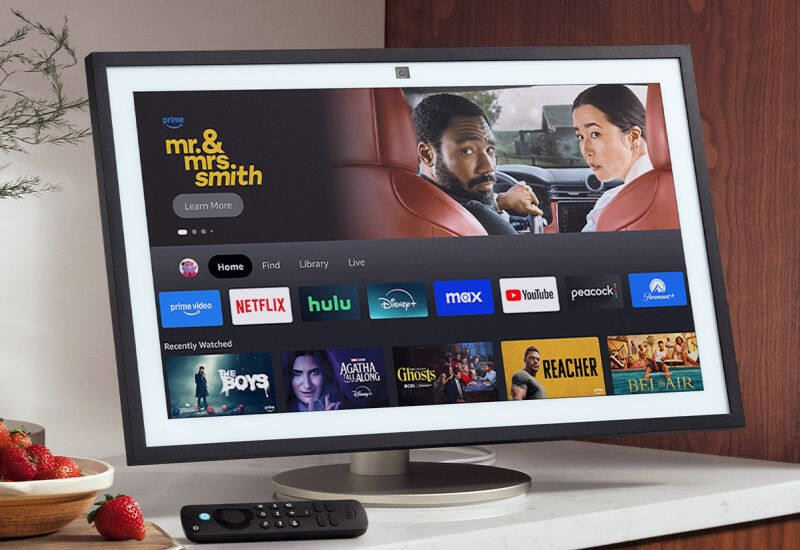
In an interview with CNBC, Panos Panay, Amazon’s head of devices and services, said the company is now producing ”silicon components” across its product lineup. He pointed to custom chips already used in Echo Show 8, Echo Show 11, and Fire TV hardware. Amazon also introduced AZ3 and AZ3 Pro in October last year, with both chips aimed at running AI models on the device rather than relying on cloud processing.
That matters because the real competition in smart-home gear is shifting from raw specs to responsiveness and privacy. A speaker or display that understands you faster, remembers context, and sends less data away has a much better sales pitch than one that simply has a brighter screen.
Alexa+ is the software side of the plan
Amazon this year launched an upgraded Alexa+ voice interface in the US, and the company is presenting it as a more capable assistant that can handle more complex requests while remembering context and user habits. That is a familiar story in the AI era, but Amazon has a useful advantage: it already has a giant installed base of speakers, displays, and TV hardware to push it through.
Panay also said Amazon still uses third-party chips, including parts from Qualcomm. So this is not a purity play, and that is smart. Large device companies rarely win by replacing every supplier; they win by using custom silicon where it makes a difference and buying elsewhere when it does not.
- Custom chips already appear in Echo Show 8, Echo Show 11, and Fire TV devices
- AZ3 and AZ3 Pro are designed for on-device AI model processing
- Amazon says future devices will lean more on conversation and context than apps and screens
Amazon is exploring portable AI device prototypes
Amazon is also keeping its options open on form factors, with Panay saying the company has prototypes of many kinds and is not ready to declare which AI device category will win. One direction it is already planning for is portable hardware that can carry context with the user at home and outside it. If Amazon can connect that with Alexa+ and its own chips, the company may have a cleaner story than its early gadget experiments ever did.
The question now is whether Amazon can turn that silicon-first vision into products people actually want to carry, not just buy and leave on a shelf. The company has stumbled before with ambitious hardware; this time, the safer bet is that it will keep iterating until one of these AI devices finally feels inevitable.