

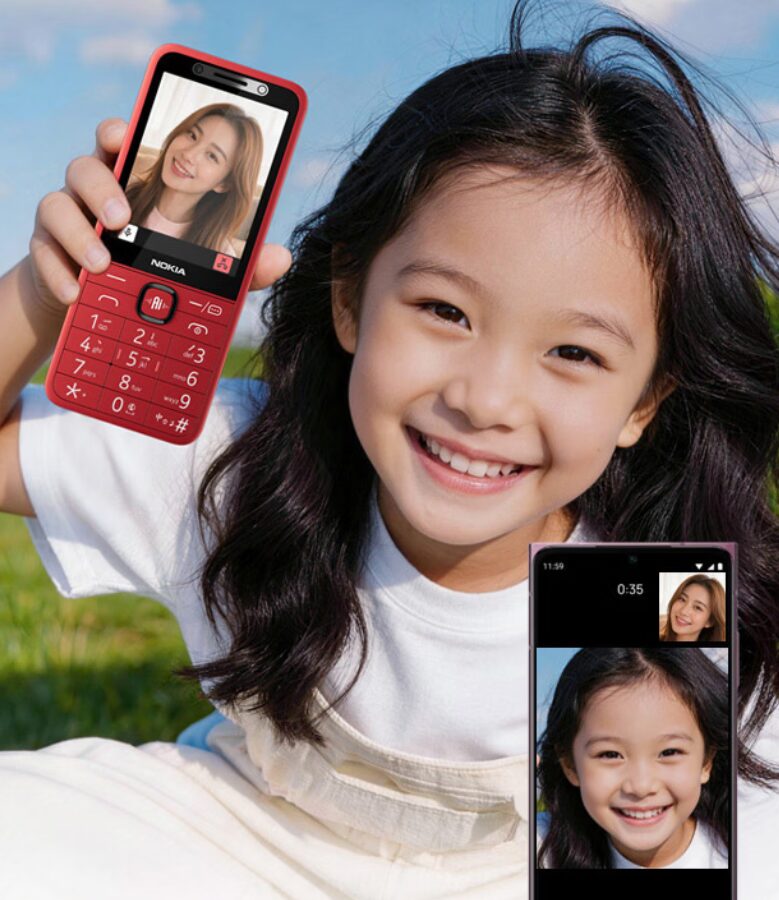
Nokia has put a very old idea on a slightly more modern diet. The Nokia 215 4G WeChat Edition has gone on sale in China, keeping the familiar keypad-phone format while adding WeChat features that make it feel closer to a stripped-back smartphone than a throwback toy.
The pitch is obvious: long battery life, simple controls, and just enough connected features to keep it useful. That mix still has an audience in China, especially for buyers who want messaging, calls, and location sharing without the distraction pile that comes with a full smartphone.
WeChat features on a keypad phone
The headline feature is deep WeChat integration. The phone supports voice and video calls, text and voice messages, push notifications from mini-programs, group chats, and location sharing. It can also send alerts if the device leaves a set perimeter, which is a very 2026 way to make a button phone do security-duty.
That is not standard dumb-phone territory. It is the kind of feature set that narrows the gap between basic phones and entry-level smartphones, while still keeping the interface and hardware intentionally minimal. HMD and other feature-phone makers have leaned on similar nostalgia-plus-utility ideas, but WeChat gives this Nokia model a much stronger local hook.
Nokia 215 4G specs and battery focus
The hardware stays conservative. Nokia 215 4G WeChat Edition has a 2.8-inch display with reduced blue light, large keys, a simplified interface, a built-in flashlight, and an energy-efficient chip. It also ships with a 2.75W charger, and the emphasis throughout is on standby time rather than app-heavy performance.
- 2.8-inch screen with reduced blue light
- Large physical keys and simplified UI
- Voice and video calls through WeChat
- Location sharing and geofence alerts
- Built-in flashlight and QR-code payment support
Price and China release details
The Nokia 215 4G WeChat Edition is now on sale in China. The recommended price is 399 yuan, while some storefronts list an introductory price of about 369 yuan, or roughly $54. For a phone this basic on the surface, that is not bargain-basement cheap; what buyers are paying for is the WeChat layer and the promise of far better endurance than a modern touchscreen handset.
The bigger question is whether this sort of hybrid phone can grow beyond niche appeal. In China, probably yes, because WeChat is the operating system for everyday life in everything but name. Outside that ecosystem, the formula gets much less compelling, which is exactly why this Nokia looks tailored to one market instead of a global comeback.