

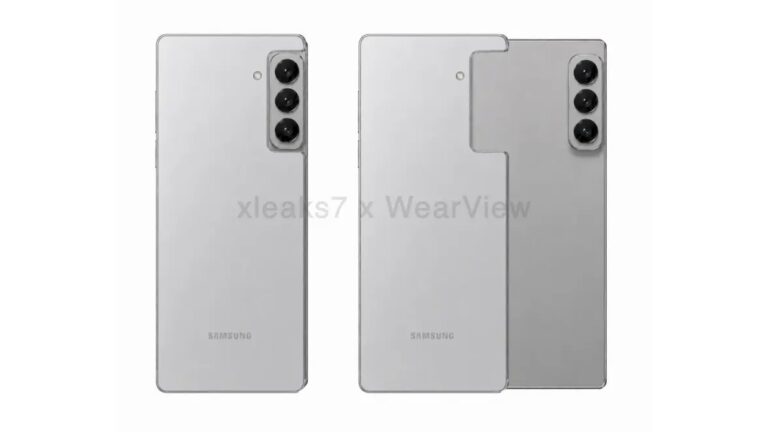
Samsung’s first rollable phone could arrive in 2028, according to a new report from South Korean media. The device is said to be targeting the first half of 2028 and could launch as the Galaxy Z Slide, potentially alongside the Galaxy S28 lineup.
The report suggests Samsung is moving fast on a commercial rollable smartphone that could stretch from pocket-friendly to near-tablet size at the press of a button. If that sounds like Samsung trying to outflank its own foldables, that is basically the point.
The company still leads the category, but its share of foldable display panels reportedly slipped from 41.8% in Q4 2025 to 27% in Q1 2026, according to Omdia. A rollable phone would let Samsung reclaim some of the hype it once owned almost by default.
Galaxy Z Slide display size and timing
The device is rumored to feature a 10-inch 16:9 screen with around 440 pixels per inch, which would put it in the same conversation as compact tablets rather than ordinary phones. There is also talk of a second model arriving in 2030, suggesting Samsung may be thinking beyond a one-off science project and toward a new product family.
- Target launch: first half of 2028
- Possible branding: Galaxy Z Slide
- Rumored display: 10-inch, 16:9, around 440 ppi
- Possible follow-up model: 2030
Why rollable phones are harder than foldables
Rollable screens sound easy until you try building one that survives real life. The panel has to extend and retract hundreds or thousands of times without developing waves, creases, or uneven tension, while the rollers, internal layers, and support structure all stay thin and light. That is a tougher engineering problem than a foldable hinge, which is why no one has fully normalized the category yet.
Samsung has been showing its homework for a while. At CES 2023, it demonstrated the Flex Hybrid, which mixed folding and sliding, and later the Rollable Flex prototype at SID Display Week, where a 49mm screen expanded to more than 254mm. That is a neat trick in a lab; shipping it at scale without turning the phone into an expensive mood ring is the actual test.
What Samsung is trying to win
Samsung does not just want a flashy new form factor. It wants the premium end of the market to associate the company with the next shape of mobile hardware, not just the last one. If the Galaxy Z Slide arrives with a convincing design, a premium feel, and a price buyers can swallow, it could become the clearest signal yet that phones are moving beyond the fold-and-flip era.
The open question is whether Samsung can make rollable hardware feel inevitable rather than experimental. The company has the display know-how, the brand, and the incentive; the rest is execution, which has a nasty habit of ruining the party.